 The Standard Group Plc is a multi-media organization with investments in media
platforms spanning newspaper print
operations, television, radio broadcasting, digital and online services. The
Standard Group is recognized as a
leading multi-media house in Kenya with a key influence in matters of national and
international interest.
The Standard Group Plc is a multi-media organization with investments in media
platforms spanning newspaper print
operations, television, radio broadcasting, digital and online services. The
Standard Group is recognized as a
leading multi-media house in Kenya with a key influence in matters of national and
international interest.


For a few gut-wrenching seconds at Wajir Stadium on Thursday, Kenyans were again treated to yet another security breach during President William Ruto’s event.
A man in a white shirt and blue jeans emerged from behind the podium and sprinted directly towards the President, forcing the Head of State to stop his speech mid-sentence as security aides scrambled to intervene.
“Polepole, pole,” the President was heard saying, urging security to calm down as they wrestled the intruder to the ground. Within moments, order was restored. The man was taken away, and President Ruto continued with his speech.
But the incident, the third one in less than a year in which a member of the public has physically breached the presidential security layer, has sent shockwaves through the National Police Service and raised uncomfortable questions about the vulnerability of Kenya’s most protected citizen.

Security expert George Musamali says the three incidents are one too many.
“The first time it happens, that is a coincidence. The second time was by chance. But the third time, it is enemy action. Someone is doing a dry run. Attacks are carried out in phases,” said Musamali.
Musamali says the first phase of an attack is the ‘harmless’ attempt at reaching the President.
“God forbid they try another attempt. They have been observing the security lapses and seeing the gaps. The Joint Operations Command is the team that plans everything, including the minute details. They clearly didn’t do their job,” Musamali said.
He says the lapse was so critical and it is worrisome that the security vulnerability was broadcasted to the entire world.
Tom Kipyegon, another security expert, says three physical breaches in twelve months is not a series of unfortunate incidents but a systemic failure of command.
“When a civilian can reach the podium twice at the same type of event, the problem is not the man on the ground. It is the risk assessment done in the boardroom. The Presidential Security Unit operates on a ‘dirty zone’ concept; the area immediately around the principal should be sterile. If that zone is being penetrated by people who ‘just want to say hello,’ then it is already compromised for anyone who does not,” Kipyegon said.
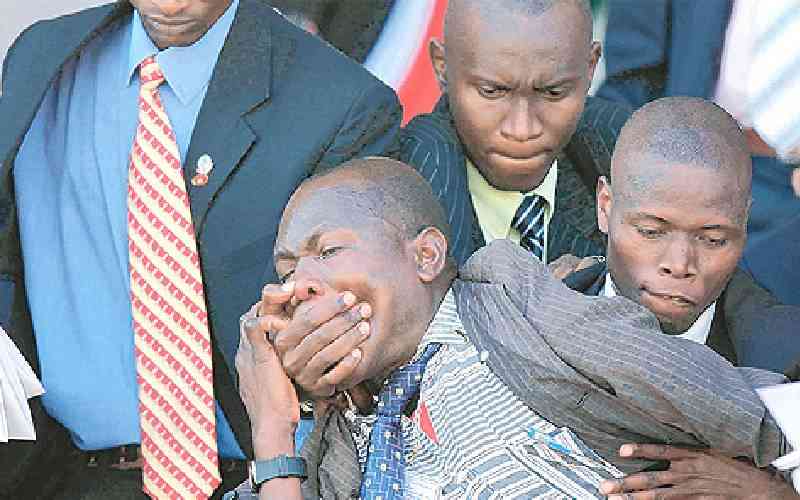
Inspector General of Police Douglas Kanja has since ordered a three-day inquiry into what went wrong, tasking a special team to “identify any procedural gaps that may have contributed to this breach” and recommend immediate corrective measures.
In Wajir, the latest drama unfolded during the National Youth Opportunities Towards Advancement (NYOTA) programme event.
As President Ruto addressed thousands of young people at Wajir Stadium, Ahmed Muhumed, a local MCA aspirant, somehow navigated past multiple layers of security to reach the podium.
Muhumed later told the media that he had waited patiently through most of the President’s speech but became impatient towards the end.
“There was no other way. I just wanted to greet him and share my ambition for the 2027 elections,” he said, blissfully oblivious to the gravity of his actions.
The National Police Service moved quickly to contain the narrative. In a statement issued late Thursday, police spokesperson Muchiri Nyaga insisted that “at no time was the safety of His Excellency the President, other dignitaries, or members of the public compromised.”
Officers had acted “with the utmost professionalism and speed to de-escalate the situation and restore order,” he added.
What makes the Wajir incident particularly concerning is that it is not an isolated event. Just six days earlier, on February 6, President Ruto faced a remarkably similar scare while addressing a NYOTA event at the Jomo Kenyatta Showground in Mombasa.
On that occasion, a man ran towards the podium from the front, tumbling over it before officers from the Presidential Security Unit could apprehend him.
Again, the President defused the moment with humour, asking the man his name and joking about his missing shoes.
Again, the man claimed he simply wanted to talk to the President.

In May last year, Dr Ruto was forced to dodge a flying shoe hurled at him during a rally in Migori County. State House later described it as “a moment that got out of hand,” suggesting it happened accidentally.
Presidential events, and particularly in hostile northern Kenya, require heightened vigilance. Yet it was precisely at such an event, in Wajir, near the Somali border, that Thursday’s breach occurred.
Yet the area is highly volatile, and the most significant threat emanates from across Kenya’s border.
Al-Shabab, the Islamist militant group based in Somalia, has masterminded a series of devastating attacks on Kenyan soil, including the Westgate shopping mall massacre in 2013 that killed 67 people, the Garissa University attack in 2015 that left 148 dead, and the DusitD2 hotel assault in 2019 that claimed 21 lives.
As Kanja’s team begins its three-day inquiry, several questions demand answers. How did Muhumed navigate past the outer security cordon? Why was he not intercepted by plainclothes officers mingling with the crowd? How did he reach the podium without being stopped? And, crucially, why have similar incidents occurred repeatedly without apparent changes to protocols?
“The President is the most protected person. So when we see these kinds of breaches, it is worrying,” said Byron Adera, another security expert.




