 The Standard Group Plc is a multi-media organization with investments in media
platforms spanning newspaper print
operations, television, radio broadcasting, digital and online services. The
Standard Group is recognized as a
leading multi-media house in Kenya with a key influence in matters of national and
international interest.
The Standard Group Plc is a multi-media organization with investments in media
platforms spanning newspaper print
operations, television, radio broadcasting, digital and online services. The
Standard Group is recognized as a
leading multi-media house in Kenya with a key influence in matters of national and
international interest.

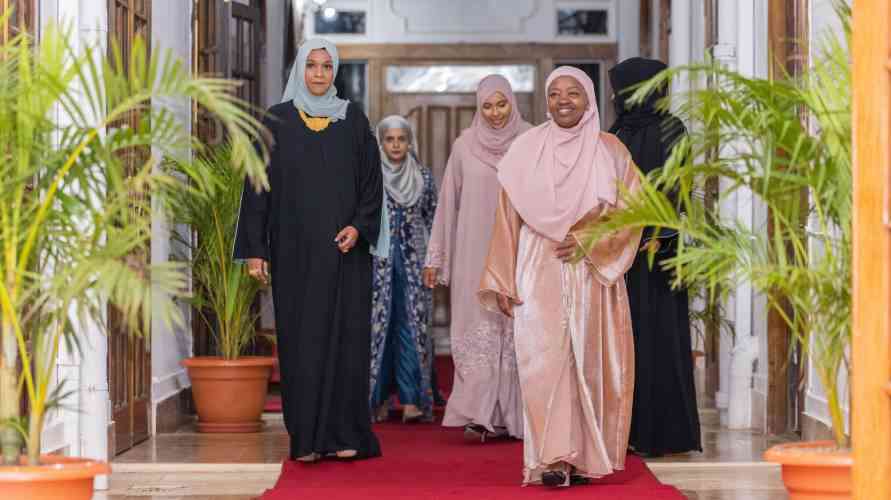
As the holy month of Ramadhan draws to a close, various religious and political leaders have been sharing the breaking fast occasions (Iftar) with Muslim faithfuls.
Last week, First Lady Rachel Ruto hosted Muslim women at State House in Nairobi for Iftar.
The event was attended by various female leaders from the Islam faith, including Members of Parliament as well as notable media personalities.
The colorful images of the event were shared on the first lady's official Twitter handle.
However, most social media users noticed that Rachel had covered her head with a pink hijab and a long dress to match, begging the question why muslim women are supposed to cover up.
In the Islamic tradition, modesty is highly valued and the women are required to cover up always, especially while praying.
It is a sign of respect and humility before God. It is believed that by covering oneself is a way of preserving that modesty.
While praying, the muslim women are required to wear loose-fitting clothes to cover their body structures and a hijab to cover their head.
This is considered as a way of maintaining purity and sanctity of the act of worship.
It is also strongly believed that by covering up, one is able to focus fully on their prayers and avoid distractions.
In the same Islamic tradition and guidance of the faith, women and men are separated during prayer in order to maintain modesty and prevent distractions.
This is based on the idea that prayer is a sacred and intimate act of worship, and that minimising potential distractions or temptations can help individuals focus more fully on their connection with God.
Muslim scholars however note that the separation of genders during prayer is not meant to imply any sort of inequality or inferiority of one gender over the other.




