 The Standard Group Plc is a multi-media organization with investments in media
platforms spanning newspaper print
operations, television, radio broadcasting, digital and online services. The
Standard Group is recognized as a
leading multi-media house in Kenya with a key influence in matters of national and
international interest.
The Standard Group Plc is a multi-media organization with investments in media
platforms spanning newspaper print
operations, television, radio broadcasting, digital and online services. The
Standard Group is recognized as a
leading multi-media house in Kenya with a key influence in matters of national and
international interest.

The scarcity of early-stage capital and lack of management expertise has seen many Kenyan startups die an early death.
A missing link between the startups and corporates, academia, has also denied local entrepreneurs a helping hand, including advice, introductions and seed money.
However, initiatives to strengthen collaboration between academic institutes, industry and startups, and pursuing public-private partnerships to fund startups' higher-risk research and development-intensive projects could unlock the true potential of local entrepreneurs.
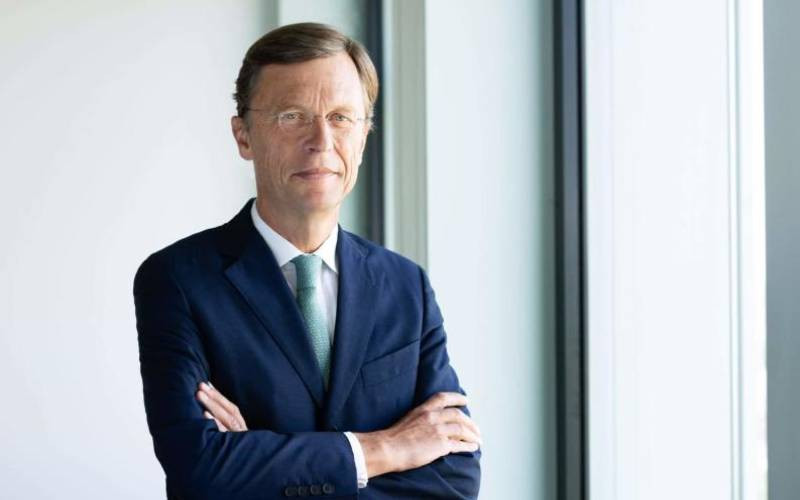
Germany has walked this path and attained huge success, according to German development economist Matthias von Bismarck-Osten.
The senior economist and financial advisor, on technology impact, investing and development policy, says Kenya which also boasts a vibrant startup scene can also try this route to achieve its full potential.
Unlike Kenya, the startup scene in the European powerhouse has produced several billion-dollar companies, some of which have been snapped up by international tech giants.
Some of the most successful German start-ups include the fintech startup N26, luggage manufacturer Horizn, the Auto1 Group and now internationally established companies such as Flixbus and Flixmobility, Zalando and Trivago.
"They have all shown that they can build successful business models with fresh ideas and sustainable concepts," says von Bismarck-Osten, an economist and financial advisor on technology impact investing and development policy.
He shared these insights at a recent forum in Nairobi exploring how the Kenyan startup ecosystem has evolved.
The Nairobi forum was organised by Germany's Friedrich Naumann Foundation for Freedom.
Between 2008 and 2018, 28 unicorns were created in Germany.
A unicorn is a privately held startup company with a value of more than $1 billion (Sh130 billion).
Von Bismarck-Osten, who is also an adviser for GreenTec Capital Partners a Germany-based African-focused investor in African startups and SMEs, says Kenyan universities with their rich treasure troves of research can offer a better foundation for local startups to solve real problems in the country.
He argues that like in Germany, academia can be an important pillar in Kenya's startup economy and that public and private sector partnerships with education institutions can provide frameworks to support young businessmen and women to flourish.
Many start-ups springing from German universities and research institutes have received funding through the federal government's EXIST programme, an initiative to boost the country's edge in innovation.
It is all not lost for Kenyan startups, however, according to Kenya's early-stage investment expert Esther Ndeti.
Ndeti argues that some of the challenges early-stage startup Kenyan innovators face include limited awareness of the variety of investors and opportunities available to them.
A new startup law aimed at providing a framework to encourage entrepreneurship in Kenya as well as to stimulate growth and sustainable development of technology to attract Kenyan talent and capital will be vital, she notes.
Policy framework
The legal framework proposes to establish a Kenya National Innovation Agency, which will be responsible for the registration of startups.
The agency will be tasked with formulating an incubation policy framework for the development of startups, both at the national and county level, as well as creating partnerships between local and international business incubators.
Dubbed 'Silicon Savannah', Kenya has emerged as a major player in the fintech space since telecoms operator Safaricom pioneered its M-Pesa mobile money service in 2007 for people without access to a formal banking network.
A ready pool of users has turned the country into a centre of innovation, attracting major players in the world of venture capital, some with investments in top-tier investment firms in Silicon Valley.
Microsoft, for instance, recently opened a Sh3 billion office and labs for its premier engineering hub, the African Development Centre (ADC), after three years of operation in Kenya.
And in 2019, Chinese telecoms firm Huawei inked a loan deal to develop the Konza project at a cost of Sh17.5 billion.




