 The Standard Group Plc is a multi-media organization with investments in media
platforms spanning newspaper print
operations, television, radio broadcasting, digital and online services. The
Standard Group is recognized as a
leading multi-media house in Kenya with a key influence in matters of national and
international interest.
The Standard Group Plc is a multi-media organization with investments in media
platforms spanning newspaper print
operations, television, radio broadcasting, digital and online services. The
Standard Group is recognized as a
leading multi-media house in Kenya with a key influence in matters of national and
international interest.

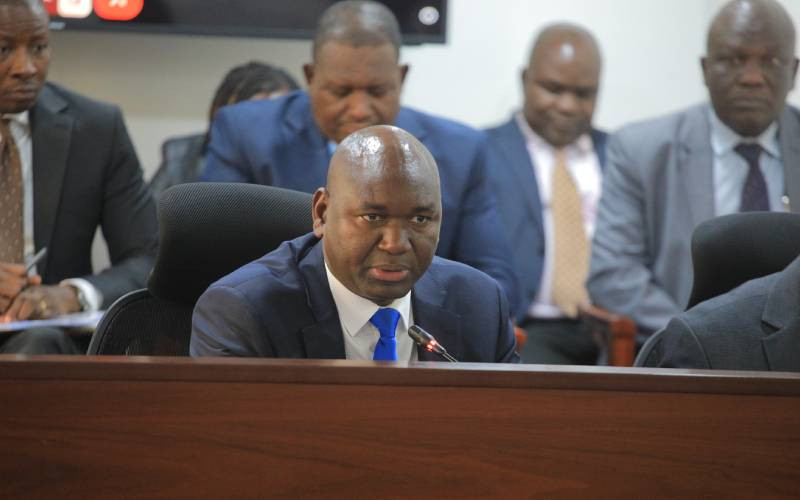
Basic Education PS, Julius Bitok, before the Public Accounts Committee at Bunge Towers, Parliament, Nairobi. April 22, 2026. [Elvis Ogina, Standard]
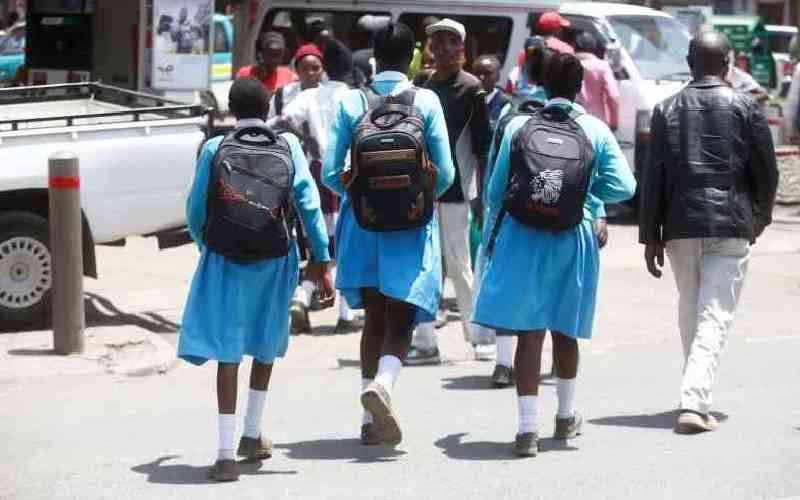
Schools are once again staring at a funding crisis as they prepare to reopen for the second term, with capitation disbursements falling short of the required amounts.
The second term, set to run for 14 weeks — the longest in the academic calendar — will begin under financial strain, with school heads forced to navigate persistent budget deficits.
The shortfall is expected to affect both Free Primary Education and Free Day Secondary Education programmes, raising concerns over the sustainability of operations in public schools.
Parents are also likely to feel the impact, as institutions increasingly turn to them to bridge funding gaps.
This comes after the government announced the release of Sh23.4 billion in capitation for the second term.
Basic Education Principal Secretary Julius Bitok said the funds would be credited to school accounts by Friday, ahead of Monday’s reopening.
However, despite the timely release, it emerged that the disbursement falls below the expected allocation for the term.
Secondary schools, which are among the hardest hit, are expected to receive significantly less than the required amount.
While the approved capitation stands at Sh22,244 per learner annually, translating to Sh6,673 per term, schools will receive only about Sh3,094 per student this term.
This continues a trend seen in the first term, where schools received Sh7,000 per learner against an expected Sh11,122.
In January, the government released Sh44.3 billion in capitation, with Sh26.1 billion allocated to Free Day Secondary Education, Sh14.5 billion to Junior Secondary, and Sh3.7 billion to Free Primary Education.
However, the funds still fell short of actual needs.
A special audit on school funding covering the 2020/21 to 2023/24 financial years revealed an accumulated capitation shortfall of Sh76.9 billion, underscoring the depth of the funding crisis.
The current allocations come after a nationwide verification exercise aimed at eliminating ghost learners and institutions.
According to the Ministry of Education, the exercise established that there are 3,259,650 learners in secondary schools, 2,948,929 in junior secondary, and 4,817,694 in primary schools.
Education officials had expressed optimism that the verification would enable more accurate and adequate funding.
However, figures from the latest supplementary budget highlight a widening gap between available resources and actual requirements.
Secondary schools face the largest deficit. With an approved allocation of Sh54.89 billion for 3.2 million learners, each student will receive about Sh16,845 annually — well below the required Sh22,000.
Treasury estimates indicate that Sh78.50 billion is needed to fully fund the programme, leaving a deficit of Sh26.61 billion.
Kenya Secondary School Heads Association Chairman Willy Kuria warned that the funding gap would have far-reaching consequences.
“It will impact the ability of schools to cover essentials such as food, laboratory materials and operational costs, setting the stage for delayed payments, mounting debts and renewed pressure on parents,” he said.
In junior secondary schools, the situation is equally dire as institutions grapple with the demands of the Competency-Based Education (CBE).
With an allocation of Sh28.92 billion for nearly 3 million learners, each student will receive about Sh9,810, far below the recommended capitation of over Sh15,000.
This leaves a per-learner deficit of Sh5,190 and an overall funding gap of Sh20.98 billion, against a requirement of Sh49.90 billion.
Primary schools appear slightly better off, but still face constraints.




