×

The Standard e-Paper
Fearless, Trusted News
 The Standard Group Plc is a
multi-media organization with investments in media platforms spanning newspaper
print operations, television, radio broadcasting, digital and online services. The
Standard Group is recognized as a leading multi-media house in Kenya with a key
influence in matters of national and international interest.
The Standard Group Plc is a
multi-media organization with investments in media platforms spanning newspaper
print operations, television, radio broadcasting, digital and online services. The
Standard Group is recognized as a leading multi-media house in Kenya with a key
influence in matters of national and international interest.

Audio By Vocalize
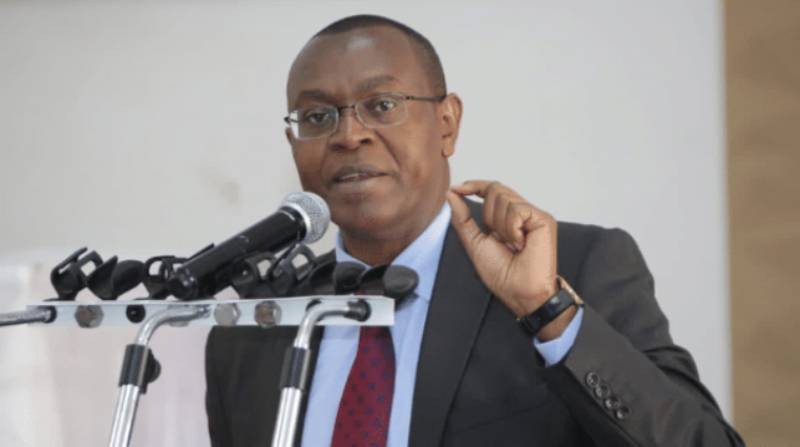
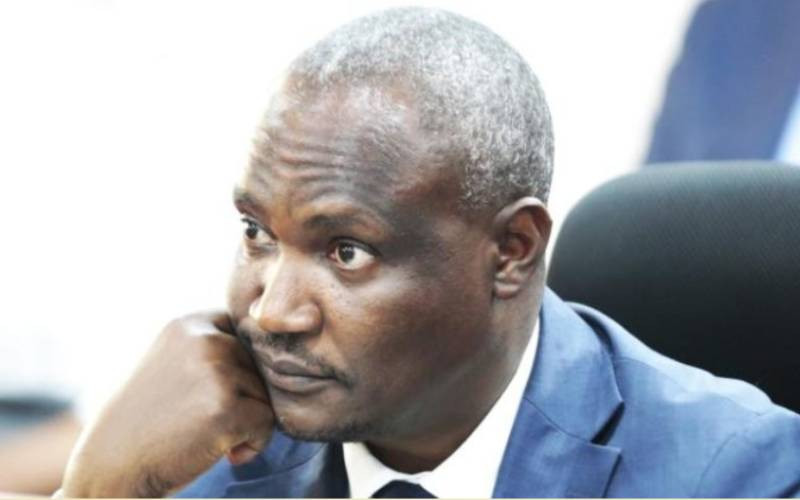
Some 1,130,587 candidates sat for the 2025 Kenya Junior School Evaluation Assessment (KJSEA), Kenya National Examinations Council (KNEC) Chief Executive David Njengere has said.
He spoke during the release in Nairobi on Thursday, December 11.
KNEC did not deploy police or other security personnel during the exams, relying instead on 185,689 trained officials, 11,239 examiners, and newly established county assessment hubs to manage the process.
“This year we focused on professional management and structured oversight rather than security deployment,” Njengere explained.
He noted that the approach ensured smooth conduct across 24,366 junior secondary schools and allowed examiners to focus on learners’ performance.
The 2025 KJSEA cohort is the first group of Grade 9 students to complete the Competency Based Education (CBE) system, having previously sat the Kenya Primary School Evaluation Assessment (KPSEA) in 2022.
“For the first time, the Kenyan education system will report learners’ achievement using a rich array of data from both formative and summative assessments,” Njengere observed.
County assessment hubs, each drawing five schools per county, will monitor and support schools while resolving issues without delay.
“These hubs keep us engaged with schools and ensure any challenges are addressed immediately,” he added.
Placement of 2025 KJSEA candidates will begin immediately, with all learners expected to know their senior schools by next week.
Reporting is set for January 12, 2026, Basic Education Principal Secretary (PS) Julius Bitok said. Nairobi, Kakamega, and Nakuru counties registered the highest number of candidates, while Isiolo, Nairobi, Samburu, and Pokot counties had more female candidates.
The 2025 KJSEA assessed nine subjects: English, Kiswahili, Mathematics, Integrated Science, Pre-Technical Studies, Social Studies, Agriculture, Religious Education, and Physical Health Education & Sports. Learners will progress to senior school pathways in STEM, Social Sciences, or Arts & Sports Science.
KNEC introduced new scoring bands: Exceeding Expectations (EE) 90–100 per cent (EE1) and 75–89 per cent (EE2); Meeting Expectations (ME) 58–74 per cent (ME1) and 41–57 per cent (ME2); Approaching Expectations (AE) 31–40 per cent (AE1) and 21–30 per cent (AE2); Below Expectations (BE) 11–20 per cent (BE1) and 1–10 per cent (BE2).
Final senior school placements will consider 60 per cent KJSEA national assessment results, 20 per cent school-based assessments (Grade 7 & 8 projects, practicals, oral and written tasks), and 20 per cent KPSEA scores.
Stay informed. Subscribe to our newsletter
Learners’ declared interests and KNEC’s recommended pathway will also determine placement.
KNEC is preparing senior school teachers for the next phase of the CBC, with online capacity building allowing all eligible staff to enrol.
“This platform will support teachers as they handle the new curriculum,” Njengere noted.
Subscribe to our newsletter and stay updated on the latest developments and special offers!







 join
join