×

The Standard e-Paper
Join Thousands Daily
 The Standard Group Plc is a
multi-media organization with investments in media platforms spanning newspaper
print operations, television, radio broadcasting, digital and online services. The
Standard Group is recognized as a leading multi-media house in Kenya with a key
influence in matters of national and international interest.
The Standard Group Plc is a
multi-media organization with investments in media platforms spanning newspaper
print operations, television, radio broadcasting, digital and online services. The
Standard Group is recognized as a leading multi-media house in Kenya with a key
influence in matters of national and international interest.

Audio By Vocalize
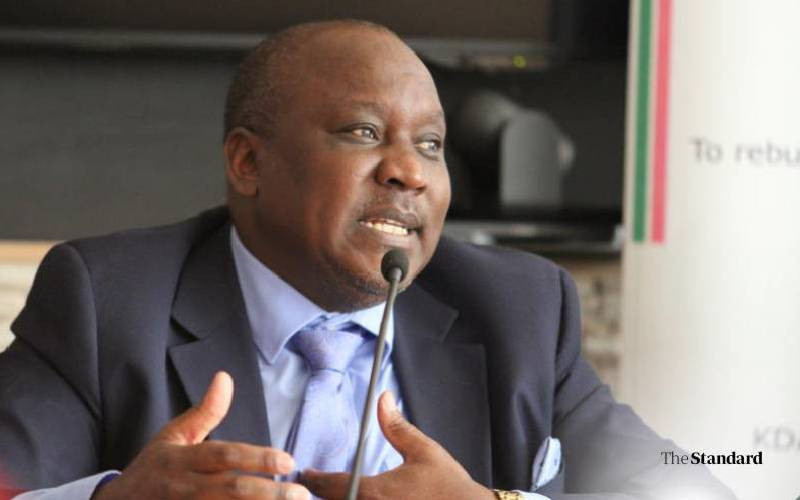
The Government must establish a formal complaints system to protect Kenyans working for international bodies that enjoy diplomatic immunity from rights violations, the High Court has ordered.
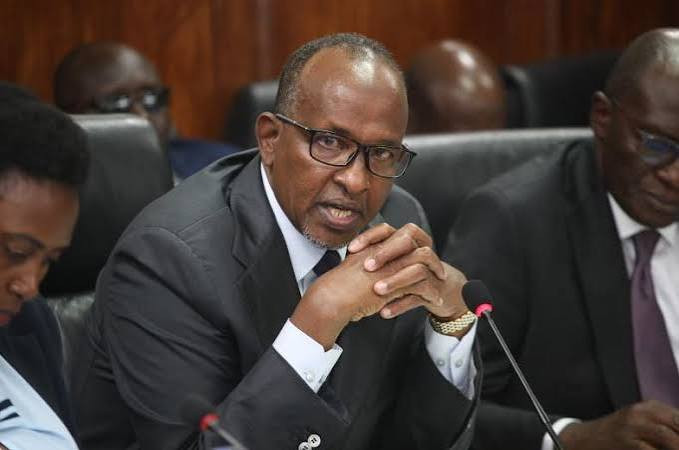
Justice Roselyn Aburili has given the Attorney General Dorcas Oduor and officials at the Ministry of Foreign Affairs nine months to develop and operationalise mechanisms through which Kenyans working for international and regional organisations can lodge and have their complaints processed.
The judge issued the far-reaching order after finding that State officials violated the constitutional rights of a former African Union Economic, Social and Cultural Council (ECOSOCC) member's constitutional rights by ignoring his complaint over an unlawful suspension.
The court found that the Attorney General, the Foreign Affairs Cabinet Secretary and Principal Secretary and Kenya's Ambassador to the African Union breached Dr Shem Odongo Ochuodho's right to fair administrative action by failing to respond to his request for diplomatic intervention.
"A declaration is hereby issued declaring that the petitioner's right to a fair administrative action guaranteed under Article 47 of the Constitution was violated by the 3rd, 4th, 5th, 6th and 7th Respondents' failure to address his complaint against ECOSOCC through the available Diplomatic Channels," Justice Aburili ordered.
The court further held that the failure violated Ochuodho's rights to access justice and a fair hearing under Articles 48 and 50(1) of the Constitution.
The judge said the case exposed a gap in how Kenya handles grievances involving international organisations that enjoy immunity and therefore cannot easily be subjected to proceedings before Kenyan courts.
As a remedy, Justice Aburili issued a supervisory order of mandamus compelling state to, within nine months of the date of being served with this Judgment, develop and operationalise a system for handling such complaints.
The order places the responsibility squarely on the Kenyan Government to create an administrative avenue for citizens who may have grievances against international or regional organisations that cannot easily be sued in Kenyan courts because of diplomatic immunity.
“As can be appreciated, such grievances as against international bodies are not unique to the petitioner alone and can affect any person or citizen engaged in such diplomatic relations, hence, the need for a supervisory order,” Justice Aburili said.
The African Union Commission, the ECOSOCC Standing Committee and the ECOSOCC Secretariat had been struck out of the case in an earlier ruling delivered on July 3, 2026.
The court held that the bodies enjoy immunity from legal process under the Privileges and Immunities Act, and that such immunity may only be relinquished where there is an express waiver.
The immunity meant the court could not compel the AU bodies to reinstate Ochuodho or otherwise directly intervene in his dispute with ECOSOCC.
Stay informed. Subscribe to our newsletter
Ochuodho's term had also expired in December 2022, making an order for his reinstatement moot.
The case arose from Ochuodho's suspension by the AU on June 21, 2022, alongside six other ECOSOCC members from Sudan, Libya, Gabon, Mauritania and Nigeria.
The AU's Office of Internal Oversight cited findings including the illegal convening of an ECOSOCC General Assembly and conduct that destabilised the organ.
Ochuodho was also accused of improper behaviour.
He disputed the suspension, arguing that it was procedurally unlawful and that the AU Commission chairperson lacked the power to sanction elected ECOSOCC members.
He further maintained that the council's disciplinary rules had been bypassed and alleged that his suspension was retaliation for complaints he and other members had raised over alleged corruption and mismanagement at the ECOSOCC Secretariat.
The former Kenya Pipeline Company managing director and Rangwe MP said he turned to Kenyan authorities for help after his suspension, seeking diplomatic intervention.
But he told the court that his complaints received no substantive response, even after the respondents were served with his petition.
Justice Aburili found that the Ministry of Foreign Affairs could not simply ignore the complaint because the dispute involved an organisation enjoying diplomatic immunity.
“By ignoring the complaint filed by the Petitioner, as was the case in this Petition, the Ministry of Foreign Affairs failed its statutory duty to process and determine the request by the petitioner,” the judge said.
The judge noted that Section 4 of the Fair Administrative Action Act requires an administrator to give a person a fair opportunity to make representations and consider those representations before making a decision.
She further held that where administrative action adversely affects a person's rights, Article 47 of the Constitution requires written reasons.
“By remaining silent, the Ministry prevented the Petitioner from knowing why the Ministry of Foreign Affairs declined to use diplomatic channels, thereby making it impossible to evaluate if their inaction and non-responsiveness was lawful or arbitrary,” Justice Aburili said.
While Kenya could not be compelled to override the AU's immunity or force the organisation to reinstate Ochuodho, the court found that Kenyan authorities had a duty to receive, process and determine a citizen's request for diplomatic assistance.
The court recognised that international organisations may enjoy immunity from legal process under agreements to which Kenya is party.
It cited previous decisions holding that such immunity is a legitimate limitation on the right of access to justice where it enables international organisations and their officials to perform their functions without interference.
However, the judge found that immunity did not absolve Kenyan authorities from their administrative obligations.
Subscribe to our newsletter and stay updated on the latest developments and special offers!


 Prefer the Standard on Google







 join
join