×

The Standard e-Paper
Join Thousands Daily
 The Standard Group Plc is a
multi-media organization with investments in media platforms spanning newspaper
print operations, television, radio broadcasting, digital and online services. The
Standard Group is recognized as a leading multi-media house in Kenya with a key
influence in matters of national and international interest.
The Standard Group Plc is a
multi-media organization with investments in media platforms spanning newspaper
print operations, television, radio broadcasting, digital and online services. The
Standard Group is recognized as a leading multi-media house in Kenya with a key
influence in matters of national and international interest.

Audio By Vocalize

Imagine living with the image of a person whom you last saw going out or made a last call but to-date, you have no clue of their whereabouts and worst of all, cannot close their chapter because you do not know if they are alive or dead.
This is the sad and traumatic stories from families crying out for help, accusing the police of being behind enforced disappearance.
Mwenda Mbijiwe’s mother was courageous enough to take on the government head on. Her pain, clearly written as her tears dropped after the court said she could not prove that he disappeared in the hands of police officers.
She is the poster image of the agony families go through having lost someone with no help or closure coming through.
Mbinjiwe’s story is similar to that of Daniel Baru Nyamohanga. In a case which was before Justice Anthony Mrima, the court heard that Police officers at Kehancha town within Migori County had arrested him.
His siblings insisted that he was last seen in the hands of the officers. On the other hand, the Attorney General and the Officer Commanding Police Division (OCPD) contended that he was lawfully released Baru’s wife, Rebecca Boke Mwita, together with his father, Nyamohanga Chacha averred that he was last seen alive behind bars.
The State on the other hand argued he was not in the cells.
Justice Anthony Mrima directed Independent Police Oversight Authority (IPOA) to investigate the issue. This was in 2017. The family is yet to get closure.
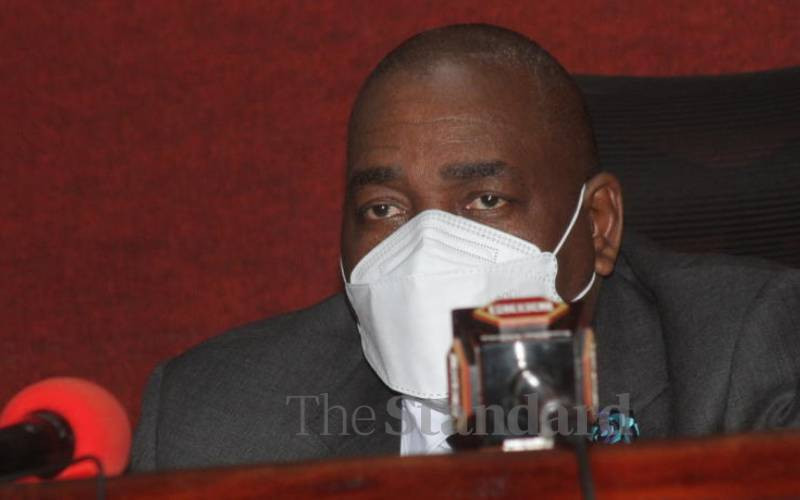
“Every time I come to court my children always ask me whether I have gone to pick their father,” he narrated.
Mbijiwe and Mboke’s stories evoke the dark memories of lawyer Willie Kimani, his client Josephat Mwenda and their driver Joseph Muiruri.
The International Justice Mission (IJM) lawyer, the driver and client were last seen while leaving Mavoko Law Court.
It would later emerge that were abducted by police officers who used an informer in June 2016 to trail and later execute them.
Police officer Frederick Leliman who was the mastermind was handed a death sentence while his colleagues Stephen Cheburet and Sylvia Wanjiku, and, Peter Ngugi who was an informant, were handed prison sentences ranging from 20 to 30 years.
The cases of people going missing without a trace have always haunted the police even as lobby groups and activists link them to the cases.
Stay informed. Subscribe to our newsletter
Police have always denied responsibility but have little to no success in solving these cases.
A report from Missing Voices shows that Kenya recorded six cases of enforced disappearances in 2025 a sharp drop from the 55 cases recorded in 2024.
In 2023 the country recorded 10 cases of enforced disappearance, 22 cases in 2022 and 32 cases in 2021.
The cases paint the grim picture of a country that is unable to guarantee the safety of her citizens but also unable to provide their families with answers of how they went missing and under what circumstances.
For instance, in April 19, 2021, four friends met in Kitengela for drinks.
Benjamin Amache Imbai, 30, Elijah Obuong, 35, Brian Oduor, 36, and Jack Ochieng, 37, resided in different parts of Nairobi and arrived at the Enkare club at different times.

The four were then picked by masked men and bundled into waiting Prado vehicles that then drove to an unknown location.
Their vehicle a Toyota Mark X was found abandoned at a parking some 500 meters from the club where they were.
It would later emerge that the four were not at the club alone, there was a man and a woman who had dined with them but managed to escape the abductors trap.
The man is alleged to be the one who called the families of the four men and informed them of the events that transpired.
The then Inspector General of Police Hillary Mutyambai said that he had directed the Directorate of Criminal Investigations (DCI) to probe the matter within a month and give him a report.
“This morning, I directed the DCI homicide team to investigate this matter in order to get to the bottom of it. The team has already begun its work and will be expected to report to the IG on the entire matter within a month,” he said at the time.
This report was never made public.
The body of Obuong was discovered at the Mathioya river in Murang’a County by sand harvesters and taken to the county’s referral hospital.
A post mortem done at the facility showed that he died as a result of strangulation.
Imbai’s body was discovered in a thicket in in Kieni Forest in Kiambu County.
The discovery was made by a plumber who was repairing local water pipes, he notified the authorities who removed it to the General Kago funeral home in Thika town.
A post mortem at morgue showed that Imbai died as a result if suffocation and strangulation, which also showed that he struggled with his killers as he his body had bruises all over.
The bodies of Oduor and Ochieng have never been found to date.
Reports later emerged that the four men were linked to criminal activities in Nairobi, Mombasa and Kisumu counties.
They were allegedly in a gang led by Oduor, who at the time of abduction had skipped a Sh500,000 cash bail in Mombasa over a case relating to the theft of Sh1.5 million, alleged to have been stolen from a vehicle.
In the same year in July 9, Police Officer Joseph Otieno who was attached to the General Service Unit (GSU) headquarters and in charge of the armoury went missing. He is believed to have been abducted.
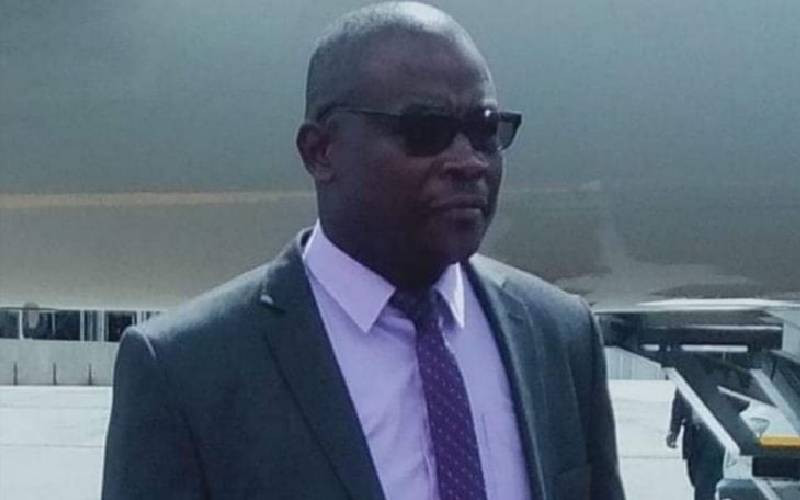
His family told The Standard that on the day he went missing, he was on his way to a supermarket to do some shopping before leaving for his rural home in Kisumu County.
The 36-year-old corporal had hired a Toyota Fielder from a dealership in Nairobi City that he intended to use for errands and the trip.
It is believed that his kidnappers trailed him as he left GSU headquarters for the supermarket that is less than 1 kilometre away in Ruaraka.
He was picked and the vehicle was found abandoned days later in Mwiki, Kasarani Constituency and he has never been found to date.
Around the same time, it emerged that an officer attached to the Embakasi Police Training college had been killed in mysterious circumstances after his vehicle was sprayed with bullets while another officer was arrested in Kayole.
Some detectives at DCI headquarters said that killings and disappearances were linked to the illegal sale of bullets, drawing a collusion between officers in charge of the armoury and those in charge of police training.
The final destination of the bullets was counties in the Rift Valley region where banditry was thriving at the time.
The following year in July 2022 two Indian nationals and their Kenyan taxi driver were allegedly abducted along Mombasa road as they made their way back to their hotel for the night.

Zaid Sami Kidwai and Zulfiqar Ahmad Khan had been in Kenya as part of President William Ruto’s IT team in preparation for the general elections and they picked Kenyan Nicodemus Mwania to drive them around.
Their disappearance prompted questions from the Indian government and after Ruto was elected into office, the Internal Affairs Unit investigated the case under the stewardship of current DCI director Mohamed Amin.
As a result, 13 members of the now defunct Special Service Unit of the DCI were arrested alongside a member of the Kenya Wildlife Service and another from the National Intelligence Service.
The 15 men were arraigned in court in connection with the disappearance but the case aborted on Monday this week after the Director of Public Prosecution (DPP) entered a Nolle Prosequi, meaning he had abandoned the murder trial at the Kiambu High Court.
He had also dropped the enforced disappearance case before the Kahawa Magistrates Court.
In a statement issued later in the day, DPP Renson Ingonga explaining his decision said that his office would continue with the abduction charges at the Kahawa Law Courts.
The Law Society of Kenya (LSK) on the other hand in its report dubbed in search of answers indicated that failure to actualise laws, including the National Coroners Services Act, 2017.
LSK also suggested that acquiring body-worn cameras for officers during operations should be on government’s agenda as evidence shows that when officers wear cameras, use-of-force incidents decrease.
“Over the years, Kenya has witnessed an alarming rise in cases of enforced disappearances, particularly in the context of law enforcement operations, counterterrorism measures, and public demonstrations.
“These disappearances often involve arbitrary arrests, incommunicado detentions, and extrajudicial actions allegedly carried out by security agencies, raising serious concerns about state accountability and the protection of fundamental rights.
“The recent 2024 Finance Bill protests have further exposed the extent of human rights violations perpetrated by state actors. Reports indicate widespread abuses, including excessive use of force by the police, mass arrests, enforced disappearances,” the report reads in part.
In 2023, a Kenyan Zakariya Kamala Abasheikh alias Sakaria Kamal was abducted by unknown people in Mombasa County.
Kamal was born in Ganjoni, Mombasa and schooled in the county before moving to China where he studied engineering and Computer Science.
When he came back into the country he ran a logistics business where he would ship good from China for sale in Kenya and was running a cosmetics shop in Mombasa’s CBD.

He was arrested and arraigned at the Shanzu Law Courts where he was charged with shipping arms to Somalia for use by the Al Shabaab terror group.
He was freed on a Sh1 million bond and was reporting to the Anti-Terrorism Police Unit weekly before his abduction that was captured on camera where he was bundled into a Toyota Landcruiser and driven away.
After going missing for days, Somalia’s intelligence agency NISA announced that Kamal had been arrested in the country while allegedly trying to hide in areas under the terror group’s control.
At the height of the 2024 Gen Z demonstrations in Kenya, several people were reported missing where some were found and others have never been found to date.
Among those who went missing are the Mlolongo four, Kalani Muema, Steve Kavingo Mbisi, Martin Mwau and Justus Mutumwa in December 2024.
Their cases sparked national outrage as they were not linked to any crimes or demonstrations according to their families.
Mbisi was abducted from his home as he took a shower by masked men according to his wife and he was bundled into a waiting car that drove away.
The three others were abducted along Eastern Bypass while on a motorcycle while on their way to Kangundo.
The bodies Mutumwa and Mwau were discovered at the Nairobi Funeral Home after they were brought to the facility by police from the Ruai Police Station, while the bodies of Mbisi and Muema have never been found to date.
In December 2024 five young men were abducted from different parts of the country.
Billy Mwangi was picked from Embu, Peter Muteti (Nairobi), Bernard Kavuli (Ngong), Gideon Kibet alias Kibet Bull (Nairobi) and Rony Kiplang’at (Kiambu).
The five went missing for days and this led to the filing of habeas corpus applications in court seeking to have police produce them.
They were eventually freed by their captors and dumped in different parts of the country on January 5, 2025, with activists and critics pointing fingers at the Kenya Kwanza government.
A Parliamentary report indicated that Kenya has not implemented the International Convention for the Protection of All Persons from Enforced Disappearance, despite constant push for its realization from human rights groups and Members of Parliament.
On the other hand, Missing Voices, which is a coalition of civil society organizations working to end extrajudicial killings and enforced disappearances asserted that the growing number of persons vanishing in the hands of law enforcement agencies required structural reforms, including criminalizing enforced disappearance.
The group noted that the void in the law had left victims with pain while those involved went away with lighter cases such as abduction.

IJM Kenya country director Vincent Chahale said that there was a need to implement the Victims Protection Act, 2024 by appointing the board.
“One of the primary reasons for prioritizing VPB operationalization is to ensure the effective delivery of comprehensive victim support services. The Act envisions a system where victims receive assistance across the entire continuum of care from pre-trial to post-trial stages, including case management, psychosocial support, and access to reparations.”
“Currently, gaps in coordination and service delivery result in fragmented support, leaving many victims without the assistance they require. A functional VPB would streamline these services, eliminate duplication, and provide a unified framework for addressing the diverse and evolving needs of victims, including trauma-informed care and restorative justice approaches,” said Chahale.
Subscribe to our newsletter and stay updated on the latest developments and special offers!


 Prefer the Standard on Google






 join
join