×

The Standard e-Paper
Kenya’s Boldest Voice
 The Standard Group Plc is a
multi-media organization with investments in media platforms spanning newspaper
print operations, television, radio broadcasting, digital and online services. The
Standard Group is recognized as a leading multi-media house in Kenya with a key
influence in matters of national and international interest.
The Standard Group Plc is a
multi-media organization with investments in media platforms spanning newspaper
print operations, television, radio broadcasting, digital and online services. The
Standard Group is recognized as a leading multi-media house in Kenya with a key
influence in matters of national and international interest.
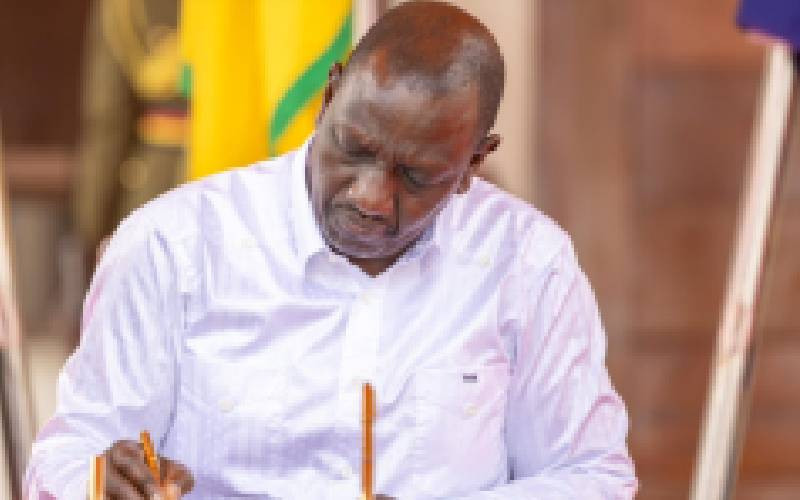
The "one-term" campaign against President William Ruto represents an unprecedented phenomenon in Kenya's political evolution. Understanding this development requires examining not only its implications for our history but also the systematic manner in which this rhetoric has been constructed and embedded within the national consciousness.
Kenya's presidential history reflects distinct leadership epochs. Jomo Kenyatta served for 15 years until his death in 1978. Subsequently, Daniel arap Moi governed for 24 years. The two-term limit was introduced in 1992 with the return of multiparty democracy. Mwai Kibaki completed two terms (2002-2013), as did Uhuru Kenyatta (2013-2022). Despite varying strengths and limitations, all served a decade to fulfil their mandate. Against this backdrop, the premature dismissal of President Ruto appears anomalous and inconsistent with established practice.
Subscribe to our newsletter and stay updated on the latest developments and special offers!

 Prefer the Standard on Google






 join
join