×

The Standard e-Paper
Stay Informed, Even Offline
 The Standard Group Plc is a
multi-media organization with investments in media platforms spanning newspaper
print operations, television, radio broadcasting, digital and online services. The
Standard Group is recognized as a leading multi-media house in Kenya with a key
influence in matters of national and international interest.
The Standard Group Plc is a
multi-media organization with investments in media platforms spanning newspaper
print operations, television, radio broadcasting, digital and online services. The
Standard Group is recognized as a leading multi-media house in Kenya with a key
influence in matters of national and international interest.

Audio By Vocalize
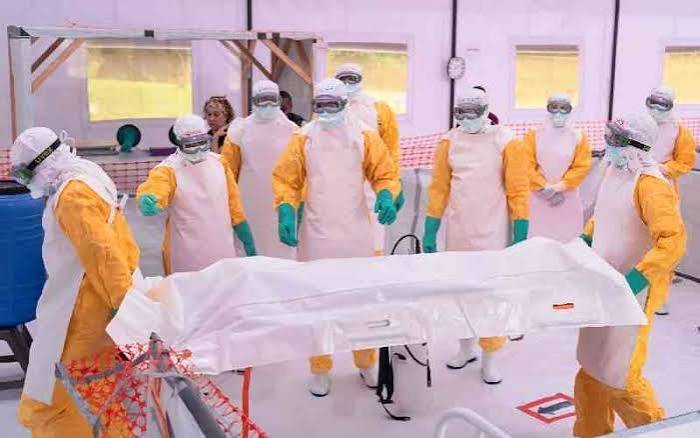
The Ebola outbreak in the Democratic Republic of Congo may have been underway for weeks before health authorities knew they were dealing with the virus, raising fresh questions about how much transmission can occur before an outbreak becomes visible. A study has revealed.
The possibility has emerged from epidemiological investigations into the current outbreak, which was formally declared on May 15 after laboratory confirmation in Ituri Province.
By then, however, investigators believe the virus may already have been circulating in communities.
If transmission began weeks before the outbreak was recognised, strengthening surveillance after confirmation will not be enough. Public-health systems must also become better at identifying unusual patterns before they develop into obvious outbreaks.
For Kenya, this is perhaps the most important lesson.
Kenya has raised its Ebola preparedness to nearly 90 per cent, with surveillance, laboratory capacity, infection prevention and control measures and health-worker training strengthened.
But preparedness is ultimately tested before a disease receives a name.
A patient arriving at a Kenyan health facility with fever, vomiting or diarrhoea may not immediately appear to have Ebola. The critical question is whether the health worker has the tools and information to recognise the possibility, ask about travel and exposure, and trigger testing before further contacts are exposed.
The DRC experience also shows why preparedness cannot be reduced to isolation centres and emergency stockpiles.
It depends on frontline workers recognising unusual illness, laboratories confirming cases quickly, surveillance teams finding contacts and communities trusting health authorities enough to report illness and cooperate with investigations.
The consequences of delayed detection can extend beyond those infected.
In the current outbreak, a nurse was among the earliest recognised casualties. Health workers can become exposed before the disease is identified, while families and communities can become part of transmission chains before public-health teams understand what is happening.
The humanitarian environment makes the task even harder.
Conflict and displacement in eastern DRC have complicated access to communities and health services, while the United Nations has called for additional resources and sustained humanitarian access to support the response.
At the same time, scientists are racing to find treatments for a virus for which far fewer medical countermeasures are available than for the Zaire species of Ebola.
The WHO-sponsored PARTNERS trial is evaluating remdesivir and the monoclonal antibody MBP134, including their use in combination, to determine whether they can help patients infected with Bundibugyo ebolavirus.
Prof Laurens Liesenborghs of the Institute of Tropical Medicine in Antwerp, one of the researchers involved in the trial, said the drugs had already produced encouraging results in animal studies.
“These two drugs actually have been proven to work against the Bundibugyo virus in animal models. They showed great efficacy, but now we need to test it in humans,” Liesenborghs said.
The speed of the research response is itself a significant change from the last major Ebola crisis.
During the 2014–2016 West Africa epidemic, clinical trials took more than a year to get under way. This time, researchers moved into clinical testing within weeks.
Prof Amanda Rojek, a University of Oxford researcher and international principal investigator of the PARTNERS trial, said: “If we look back at West Africa, where it took us over a year to start clinical trials, we're very proud of the team led by INRB that we've managed to achieve that in six weeks since the outbreak was first announced.”
But even rapid research cannot reverse infections that have already occurred.
That is why the most consequential finding from the DRC outbreak may ultimately be its timeline.
The May 15 declaration marked the moment the outbreak became visible to authorities. It did not necessarily mark the beginning of transmission.
Weeks may already have been lost.
The February funeral under investigation, the April death of the nurse, subsequent infections among healthcare workers and the eventual confirmation of Bundibugyo virus form part of a chronology that investigators are still piecing together.
For Kenya and other countries watching the outbreak from outside DRC, the lesson is straightforward.
The first confirmed case is not necessarily the first infection.
The first laboratory result is not necessarily the beginning.
And an official outbreak declaration can come only after a virus has already been moving through people.
The real test of preparedness, therefore, is not how quickly a country responds after Ebola is confirmed.
It is how quickly its health system recognises that something unusual is happening before the virus gets the chance to move ahead of it.





Subscribe to our newsletter and stay updated on the latest developments and special offers!