×

The Standard e-Paper
Home To Bold Columnists
 The Standard Group Plc is a
multi-media organization with investments in media platforms spanning newspaper
print operations, television, radio broadcasting, digital and online services. The
Standard Group is recognized as a leading multi-media house in Kenya with a key
influence in matters of national and international interest.
The Standard Group Plc is a
multi-media organization with investments in media platforms spanning newspaper
print operations, television, radio broadcasting, digital and online services. The
Standard Group is recognized as a leading multi-media house in Kenya with a key
influence in matters of national and international interest.

Audio By Vocalize
There was a time when the reason for visiting a shopping mall was straightforward: you had something to buy. It was primarily a place of transaction. You arrived, shopped and left.
That model is changing. Across Kenya and other markets, shopping malls are increasingly being challenged to answer a much bigger question: What reason does a consumer have to spend time here when they can buy almost anything from their phone? The answer is increasingly becoming experience.
Kenya's retail market remains resilient, but the numbers tell a more nuanced story. Cytonn's 2024 Kenya Retail Report put average retail occupancy at 81 per cent, up from 79.4 per cent in 2023.
At the same time, the report estimated an oversupply of about 3.6 million square feet of retail space in the Nairobi Metropolitan Area and 1.9 million square feet across the wider Kenyan market.
That creates an interesting contradiction. Retail space continues to attract tenants and consumers, yet malls cannot assume that simply having more shops will guarantee footfall.
The competition is no longer just between malls. It is between the physical shopping experience and everything else competing for a consumer's time.
According to DataReportal’s Digital 2026: Kenya report, Kenya had 23.4 million internet users in October 2025, representing an internet penetration rate of 40.5 per cent. The country also had 18.4 million social media user identities, equivalent to 31.8 per cent of the population.
Consumers are therefore increasingly discovering products online, and forming opinions online before they ever walk into a physical store. This does not mean physical retail is becoming irrelevant. It means the physical space has to offer something the phone cannot.
That something is increasingly human connection.
A book club, a fashion conversation, a wellness session, a children's activity, a live performance or a food experience may not look like traditional retail. But these experiences can give people a reason to come together physically.
They create what retail increasingly needs - dwell time, discovery and emotional connection.
Recent reporting on Nairobi's malls points to operators placing greater emphasis on visitor experience, dwell time and community engagement as the sector moves beyond a purely transactional model.
This is particularly important for younger consumers, who have grown up with digital convenience. For them, physical spaces have to earn their attention.
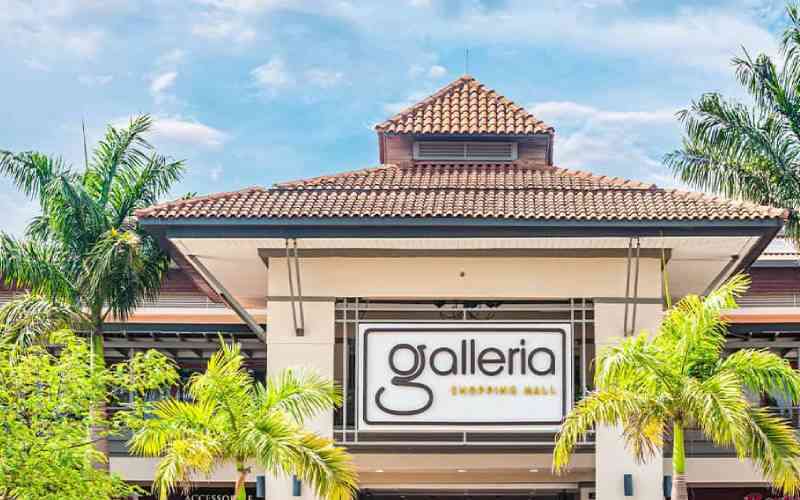
This is the thinking behind destinations such as Galleria Shopping Mall, where this shift is reflected in the evolution of the destination following its recent expansion.
The development brings together shopping, dining, entertainment and lifestyle experiences, creating more opportunities for visitors to spend time, connect and experience the mall differently.
Stay informed. Subscribe to our newsletter
But there is an important distinction here. Turning a mall into an "experience destination" does not mean filling the calendar with random events simply to generate footfall. That approach risks creating activity without meaning.
The stronger opportunity is for malls to become curators of community. This is where the idea of the mall as a social and cultural destination becomes particularly relevant to Kenya.
Our cities are growing and becoming increasingly digitally connected, yet people still need places to meet.
They need safe and accessible spaces where they can spend time with friends, discover something new and participate in experiences that feel relevant to their lives.
The opportunity for malls is therefore not simply to add more entertainment.
It is to understand what their communities care about and create spaces around those interests.
This also changes the relationship between a mall and its tenants. If a mall can bring people together around fashion, culture, wellness, food, entertainment or community, then retailers benefit from being part of a broader ecosystem rather than operating as isolated shops.
The mall becomes the platform. The tenants become part of the experience.
The bigger lesson for the industry, however, extends well beyond any one mall. The future of the shopping mall will not necessarily belong to the destination with the most shops. It may belong to the destination with the strongest sense of place.
A place where people know they can discover something, meet someone, participate rather than simply purchase and a place that becomes part of the rhythm of their lives.
Retail will remain at the heart of the mall. But retail alone may no longer be enough to make people choose to walk through its doors.
The mall of the future will increasingly function as a marketplace, entertainment venue, community space, cultural platform and social meeting point all at once.
The question for mall owners and operators is therefore no longer simply, "What can we sell here?", but rather, "What can people experience here that they cannot experience anywhere else?"
That may ultimately be the question that determines which physical retail destinations remain relevant in an increasingly digital world.
- The writer is the marketing manager, Galleria Shopping Mall
Subscribe to our newsletter and stay updated on the latest developments and special offers!


 Prefer the Standard on Google









 join
join