×

The Standard e-Paper
Stay Informed, Even Offline
 The Standard Group Plc is a
multi-media organization with investments in media platforms spanning newspaper
print operations, television, radio broadcasting, digital and online services. The
Standard Group is recognized as a leading multi-media house in Kenya with a key
influence in matters of national and international interest.
The Standard Group Plc is a
multi-media organization with investments in media platforms spanning newspaper
print operations, television, radio broadcasting, digital and online services. The
Standard Group is recognized as a leading multi-media house in Kenya with a key
influence in matters of national and international interest.

Audio By Vocalize
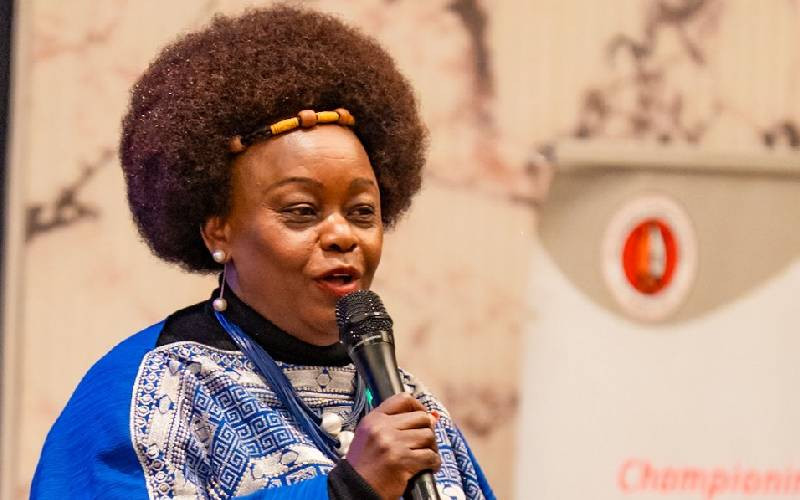
Women engineers have been challenged to step beyond technical excellence and actively pursue leadership and political positions to ensure their expertise shapes national development and public policy.
Speaking at the 2nd Women Engineers Summit Gala Dinner in Nakuru, National Assembly Minority Whip Millie Odhiambo said women professionals must reject the culture of seeking approval and instead confidently claim spaces that men have traditionally dominated.
Ms Odhiambo argued that while women have made remarkable progress in engineering, they remain underrepresented in positions where critical decisions are made.
"Women engineers are qualified. But we are not getting to those spaces. Why are we not getting those spaces? Because since we were little, we have been trained to be good girls," she said.
She urged women to break free from societal expectations that discourage them from speaking up or competing for leadership positions.
"We thrive on praise as women. It's not bad. But sometimes that is what is actually used to put us down," she noted.
The legislator said many women hold themselves back because they fear criticism, yet leadership demands confidence and the willingness to challenge established norms.
"I am just claiming my space, which the men have been sitting on for too long. As women, love yourself, number one. Because if I love myself, I have no business seeking approval from anyone," said Odhiambo.
Odhiambo challenged women engineers to move beyond boardrooms and technical careers into elective politics and public leadership, arguing that professional expertise should be reflected in the country's decision-making structures.
"Women engineers must be at the decision-making table. So just like the men, women engineers must also be elected. So join us in Parliament," she said.
She further offered to personally mentor women engineers interested in politics, encouraging them not to shy away from public leadership because of fear of criticism.
"If you need personal mentorship, please see me. Then we'll tell you what you need to do. It's nothing bad. Most of you just say, 'People will abuse us.'"
Outgoing Chairperson of the Institution of Engineers of Kenya (IEK) Women Engineers Committee, Eng Jennifer Gache, acknowledged the progress women have made in breaking barriers in engineering but noted that leadership at the highest levels remains elusive.
"Historically, it was said that women feared engineering and there's been some bias about it. But when you look at the ladies who are around this room, we can confidently say that women have already broken the glass ceiling and are proving that women can make it in the engineering field," she said.
Stay informed. Subscribe to our newsletter
Gache observed that women engineers today serve across government agencies, state corporations, international organisations and the private sector.
However, she pointed out that very few occupy chief executive positions in major engineering institutions.
"When you think about all these big organisations like KenGen, KETRACO, KURA and KeNHA, you will not find a woman CEO there. So what is it?" She posed.
She said technical competence alone is not enough to advance into executive leadership, urging women engineers to deliberately develop communication, commercial and leadership skills.
"Your technical skills will make your way into the room. But your technical skills will not keep you there and your technical skills will not make you rise to the top. There are some other additional skills that you need to develop," she said.
Gache also backed calls for more women engineers to venture into politics, saying greater representation in governance would create more opportunities for women professionals to influence policy and national development.
"We are ready. But we still need to knock on the right doors and still do a few things that can take us to that level," said Gache.
IEK Caretaker Committee member, Eng Muguru Wairimu underscored the importance of mentorship and collaboration in advancing women within the engineering profession.
She said experienced professionals have a responsibility to make the journey easier for younger women entering the sector.
"How do we make it easier for the young ladies so that they don't have to go through some of the things we've gone through?" She posed.
Wairimu attributed much of the progress made by women engineers to mentorship and solidarity, dismissing the notion that women do not support each other.
"One of the things that makes women work is we mentor each other. We know how to work together. We're told we are the greatest enemies, but we are not," said Wairimu.
She welcomed the growing confidence among women leaders and encouraged engineers to embrace bold leadership without apology.
"We have made so many steps, and it is great to see how much we have achieved in 10 years. I look forward to us keeping on growing and making life easier for the women who are coming after us," Wairimu said.
The summit brought together women engineers from across Kenya to discuss leadership, mentorship, innovation and strategies for increasing female representation in engineering, governance and other decision-making spaces.
Subscribe to our newsletter and stay updated on the latest developments and special offers!

 Prefer the Standard on Google








 join
join