×

The Standard e-Paper
Home To Bold Columnists
 The Standard Group Plc is a
multi-media organization with investments in media platforms spanning newspaper
print operations, television, radio broadcasting, digital and online services. The
Standard Group is recognized as a leading multi-media house in Kenya with a key
influence in matters of national and international interest.
The Standard Group Plc is a
multi-media organization with investments in media platforms spanning newspaper
print operations, television, radio broadcasting, digital and online services. The
Standard Group is recognized as a leading multi-media house in Kenya with a key
influence in matters of national and international interest.

Audio By Vocalize
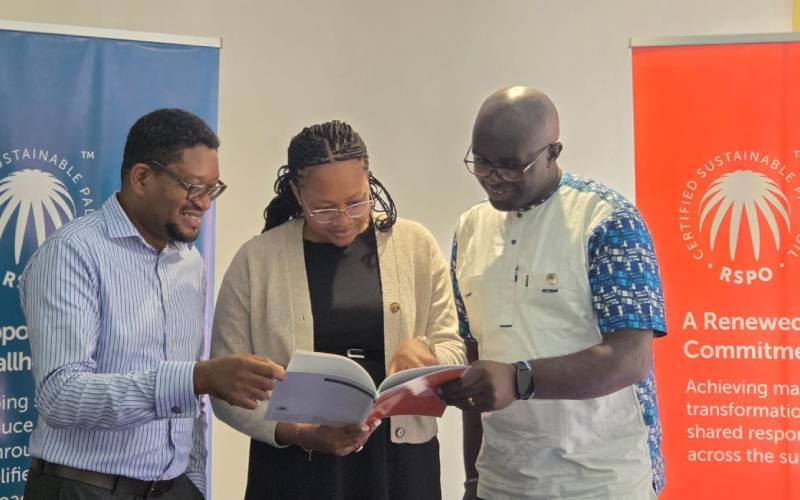
African countries are rapidly expanding palm oil production to cut costly imports, but the Roundtable on Sustainable Palm Oil (RSPO) warns the growth could come at a high environmental and social cost.
Speaking at the RSPO Africa Supply Chain Forum 2026 in Nairobi, RSPO Head of Africa Market Transformation Elikplim Agbitor said Africa was emerging as a new frontier for palm oil production because of favourable climate conditions, available arable land and a growing labour force.
"If we do not bear sustainability at every step of the development process, we may be able to meet regional demand for palm oil in the future, but at what cost to the planet and people?" said Agbitor.
His warning comes as several African countries expand oil palm cultivation to reduce dependence on imports and meet rising demand, raising comparisons with Southeast Asia, where decades of rapid expansion have been linked to widespread deforestation.
A study published in the journal PLOS One found Indonesia's forest cover declined by 11 per cent between 2001 and 2019, with nearly one-third of that loss eventually converted to oil palm plantations.
Africa's palm oil industry is also gathering pace. Côte d'Ivoire has nearly 400,000 hectares under oil palm cultivation, according to a 2026 report by the United States Department of Agriculture (USDA). A separate 2026 report by Coherent Market Insights projects Africa to record the fastest growth in the global palm oil market this year.
Agbitor urged governments, investors, producers and industry stakeholders to keep sustainability at the centre of the sector's expansion, saying responsible production creates long-term value while protecting communities and ecosystems.
Founded in 2004, the RSPO is a global non-profit organisation that develops sustainability standards for the palm oil industry. Its members include growers, processors, traders, manufacturers, retailers, financial institutions and non-governmental organisations.
Agbitor said organisations join the RSPO voluntarily but must comply with its standards once they commit to certification.
He said the standards focus on protecting workers and local communities, preventing deforestation, conserving biodiversity and promoting ethical business practices that support long-term growth.
Agbitor said companies that adopt sustainable production practices could strengthen supply chains, improve access to finance and attract investment.
He also said smallholder farmers produce about 70 per cent of Africa's palm oil, making them central to the industry's future.
To help them meet certification requirements, the RSPO introduced an Independent Smallholder Standard that simplifies the process and lowers compliance costs.
Through its Smallholder Support Fund, the organisation provides financial and technical support to help farmers form legally recognised groups, establish governance systems and complete certification audits.
The fund has supported projects in Ghana, Nigeria, Côte d'Ivoire, Tanzania and Sierra Leone, investing more than US$800,000 (Sh103 million) across six projects.
Stay informed. Subscribe to our newsletter
According to Agbitor, the first certified independent smallholder group in Africa, comprising more than 5,000 farmers in Sierra Leone, received support through the programme and remains the world's largest RSPO-certified independent smallholder group.
Agbitor said the investments show partnerships and targeted support will help ensure smallholder farmers benefit as Africa's palm oil industry expands without repeating the environmental mistakes seen elsewhere.
Subscribe to our newsletter and stay updated on the latest developments and special offers!


 Prefer the Standard on Google









 join
join