×

The Standard e-Paper
Smart Minds Choose Us
 The Standard Group Plc is a
multi-media organization with investments in media platforms spanning newspaper
print operations, television, radio broadcasting, digital and online services. The
Standard Group is recognized as a leading multi-media house in Kenya with a key
influence in matters of national and international interest.
The Standard Group Plc is a
multi-media organization with investments in media platforms spanning newspaper
print operations, television, radio broadcasting, digital and online services. The
Standard Group is recognized as a leading multi-media house in Kenya with a key
influence in matters of national and international interest.

Audio By Vocalize
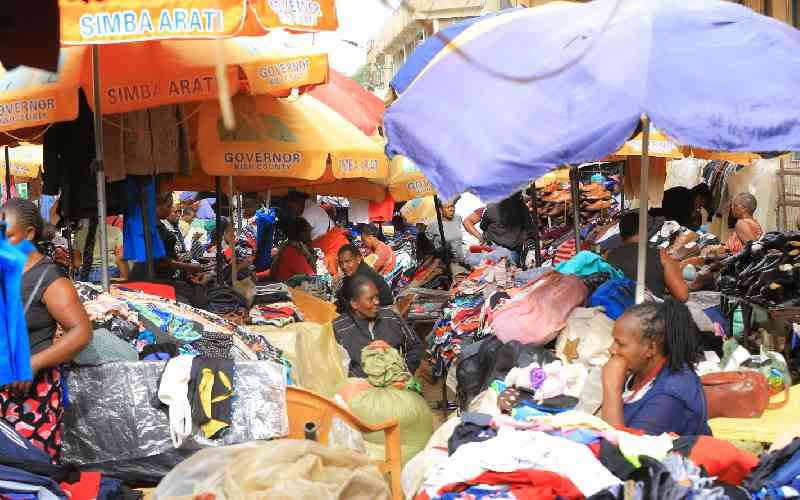
Traders display their wares in Kisii town. [Sammy Omingo, Standard]
Kenya’s micro, small, and medium enterprises (MSMEs) are facing a deep financing squeeze that experts warn could slow job creation and economic expansion if left unresolved.
Despite being the backbone of local commerce and a key driver of employment, small businesses continue to struggle with limited access to formal credit.
Findings from the revised MSME policy review process indicate that the sector requires approximately Sh4 trillion in market loans to sustain operations and support growth.
However, commercial banks currently extend only about Sh700 billion in credit to the segment, leaving a financing shortfall of Sh3.3 trillion.
“Traditional banking models rely heavily on physical collateral and formal records, an exclusionary framework that eliminates a vast majority of viable Kenyan enterprises,” said Faulu Microfinance Bank Chief Executive Officer Julius Ouma.
Ouma said that financial institutions must shift towards more inclusive lending models that reflect actual business performance rather than asset ownership.
“To bridge this operational divide, we must adopt alternative credit models that assess cash flows, transaction patterns, and consumer behavior instead of fixed assets,” he said.
Faulu Microfinance Bank CEO noted that MSMEs are not a homogeenous group, and credit needs differ significantly across sectors and business types.
He explained that retail traders often require short-term financing to restock inventory quickly, while agricultural enterprises depend on structured loans aligned with seasonal cycles. Logistics firms, on the other hand, need asset-based financing to expand transport capacity.
“Traditional lenders must therefore restructure their lending models to address systemic inefficiencies in how they service small businesses facing rising operating costs,” he said.
Ouma called for reduced loan approval timelines, warning that delays often cause entrepreneurs to miss time-sensitive market opportunities, particularly in fast-moving retail and agricultural value chains.
Beyond financing, he proposed an integrated support approach where lenders pair credit access with digital financial tools and business education, including tax planning and debt management skills.
Such measures, he said, would help MSMEs formalise operations and improve their long-term creditworthiness.
Stay informed. Subscribe to our newsletter
Ouma further said that combining flexible lending systems with mobile-based financial infrastructure could help transition Kenyan enterprises from subsistence-level operations into scalable, sustainable businesses capable of contributing more significantly to economic growth.
Subscribe to our newsletter and stay updated on the latest developments and special offers!

 Prefer the Standard on Google






 join
join