×

The Standard e-Paper
Home To Bold Columnists
 The Standard Group Plc is a
multi-media organization with investments in media platforms spanning newspaper
print operations, television, radio broadcasting, digital and online services. The
Standard Group is recognized as a leading multi-media house in Kenya with a key
influence in matters of national and international interest.
The Standard Group Plc is a
multi-media organization with investments in media platforms spanning newspaper
print operations, television, radio broadcasting, digital and online services. The
Standard Group is recognized as a leading multi-media house in Kenya with a key
influence in matters of national and international interest.

Audio By Vocalize
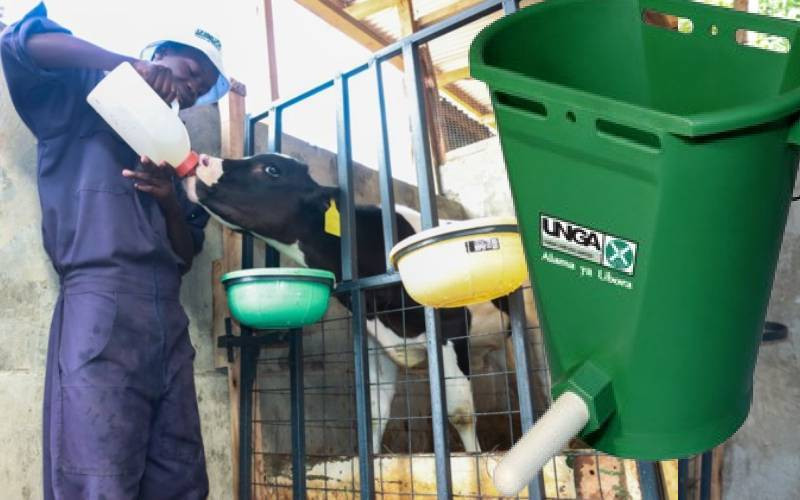
Note: This article is a continuation of the last edition on early calf nutrition and management
This is an option that is healthy and of a more reliable composition compared to cow’s milk. Milk replacer can be introduced to calves as early as 3 days old after the colostrum period.
Milk replacers are packaged and sold as powder; hence, they need to be mixed with warm water 45°C mixing temperature. Here is an example of how to mix Afya Bora calf milk replacer;
One of the challenges of milk replacer is incorrect preparation.
Table 3. Composition of calf milk replacer versus cow milk (per Litre)
|
Nutrient |
Milk replacer (125g/L) |
Whole milk (Holstein) |
|
Dry matter % |
12.5% |
12-13% |
|
Crude protein |
25-30g |
30-34g Stay informed. Subscribe to our newsletter |
|
Fat (g/L) |
20-25g |
35-40g |
|
Lactose (g/L) |
45-55g |
45-50g |
|
Energy (MJ/L) |
2.5-2.8MJ |
2.8-3.2MJ |
|
Vitamins (A, D, E) |
Fortified (consistent levels) |
Variable |
|
Minerals (Ca, P) |
Balanced & consistent |
Variable |
Source: Sprayfo; Trouw Nutrition
Note that:
Practical insights:
Fodder introduction to calves
At about 1–2 weeks old:
Begin offering small amounts of soft high-quality fodder alongside calf starter concentrate. This helps stimulate rumen development and movement. A good starter fodder includes:
Avoid coarse, mature, ‘stemy’ fodder; that is an indication of an overgrown stage.
Quality fodder/variety
Fodder quality means how nutritious, palatable and digestible, and how it supports body maintenance, growth, milk production, reproduction, and health.
Main indicators of good fodder quality
Mineral supplementation
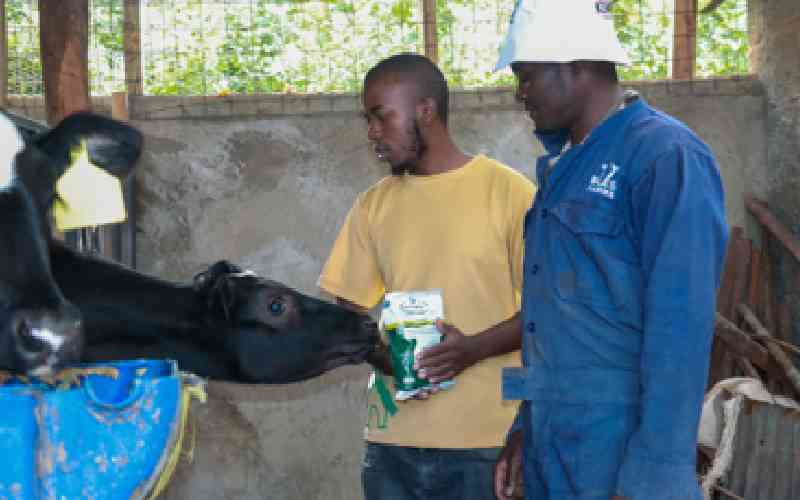
Minerals support strong bone development, healthy growth, and a strong immune system in growing calves. A balanced mineral supplement provides essential nutrients that promote feed efficiency, vitality, and overall calf performance. Consistent mineral intake helps build a healthy foundation for future productivity and lifetime performance. Aim to reach 50gm/calf/day by the weaning stage; a gradual increment can start from the second week of life.
Drinking water
Water is often overlooked, yet it is essential for calf growth and development. Calves should have unrestricted (ad libitum) access to clean, fresh water from the first week of life. Adequate water intake supports optimal growth, with consumption increasing as dry feed intake rises. Water is also vital for feed digestion, rumen fermentation and development, nutrient utilisation, and body temperature regulation.
Calf comfort
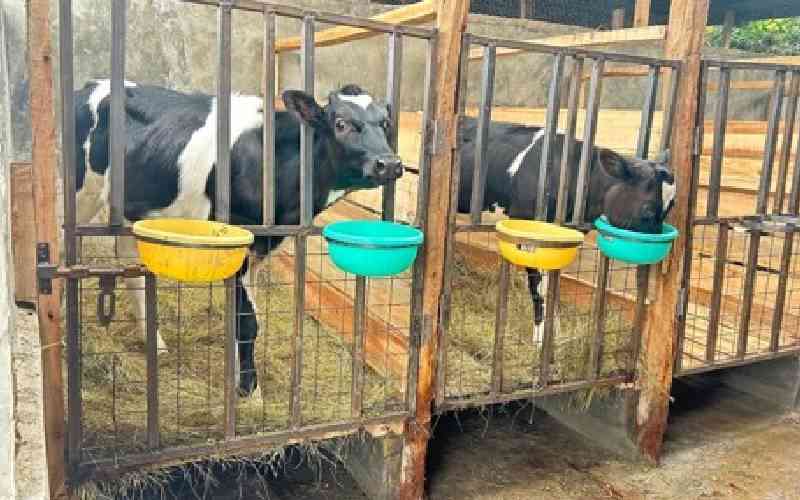
Comfort directly affects immunity, growth, and survival. Stress-free calves grow faster and are less prone to disease. Some of the key elements:
Calf pen
Proper housing ensures hygiene and reduces the spread of disease. The calves should be able to see and smell each other, but in individual housing, not touch each other, to support social interaction while limiting the spread of diseases. In addition, the calf pen should have good drainage; if possible, a raised floor with a slatted design, easy to clean, and adequate airflow without draught. Recommended pen space is as follows;
Growth management
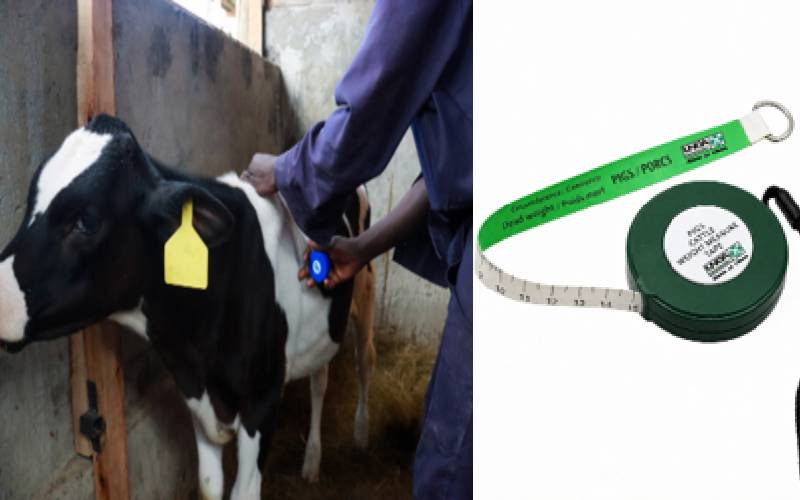
Monitoring growth ensures calves meet the target of doubling their birth weight at weaning as early as 45-60 days or triple the birth weight when weaning is done at 3 months (90-100 days). This can be achieved if the calf grows at a healthy growth rate ranging from 0.7 kg/day (weaning at 60 days) or 0.7-0.8 kg/day (weaning at 90-100 days) depending on breed type.
Weighing using a weighing band is a simple, cost-effective method that requires one to place the band around the heart girth. Weight measurements are taken bi-weekly or monthly and recorded for monitoring performance and decision-making.
Other indicators of good growth and healthy calves are bright eyes, ear play, an active calf on approach, smooth and shiny hair coat and consistent feed intake.
Vaccination
Vaccination programs vary by region but are essential for disease prevention. Work with a veterinarian to design a farm-specific schedule. Common vaccines include:
Prevention of Common Calf Diseases in Kenya
Ensure calves receive enough high-quality colostrum within the first 2 hours after birth. Maintain clean (disinfect) feeding equipment, correct feeding milk temperature, right amounts, provide clean water, avoid sudden feed changes, and keep calf pens dry and clean. Isolate sick calves to reduce disease spread.
Provide proper ventilation (note: excessive gases from faeces and urine can irritate lung tissue) without draught, dry bedding, and protection from heat, cold and rain. Avoid overcrowding and minimise stress during weaning or handling. Adequate colostrum intake and good nutrition help strengthen immunity against respiratory infections.
Dip the umbilical cord up to the navel immediately after birth using an iodine solution and repeat within the first 24 hours. Maintain clean calving areas and dry bedding to prevent bacterial infection through the umbilical cord. Proper hygiene during and after calving is essential
Deworming
Internal parasites reduce growth and feed efficiency. Start deworming at 8-12 weeks of age and repeat every 2–3 months depending on risk. Signs of infestation include poor growth, rough coat, diarrhoea, etc.
Disbudding
Disbudding prevents horn growth and reduces injuries at later life in the herd, safer handling for the farmer and family members, and easier housing management.
There are two methods of disbudding by using a hot iron or a chemical method. In both cases, it is advisable to use an anaesthetic injection. This activity needs to be done around 2–6 weeks after birth when the first horn growth can be felt and visible.
Conclusion
Early calf nutrition and management play a critical role in determining the future productivity, fertility, health, and profitability of dairy animals. Investing in proper calf rearing practices such as timely colostrum feeding, balanced nutrition, clean housing, disease prevention, and regular growth monitoring builds the foundation for a healthier, stronger, and more productive dairy herd.
Good calf management not only reduces mortality and treatment costs, but also improves growth rates, feed efficiency, and, as mentioned before, future milk production potential. Well-managed calves in the early stages of life are more likely to reach breeding weight at an early age (60% of mature weight), calve earlier, and perform better throughout their productive life.
After weaning, proper heifer management should continue through adequate feeding (quality feeds and forage), mineral supplementation, disease control, and growth monitoring to ensure the heifers reach the recommended breeding weight and age at first calving. Poor management during young stock rearing can delay maturity and reduce lifetime productivity.
Ultimately, successful dairy farming begins with raising healthy calves. Every investment made during the calf, yearling and heifer stages contributes directly to the long-term sustainability, profitability, and genetic progress of the dairy enterprise.
Subscribe to our newsletter and stay updated on the latest developments and special offers!


 Prefer the Standard on Google









 join
join