×

The Standard e-Paper
Home To Bold Columnists
 The Standard Group Plc is a
multi-media organization with investments in media platforms spanning newspaper
print operations, television, radio broadcasting, digital and online services. The
Standard Group is recognized as a leading multi-media house in Kenya with a key
influence in matters of national and international interest.
The Standard Group Plc is a
multi-media organization with investments in media platforms spanning newspaper
print operations, television, radio broadcasting, digital and online services. The
Standard Group is recognized as a leading multi-media house in Kenya with a key
influence in matters of national and international interest.

Audio By Vocalize
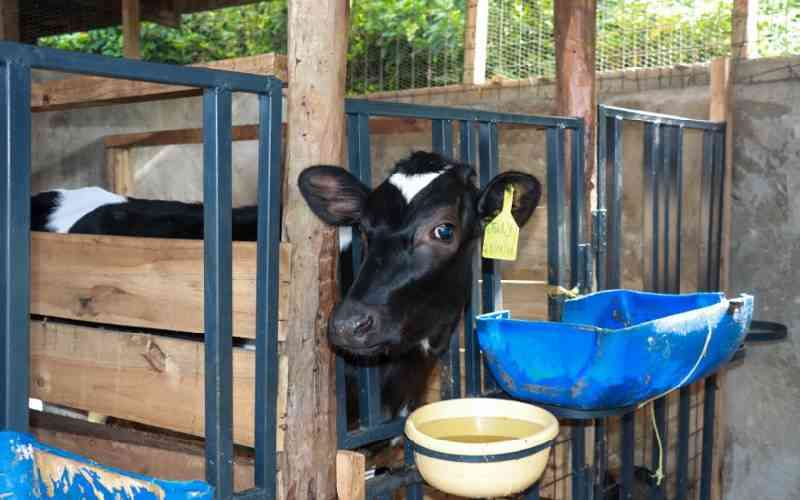
Successful calf rearing does not begin at birth; it begins with how well the pregnant cow is managed during the pregnancy, especially in the last trimester (7-9months). The condition of the dam before calving determines not only how easily she calves, but also the quality of colostrum she produces, the vigour of the newborn calf, and the calf’s ability to survive and grow.
Sire selection
Appropriate sire (bull) selection means choosing a bull with the right genetics and health traits so that calves inherit them; however, feeding and overall calf (and later cow) management determine how much of that genetic potential is expressed.
After birth
To achieve healthy, productive future dairy cows, proper calf-rearing practices must begin immediately after birth. The first important meal is colostrum.
Colostrum’s importance?
Composition of colostrum vs whole milk
|
Typical Analysis |
Colostrum |
Whole Milk |
|
Total solids |
23.9 |
12.9 |
|
Immunoglobulins/antibodies |
60 Stay informed. Subscribe to our newsletter |
0.9 |
|
Fat (%) |
6.7 |
4.0 |
|
Protein (%) |
14.0 |
3.2 |
|
Lactose (%) |
2.7 |
5.0 |
|
LgG1 (mg/ml) |
48 |
0.6 |
|
Minerals |
1.1 |
0.7 |
|
Vitamin A (ug/dl) |
295 |
34 |
The benefits of separating the calf and dam immediately after birth;
• Prevents strong dam-calf bonding in breeds with strong maternal instinct,
• Allows controlled feeding of colostrum and milk (hygiene, quantity and timing),
• Enables accurate milk production monitoring (yield, quality, any other problems),
• Reduces disease risk from suckling (dirt, manure, pathogens, and disease-causing organisms).
Why bottle-feeding or use a teat bucket
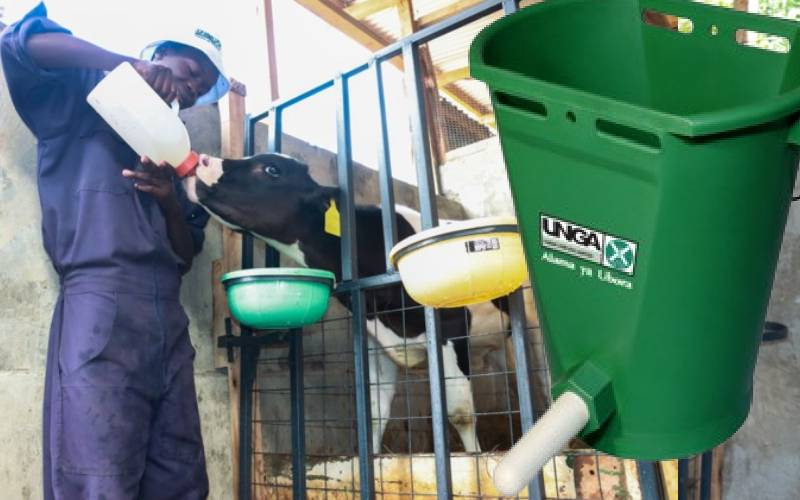
It is important to;
Whole milk feeding criteria
In the first two hours of life, feed the calf at least 2L and another 2L in 4 hours, which should add up to 10% of the birth weight. Feed the calf frequently, 3-4 feedings per day, depending on age shown in Table 2.
Introduction to feeds, roughage and water.
Starter concentrate feeds are designed to promote rumen development, transitioning the calf from a milk-based diet to one based solely on roughage/fodder and concentrates post-weaning. Providing a quality calf starter (pellets) from day one is essential to stimulate growth of the microbial population/flora in the rumen and development of the rumen papillae, which is vital for successful weaning.
Example calf feeding timeline. Remember, the volume of milk fed will increase with age as energy requirements increase.
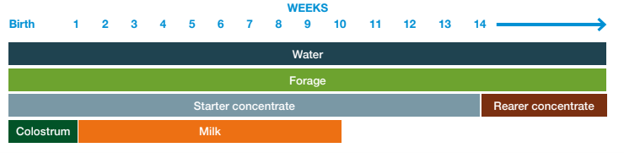
In the first few weeks of life, calves will only eat small amounts of concentrate feeds, but intake will increase steadily with age, so reduced milk supply. The earlier calves start to eat concentrate feeds, the stronger and healthier they will be at weaning.
Table below outlines the age of a calf versus milk and feed intake.
|
Age in weeks |
Calf starter (pellets) kg/day |
Milk/Milk replacer (Liters/day |
Milk feeding frequency |
|
0-2days |
0 |
6
|
1st feeding <2 hours after birth (2l/feeding) of colostrum 3-4 times a day |
|
7-10days |
Handful |
6 |
4 times a day (6 hrs. Interval, 2l/feeding) |
|
2 |
0.25-0.5 |
7 |
Thrice a day (8hrs. Intervals, 2l/feeding)
|
|
3 |
0.75 |
7 |
Thrice a day |
|
4 |
1.0 |
7 |
Thrice a day |
|
5-6 |
1.25 |
6 |
Thrice a day |
|
7-8 |
1.5 |
6 |
Twice a day (12hrs. intervals) |
|
9 |
1.75 |
4 |
Twice a day |
|
10 |
2.0 |
3 |
Twice a day |
|
11 |
2.0 |
2 |
Once a day |
|
12 |
2.5 |
1 |
Once a day |
Peris Chege- Technical Advisor, Unga Farmcare (E.A) Ltd
What is rumen development?
Rumen development is the process by which a calf’s digestive system matures from a simple, milk-digesting system at birth into a fully functional system capable of digesting fibrous feeds (roughages). This involves an increase in rumen size in volume, growth of the microbial population, and development of rumen papillae that assist in the absorption of nutrients.
The picture below shows the difference in feeding a calf with only milk and hay (fodder) against milk, hay and grain (starter concentrate), which has more rumen development.
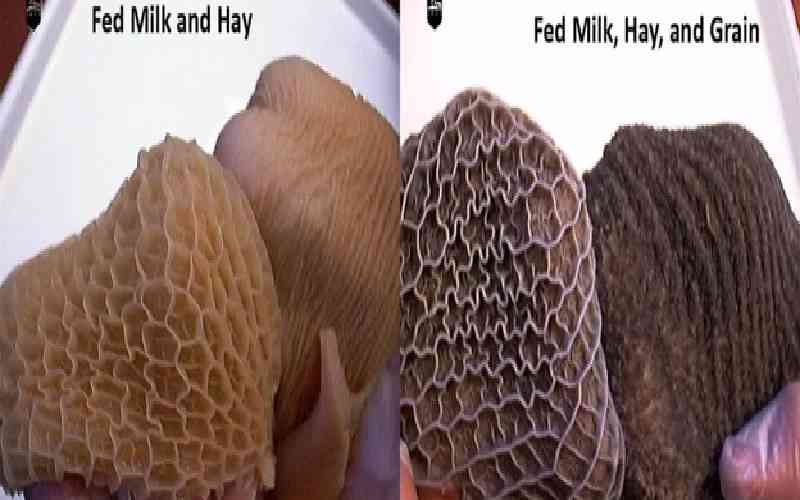
Rumen development starts as early as 2-3 weeks of life and continues into the 4th month of age. To aid rumen and rumen flora development, the introduction of starter concentrates and fibrous feeds is key at an early age (2-3 weeks).
Why early development matters:
Future implications:
Early introduction of calf starter, clean water, and small amounts of good quality roughages is essential to stimulate proper rumen development.
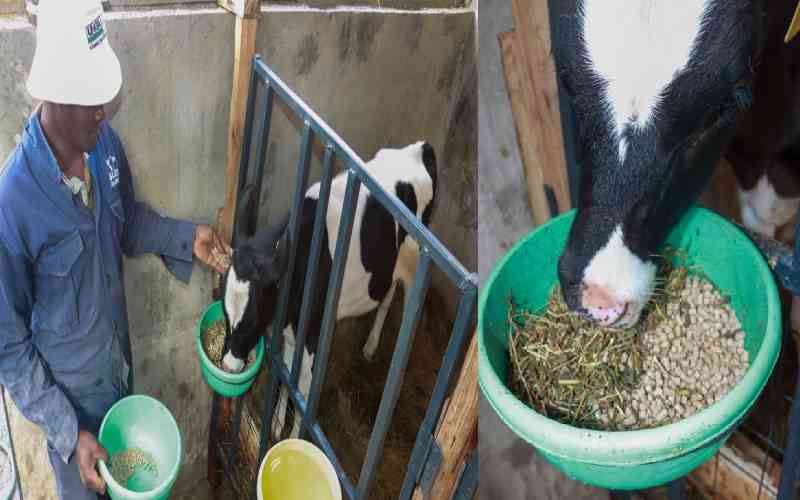
Pic 4: A farm manager feeding a calf with calf pellets, good quality hay (grass & legume) fodder and water.
Peris Chege- Technical Advisor
TO BE CONTINUED!!
Subscribe to our newsletter and stay updated on the latest developments and special offers!


 Prefer the Standard on Google









 join
join