×

The Standard e-Paper
Home To Bold Columnists
 The Standard Group Plc is a
multi-media organization with investments in media platforms spanning newspaper
print operations, television, radio broadcasting, digital and online services. The
Standard Group is recognized as a leading multi-media house in Kenya with a key
influence in matters of national and international interest.

Audio By Vocalize
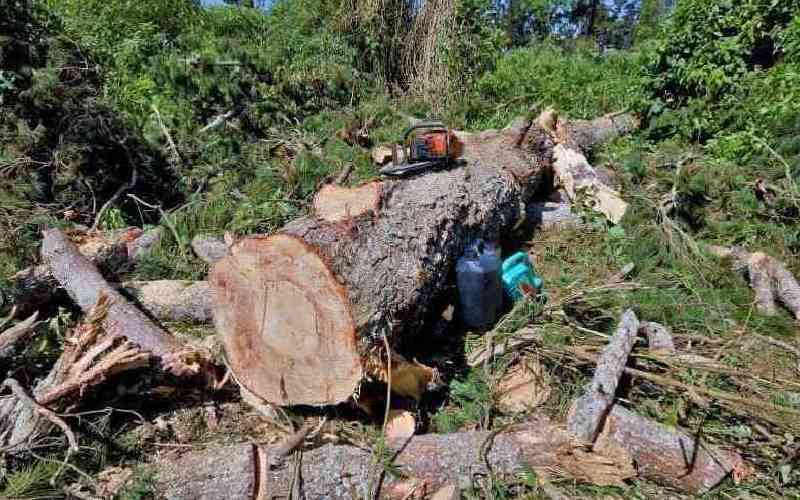
Illegal logging, wildlife trafficking, illicit mining and hazardous-waste dumping strip countries of natural wealth and leave the public to pay for the damage. In 2016, the United Nations Environment Programme and Interpol estimated that environmental crime was worth up to US$258 billion a year. In East Africa, where many communities depend on groundwater and fragile ecosystems, the consequences can outlast the people who profit from these crimes. A contaminated aquifer can remain unsafe for decades.
Somalia’s warning
On 20 March 1994, Italian journalist Ilaria Alpi and cameraman Miran Hrovatin were murdered in Mogadishu. Their reporting and subsequent investigations drew attention to allegations of arms trafficking linked to illicit hazardous-waste disposal. The motive for their killings and any connection to waste trafficking remain unresolved. After the 2004 Indian Ocean tsunami, reports that the waves had exposed suspected waste deposits renewed concern along Somalia’s coast. Establishing whether particular sites were contaminated requires independent sampling and public scrutiny of the results.
Northern Kenya’s unanswered questions
In northern Kenya, allegations of dumping hazardous and radioactive waste date back to the presidency of Daniel arap Moi, when oil exploration took place in parts of what are now Marsabit and Wajir counties. Residents of Kargi and other communities around the Chalbi Desert have since reported livestock deaths after animals drank borehole water and raised concerns about illness near abandoned exploration sites. The causes of the livestock deaths and any links between the reported illnesses and suspected contamination remain unresolved.
In 2024, former politician Cyrus Jirongo said he had seen documents concerning toxic-waste dumping and had raised the matter with President Moi. A June 2024 National Assembly statement acknowledged that oil exploration had taken place in the 1980s and early 1990s without environmental impact assessments, before the relevant legal framework was in place. In June 2025, a National Assembly committee took up historical dumping allegations involving Wajir, Garissa and Marsabit. Residents of Kargi and Kalacha also filed a civil case against BP in Kenya’s Environment and Land Court over alleged contamination linked to oil exploration by Amoco, which BP later acquired.
The groundwater threat
In arid and semi-arid areas of Somalia and northern Kenya, households, herders and farmers often depend on groundwater. Depending on their chemistry and the local geology, substances from buried or abandoned waste can leach through soil into aquifers, where they may persist for decades or longer.
Lead, cadmium and arsenic do not biodegrade. Persistent organic pollutants can resist breakdown and build up in food chains. The World Health Organization documents serious health risks from prolonged exposure to arsenic in drinking water, including cancer and other chronic illnesses.
For communities reliant on boreholes, removing waste or covering a dumping site does not by itself establish that groundwater is safe. Credible risk assessment, public records of contaminated land, restrictions on unsafe agriculture or water extraction and sustained monitoring are essential.
Contamination can also reach people through the food chain. Livestock can absorb toxic substances from contaminated pasture or water. Some of those substances can pass into milk or accumulate in meat and organs. Crops grown in contaminated soil or irrigated with polluted water may take up hazardous chemicals. Repeated consumption of affected milk, meat or produce can increase exposure to substances such as lead, cadmium, arsenic and certain persistent organic pollutants, with potential consequences for children’s development, kidney and nervous-system health and, for some contaminants, cancer risk.
The extent to which pollutants pass into milk or crops varies, and contaminated food may look normal. Testing of soil, water, animal feed, milk and food crops is therefore essential to establish actual exposure and protect communities whose livelihoods depend on livestock and farming.
What Italy learned
I thank the Italian government and the Carabinieri’s Center of Excellence for Environmental Protection in Sabaudia for training experts through the African Union and for taking us to several sites. Among them was Malagrotta, outside Rome, formerly one of Europe’s largest landfills. Seeing the work to secure and reclaim the site made clear what remediation entails. Plans include covering the landfill and collecting and treating the liquid that drains through the waste and managing the gas the waste produces. The work continues long after the last truck has left.
Decades of confronting the Mafia have given Italy distinctive experience in investigating the networks that profit from illegal waste disposal. Italian authorities have refined their methods by tracing the money, following shipments across borders and bringing specialist investigators, scientists and prosecutors together on cases. At Sabaudia, we saw how Italy passes on that experience.
Stay informed. Subscribe to our newsletter
The European Union’s Soil Monitoring and Resilience Directive provides a framework for identifying potentially contaminated sites and assessing their risks. Decisions about reopening land for cultivation or drawing water from it should depend on the contaminants present, how people might be exposed and how the land will be used. A site may look restored while the groundwater beneath it still requires monitoring.
Follow the money to find who profited. Follow the water to find who may still be paying.
What East Africa can build
East Africa has experience of its own. In 2019, a Tanzanian court convicted Yang Feng Glan, known as the “Ivory Queen”, and two accomplices in an ivory-trafficking case and sentenced each to 15 years in prison. The court heard testimony from people whose work brought them into contact with the network, helping establish how it moved tusks through the port of Dar es Salaam. The case shows what investigators can achieve when they build a case against the organisers of a trafficking operation.
The Intergovernmental Authority on Development (IGAD) and the East African Community (EAC) should work with the Italian government and the Carabinieri to build on the training already delivered through the African Union. Joint training and exchanges among investigators, prosecutors and environmental scientists would help member states adapt Italian practices to their own laws and conditions. The training should cover how to trace illicit proceeds, preserve evidence across borders and monitor contaminated sites through cleanup and beyond.
Regional governments should establish independent mechanisms to investigate credible reports of dumping, including historical allegations. In northern Kenya, that means publishing exploration and well-closure records, commissioning independent soil and groundwater tests and investigating reported patterns of illness. Across East Africa, governments can pool laboratory capacity and establish baseline measurements of groundwater quality around vulnerable communities and suspected disposal sites. Residents should help identify where to sample, receive results in accessible language and have a safe way to provide evidence.
Satellite imagery and drones can help investigators locate disturbed ground, while vessel tracking, customs records and financial intelligence can help them follow suspicious shipments and payments. Establishing what is buried and whether it has reached drinking water takes field sampling, accredited laboratories and a documented chain of custody. Governments should invest in the people who collect, interpret and present that evidence, and protect the journalists, witnesses and whistleblowers who bring cases to light.
The Basel and Bamako conventions provide a basis for cooperation on hazardous waste. Customs agencies, ports, environmental authorities and prosecutors should use them to trace illegal shipments back to the brokers, companies and financiers that arranged them. Where wrongdoing is established, the polluter-pays principle should cover containment, cleanup, health surveillance and long-term water monitoring. Communities need a voice in those decisions, especially when restrictions on boreholes, grazing or cultivation affect their livelihoods.
An illegal shipment can be arranged in days. A community may live with the consequences for generations. East Africa can act now by testing vulnerable water supplies, pursuing the people who organise and profit from environmental crime, and funding the work that keeps land and water safe after a case closes.
The writer is a governance and communication expert
Subscribe to our newsletter and stay updated on the latest developments and special offers!


 Prefer the Standard on Google