×

The Standard e-Paper
Fearless, Trusted News
 The Standard Group Plc is a
multi-media organization with investments in media platforms spanning newspaper
print operations, television, radio broadcasting, digital and online services. The
Standard Group is recognized as a leading multi-media house in Kenya with a key
influence in matters of national and international interest.

Audio By Vocalize
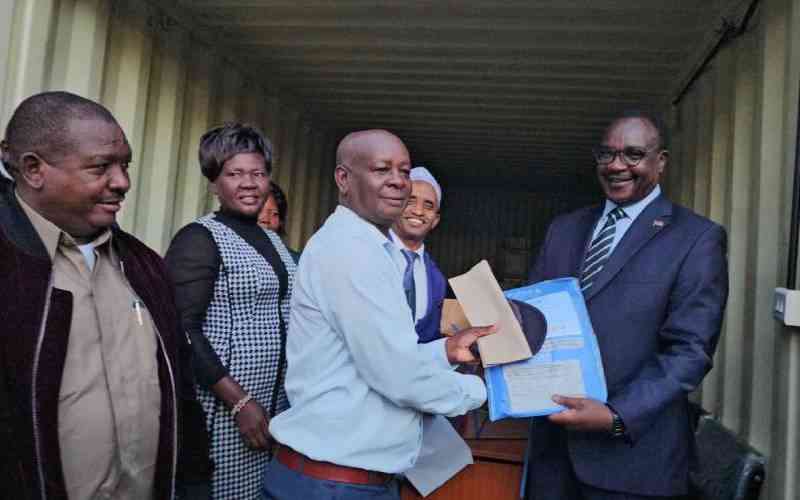
Education Cabinet Secretary Julius Ogamba hands over KPSEA and KJSEA papers to head teachers in Makindu Sub-County on October 26, 2026. [Stephen Nzioka, Standard]
A mother was arrested recently after locking her daughter inside their house, preventing her from sitting the Kenya Primary School Education Assessment, because her reference number had 666, which the mother believed to be satanic.
The incident attracted widespread outrage and condemnation. It also exposed a gap in how we respond to religious convictions that are unpopular or different from our own.
According to the head teacher, the mother had raised concerns about the reference number with the class teacher the previous day. When the child failed to report to school the following morning, the headteacher called the mother, pleading with her while explaining that the number was computer generated. The mother remained adamant, prompting the school to report the matter to the authorities who moved swiftly to rescue the child.
Kenya has good reason to take matters involving religious convictions seriously. The Shakahola tragedy is a painful reminder of how far harmful religious teachings can go. Recently, Paul Mackenzie was sentenced to 200 years in prison for the murder of 191 people, all but one of them children.
There is therefore no doubt that the police had good reason to intervene swiftly to protect the child’s welfare. The mother’s decision to deny her daughter to sit a national examination was wrong despite her convictions.
However, considering prior concerns had been raised, and that she was not opposed to her daughter sitting the exam, there was room to resolve the matter more amicably with consideration of her constitutional right to religious freedom.
The number 666 is identified in Revelation 13 as the number of the beast, and has long been associated in popular christian thought with the end times. Its meaning has been debated for centuries, with some Christians interpreting the number symbolically while others directly associating it with Satanism and the Antichrist.
Whether the mother’s interpretation of Revelation 13 is right or wrong remains a theological question. It is not for the public, the police or any other institution to determine which interpretations warrant constitutional protection.
Article 32 of the Constitution protects the freedom of conscience, thought, religion, belief, and opinion. These protections hold ground whether the beliefs are unfamiliar or considered irrational or backwards.
Kenyan institutions have confronted similar tensions before. In 2017, the Seventh-day Adventist (SDA) Church challenged restrictions that prevented its students from fully observing the Sabbath, and the court recognised the need for reasonable accommodation of their religious practices.
We have also made room for religious attire like hijabs for Muslims and turbans worn by Sikh and Akorinu communities.
Of course, observing the Sabbath, accommodating additional attire, and objecting to the number 666 are very different issues. But in principle, they all point to what happens when a sincerely held religious conviction collides with an institutional rule or administrative practice, and how it is possible to find mutual inclusive solutions.
In this case, perhaps a senior education official could have been brought to the conversation or someone the mother trusted could have helped her understand the consequences of her actions without dismissing her concerns.
And perhaps, this occurrence should prompt the Kenya National Examination Council (KNEC) to consider having alternative identifiers that can be issued when genuine concerns arise.
Stay informed. Subscribe to our newsletter
Faith shapes how millions of people understand the world. It informs how they raise their children. It influences their most important decisions. This reality should guide our institutions in handling tensions involving religious convictions.
The mother was wrong to lock her daughter in the house and no religious conviction can excuse that. She could have been held accountable for her actions, her daughter’s welfare looked after, all without dismissing the fact that her actions were informed by a religious conviction she deeply held.
Her mistake was not an excuse for us to abandon the very religious tolerance we expect others to show towards our own beliefs simply because her convictions were unconventional or unfamiliar to us.
After all, religious freedom means very little if it only protects those whose beliefs we find acceptable.
- Mr Kahora Ngari is an advertising professional with a focus on social behavior change communication
Subscribe to our newsletter and stay updated on the latest developments and special offers!


 Prefer the Standard on Google