×

The Standard e-Paper
Smart Minds Choose Us
 The Standard Group Plc is a
multi-media organization with investments in media platforms spanning newspaper
print operations, television, radio broadcasting, digital and online services. The
Standard Group is recognized as a leading multi-media house in Kenya with a key
influence in matters of national and international interest.
The Standard Group Plc is a
multi-media organization with investments in media platforms spanning newspaper
print operations, television, radio broadcasting, digital and online services. The
Standard Group is recognized as a leading multi-media house in Kenya with a key
influence in matters of national and international interest.

Audio By Vocalize
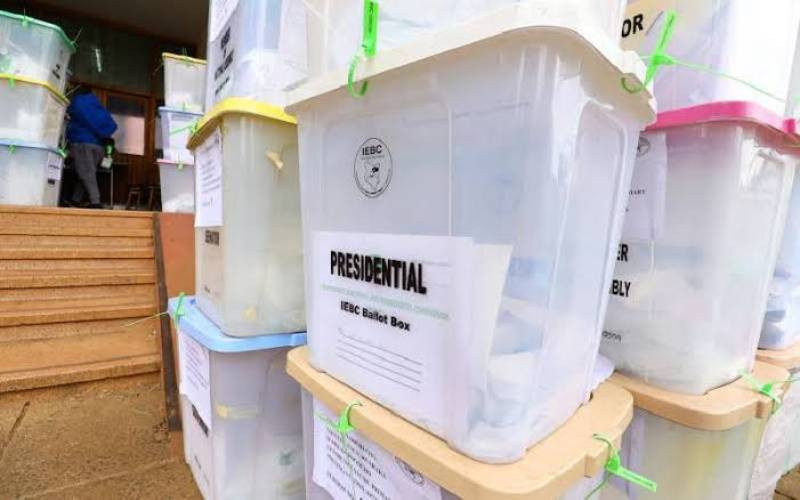
When does constitutionalism stop being convenient? What happens when a public institution breaks the law but the public benefits from the breach? Is a court permitted to ask what was achieved and decide that the violation is tolerable because the outcome was useful? Or does constitutionalism demand something harder, that once the constitutional and statutory rules governing public power have been violated, the court stops the inquiry there? The recent Court of Appeal decision in Civil Appeal No. 239 of 2019, Royal Media Services Ltd vs Independent Electoral and Boundaries Commission & 3 Others, offers a starting point.
In a rare moment of constitutional discipline from the Court of Appeal, the court refused to rescue an unlawful public transaction merely because it produced a public benefit. That is important as a test of transformative constitutionalism. The dispute arose from an urgent voter mobilisation campaign shortly before the 2013 elections. Royal Media Services said Independent Electoral and Boundaries Commission (IEBC) officials requested a nationwide campaign when voter registration numbers were dangerously low. It said it rendered the services and later sought Sh182 million. There was, however, no formal written contract. The direct-procurement requirements were not followed at all. The process fit a proper definition of opacity and no written contract was signed. Millions of additional voters were allegedly mobilised. The exercise served a constitutional democratic objective. Why, then, should a company that actually performed be left unpaid?
The ‘executive favourite court’, when it comes to stay orders, delivered something critical for the rule of law in Kenya. The finding of the court is obviously commercially uncomfortable but gets it right. Public benefit cannot become a solvent for illegality. The constitutionally imposed obligations not only on the public entity but also on contractors dealing with it are peremptory. The failure to comply therefore went to the legality and enforceability of the transaction. Even ‘quantum meruit’ could not be used to circumvent statutory prohibitions. The fact that a benefit had been conferred on a public entity could not, by itself, justify relief. This is where the decision speaks directly to transformative constitutionalism.
A transformative constitution cannot just be a catalogue of desirable outcomes. It is a project for changing how public power is exercised, as Karl E Klare argues. Article 227 does not simply say that government should procure efficiently. It constitutionalises procurement around a transparent, fair, equitable, competitive and cost-effective system. Public benefit must therefore be pursued through constitutional means. That distinction matters. If the State can say, “Yes, the process was unconstitutional, but look at the good that came out of it,” then Article 227 becomes optional whenever government can produce an attractive justification. This produces ‘convenient constitutionalism.’
But here is the troubling parallel from the same court in the past. The same Court of Appeal has, in other contexts, treated disruption of government services as a powerful reason to lift stays against governmental action. Courts do not want injunctions to ‘paralyse’ essential public functions. The State loves this reasoning as a constitutional escape hatch. Consider, for instance, the litigation surrounding the US-Kenya health-data arrangements just recently. The constitutional questions involved privacy, health information, consent, accountability and the lawful handling of deeply personal data. If the answer to a constitutional challenge becomes, in substance, “the State must continue because stopping it would disrupt health services,” are we not allowing administrative convenience to outrank constitutional legality? The public may genuinely need the services. But does that make an unlawful arrangement lawful? The same question arises in Safaricom shares litigation and disputes involving State assets.
Where the court weighs the consequences of interruption and permits governmental action to continue because "the national economy or public services might suffer," it adopts a pragmatic constitutionalism. But where is the limit? This is where the two tones of the court become difficult to reconcile.
In the Royal Media decision, the spirit of the reasoning of the court is unmistakable: constitutional imperatives first. Benefit cannot cure an unlawful procurement. In stay cases involving the State, the message has always appeared to be constitutional legality, yes but what happens to the public if we stop the State? One treats compliance as a threshold question; the other risks making it one factor in balancing. Is that not what “convenient constitutionalism” looks like? I think so.
Transformative constitutionalism should not mean that courts ignore consequences. Courts inevitably consider public interest. But it cannot be reduced to governmental convenience. There is also a public interest in constitutional government; it may be, as here, clean procurement, other times lawful expenditure, accountable institutions, privacy, fair competition and predictable rules. The Royal Media decision exposes the deeper point. The court recognised that the voter registration campaign may have produced a genuine public benefit, but it identified a competing and stronger public interest, preserving procurement law as enshrined in the Constitution.
That is precisely the reasoning a transformative order requires. The public is never served only by immediate delivery; it is also served when legality does not depend upon outcome. So, should every stay be lifted whenever government says services will be disrupted? Surely not. Should every unconstitutional act continue because citizens may suffer from interruption? Equally not. The core question is this: can the court articulate a consistent principle explaining when public interest justifies preserving government action and when constitutional illegality is itself the end of the analysis? Royal Media suggests that it can. Once the legal foundation collapses, the court cannot rebuild it with the bricks of public benefit. The challenge is for the court to apply that discipline consistently. Otherwise, Article 227, and of course any other provision, risks becoming a constitutional command with a footnote of "obey it when convenient". And that is not transformative constitutionalism. It is constitutionalism by selection, adhered to when it fits and patched around when it does not. Reflect with me.
Subscribe to our newsletter and stay updated on the latest developments and special offers!


 Prefer the Standard on Google









 join
join