×

The Standard e-Paper
Stay Informed, Even Offline
 The Standard Group Plc is a
multi-media organization with investments in media platforms spanning newspaper
print operations, television, radio broadcasting, digital and online services. The
Standard Group is recognized as a leading multi-media house in Kenya with a key
influence in matters of national and international interest.
The Standard Group Plc is a
multi-media organization with investments in media platforms spanning newspaper
print operations, television, radio broadcasting, digital and online services. The
Standard Group is recognized as a leading multi-media house in Kenya with a key
influence in matters of national and international interest.

Audio By Vocalize
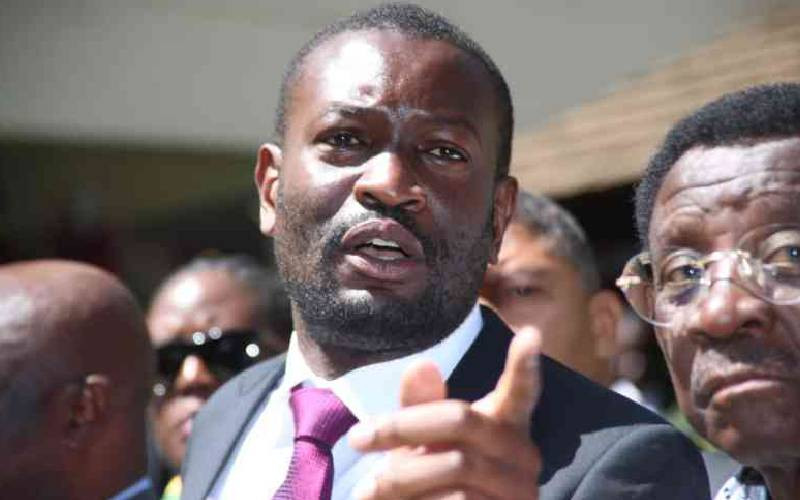
Edwin Sifuna has spent years building a recognisable political identity through public communication, parliamentary politics and his role within the Orange Democratic Movement. But politics has an unforgiving distinction: being heard is not the same as being organised. His recent political transition makes that distinction particularly important. In 2026, he lost the ODM Secretary-General position and was subsequently removed as Senate Deputy Minority Whip. His political response, however, has increasingly been associated with the Linda Mwananchi movement.
On September 30 2026, the Political Parties Disputes Tribunal set aside the rejection of the proposed Linda Mwananchi name and directed the Registrar to reconsider the matter within seven days.
The ruling removed an important procedural obstacle, but it was not itself final party registration. The movement therefore still faces the organisational and legal requirements necessary for electoral participation.
And that is where Sifuna’s real political examination begins. Sifuna’s greatest political asset has been his voice.
He has demonstrated an ability to communicate sharply, occupy political conversations and connect with audiences, particularly through contemporary political and social-media platforms. But history teaches that political movements rarely survive on rhetoric alone. Kenya’s own political history offers a useful comparison.
In 1992, FORD brought together political pressure groups, civil society organisations and religious organisations in opposition to KANU, yet the movement fractured before the election, producing FORD-Kenya and FORD-Asili. The lesson is not that movements inevitably collapse. Rather, political momentum needs organisational structures capable of surviving disagreements.
A popular political message can create momentum, but converting momentum into electoral strength requires agreements about leadership, nominations, resources, structures and strategy. The voice creates the movement; the machine determines whether the movement can move.
A similar pattern can be considered in the wider East African and African political context. Across the region, charismatic leaders and powerful public communicators have often demonstrated that personal popularity can mobilise citizens rapidly. Yet political organisations that endure require more than a compelling personality.
They require local branches, candidates, membership systems, financing, internal rules and mechanisms for resolving disputes.
This is particularly relevant to the Linda Mwananchi project. A movement associated strongly with Sifuna may generate enthusiasm, but the electoral test is whether that enthusiasm can be converted into organisation across counties and constituencies. That means asking difficult but practical questions.
There is also a useful literary analogy for understanding Sifuna’s challenge. Think of politics as a long epic. The political voice is the poet who gives the story its language; the political organisation is the army that carries the story across the landscape. A poet can inspire thousands with a powerful line, but inspiration alone cannot occupy territory in an electoral contest. Sifuna has already demonstrated the ability to write himself into Kenya’s political conversation. The next chapter requires him to determine whether other people can carry that story when he is not on the microphone. That is the difference between personality politics and institutional politics.
The strength of a political voice can create attention, but the strength of an organisation determines whether that attention can be translated into sustained political activity.
The 2027 election will therefore pose a different question from the one Sifuna has faced before. It will not simply ask whether he can attract attention. It will ask whether his political network can demonstrate national reach, organisational discipline and electoral preparedness.
Several indicators will matter: support across counties, communities and age groups, the development of national organisation, and the extent to which the movement can operate beyond social-media visibility.
A viral video can reach millions, but an election requires people in thousands of locations to perform thousands of tasks. That is why crowd size alone cannot settle the question of national political strength. Sifuna’s story is consequently bigger than one politician.
Stay informed. Subscribe to our newsletter
It reflects a wider transformation in Kenyan politics: the growing importance of political communication, younger political audiences and movements that attempt to operate outside traditional party structures
Ojwang is a teacher of English Literature at St Georges Girls, Nairobi
Subscribe to our newsletter and stay updated on the latest developments and special offers!


 Prefer the Standard on Google






 join
join