×

The Standard e-Paper
Home To Bold Columnists
 The Standard Group Plc is a
multi-media organization with investments in media platforms spanning newspaper
print operations, television, radio broadcasting, digital and online services. The
Standard Group is recognized as a leading multi-media house in Kenya with a key
influence in matters of national and international interest.

Audio By Vocalize
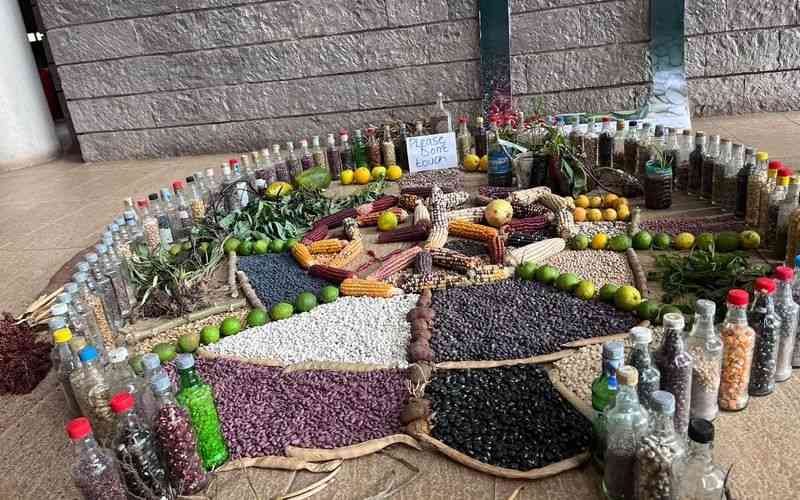
African governments have been urged to strengthen legal protections for indigenous seeds and traditional farming systems to safeguard food security, preserve agricultural biodiversity and reduce dependence on imported commercial seeds.
During the First East African Indigenous Seeds Conference, which brought together lawmakers, farmers, researchers, civil society organisations and development partners to discuss the role of indigenous seeds in strengthening food sovereignty and building climate-resilient food systems.
Participants warned that increasing dependence on commercial seed companies, coupled with the disappearance of traditional crop varieties, could expose African countries to food supply disruptions and undermine farmers' ability to produce food sustainably.
Catherine Foss, Director of the Rosa Luxemburg Foundation's East Africa Office based in Dar es Salaam, Tanzania, said indigenous seeds had sustained communities for generations and were naturally adapted to local climatic conditions and people's food needs.
She criticised the growing influence of multinational agricultural companies and restrictive seed regulations that limit farmers' ability to save, replant and exchange traditional seeds.
"Having indigenous seeds and farmers who have the possibility to exchange indigenous seeds is very important. These are the seeds that have fed humankind since the very beginning. They have developed over time, adapting to climate issues and the needs of human beings," she said.
Foss warned that some commercial hybrid varieties leave farmers dependent on suppliers because they cannot reliably reproduce the seeds for subsequent planting seasons.
She added that such varieties often require specific fertilisers and chemical inputs, increasing production costs while potentially undermining soil quality.
"I see a great danger in buying these artificial seeds instead of using indigenous seeds," she said.
She challenged the argument that industrial agriculture was the answer to food insecurity, saying the model had failed to deliver food sovereignty or sustainable livelihoods for farmers.
Foss called on development partners to reconsider their funding priorities and invest more in traditional seed systems, adding that her organisation was working with Seed Savers Network in Kenya and partners in Uganda, Rwanda and Tanzania to strengthen regional cooperation and knowledge exchange.
East African Legislative Assembly (EALA) Member of Parliament David Alasankok also called for stronger legislation to protect indigenous seeds, warning that dependence on a handful of multinational companies could leave African countries vulnerable to disruptions in international supply chains.
He argued that indigenous varieties had demonstrated resilience against drought, pests and changing climatic conditions, making them important in addressing the effects of climate change.
"Our local seeds have been replanted for centuries. They are resistant to pests and drought, and they are very resilient. We need to protect them so that we can feed our people," he said.
Alasankok cautioned that concentration of commercial seed supply among a few multinational companies could threaten food production if supplies were deliberately restricted or disrupted.
Stay informed. Subscribe to our newsletter
"If these big companies decide to create an artificial shortage of their seeds, then a significant portion of the seed supply will not be available. Africa is already a net importer of food. What happens when we cannot access the seeds we depend on?" he posed.
He disclosed that the Seed and Plant Varieties Bill, 2025, was before the legislative process and that submissions made during the conference would inform possible amendments.
Alasankok said lawmakers also intended to initiate a separate legislative process to protect indigenous livestock breeds, noting that the current Bill was already too advanced to incorporate the issue.
He further criticised agricultural decisions made without adequate research and consultation, citing proposals to introduce foreign livestock breeds into environments where they might struggle to survive.
"Without research, without consulting professors and researchers, we make roadside declarations. They are not helpful at all," he said.
Meanwhile, Seed Savers Network Director Daniel Wanjama warned that the continued marginalisation of indigenous seeds was contributing to the loss of agricultural biodiversity.
Citing research conducted by the organisation in Kenya, Wanjama said approximately 30 per cent of local crop varieties had disappeared over the past two decades.
He argued that traditional seed systems remained central to food production but continued to receive inadequate recognition in agricultural policies.
"We cannot survive climate change without our agricultural biodiversity," he said.
Wanjama also raised concerns about Kenya's dependence on imported commercial seeds, claiming that the country imports up to 97 per cent of its vegetable seeds and more than 70 per cent of its maize seed requirements.
He warned that such dependence exposed farmers to supply disruptions and rising production costs, particularly small-scale producers.
The conference also examined legal challenges surrounding farmers' rights to save and exchange indigenous seeds.
Wanjama cited a 2025 High Court ruling in Machakos concerning provisions of Kenya's Seed and Plant Varieties Act, arguing that the existing legal framework had not adequately distinguished commercial seed production from traditional farmer-managed systems.
He called for breeders developing commercial varieties from indigenous genetic resources to disclose their origins and ensure communities that had preserved the resources benefited from their commercial use.
"If you have benefited from genetic resources that we have maintained as societies and communities for many years, you should not earn the benefits alone. You should share the benefits with the rest of us," he said.
Stakeholders called for stronger regional cooperation, increased investment in traditional seed systems and policies that guarantee farmers access to land and the freedom to preserve and exchange indigenous seeds.
They maintained that protecting indigenous seeds was not simply about conserving agricultural heritage but also about strengthening Africa's capacity to produce sufficient, nutritious and climate-resilient food.
Subscribe to our newsletter and stay updated on the latest developments and special offers!


 Prefer the Standard on Google