×

The Standard e-Paper
Home To Bold Columnists
 The Standard Group Plc is a
multi-media organization with investments in media platforms spanning newspaper
print operations, television, radio broadcasting, digital and online services. The
Standard Group is recognized as a leading multi-media house in Kenya with a key
influence in matters of national and international interest.
The Standard Group Plc is a
multi-media organization with investments in media platforms spanning newspaper
print operations, television, radio broadcasting, digital and online services. The
Standard Group is recognized as a leading multi-media house in Kenya with a key
influence in matters of national and international interest.

Audio By Vocalize
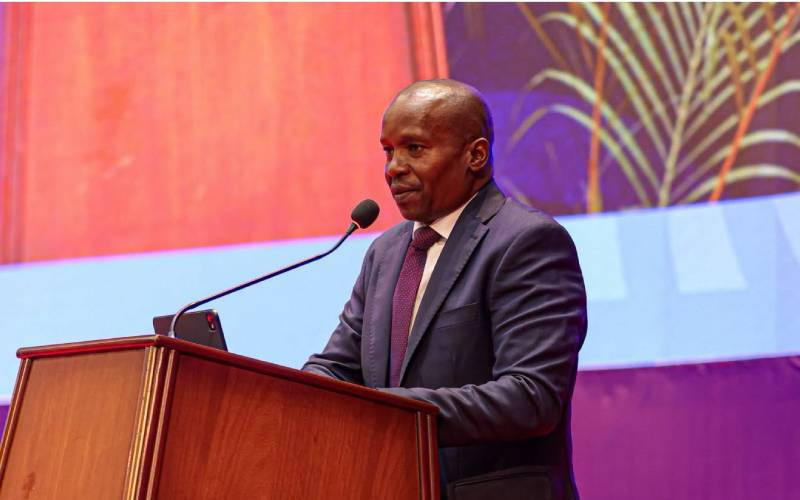
Deputy President Kithure Kindiki has urged African nations to adopt long-term development strategies that will transform the continent into a globally competitive economy, saying Africa already possesses the resources, talent and potential needed to achieve First World status.
Speaking during the Infra for Africa Forum and the Africa50 General Shareholders Meeting in Dar es Salaam, Tanzania, where he represented President William Ruto, Kindiki said the continent's greatest challenge is not a lack of resources but the absence of sustained policy implementation and confidence in its own capabilities.
"Africa needs to build confidence in itself. As Africans, we must learn to have confidence in our continent and in our capability to do what others have been able to do," Kindiki said.
He noted that Africa is richly endowed with natural resources, a youthful population and expanding economic opportunities, arguing that these advantages should position the continent among the world's leading economies if supported by sound governance and long-term planning.
A key issue raised during the forum was the need for governments to move beyond short-term political and economic interests.
Kindiki emphasized that national development programmes should be protected from disruptions caused by changes in political leadership, warning that inconsistent policies discourage investors and delay critical infrastructure projects.
"The biggest threat to Africa's development today is policy disruption, which is an unintended consequence of democracy," he said. "The movement from one administration to another is a good thing but we must find ways of insulating our development agenda from democratic transitions so that we can have continuity in development."
Kindiki also outlined Kenya's efforts to accelerate infrastructure development through innovative financing models aimed at attracting private investment while easing pressure on public finances.
He highlighted the establishment of the Kenya Infrastructure Fund, which seeks to mobilise capital through the stock market by partially divesting government stakes in selected state-owned enterprises.
"In Kenya, we have just put in place an Infrastructure Fund where we are mobilising resources from the stock market by selling part of the stakes in government-owned entities and using the capital to crowd investment by the private sector," he said.
The Deputy President stressed that infrastructure development should go hand in hand with inclusive growth.
He said investments in roads, railways, ports and energy projects must translate into improved livelihoods for ordinary citizens, particularly women, young people and vulnerable communities.
"We need to have the people with us. We must carry the people along; women, young people, rural and urban poor. It is not enough to build roads, railways, seaports, harbours and gas pipelines. It is important to ensure the people travel the development journey with us," he said.
Another major issue discussed was the importance of regional cooperation in mobilising resources for large-scale infrastructure projects. Kindiki called on African governments to strengthen partnerships that reduce investor risk, lower the cost of capital and unlock financing for transformative projects across the continent.
"We need to have innovative ways of mobilising resources both nationally and regionally to be able to reduce investor risk and lower the cost of capital and enable implementation of capital-intensive projects," he said.
Stay informed. Subscribe to our newsletter
The forum brought together heads of government, development partners, financiers and investors to explore sustainable financing strategies for Africa's infrastructure needs.
Tanzanian President Samia Suluhu Hassan, former Tanzanian President Jakaya Kikwete and other regional leaders also attended the meeting, reaffirming the continent's commitment to strengthening infrastructure as a catalyst for economic growth and regional integration.
Subscribe to our newsletter and stay updated on the latest developments and special offers!


 Prefer the Standard on Google




 join
join