×

The Standard e-Paper
Read Offline Anywhere
 The Standard Group Plc is a multi-media organization with investments in media
platforms spanning newspaper print operations, television, radio broadcasting,
digital and online services. The Standard Group is recognized as a leading
multi-media house in Kenya with a key influence in matters of national and
international interest.
The Standard Group Plc is a multi-media organization with investments in media
platforms spanning newspaper print operations, television, radio broadcasting,
digital and online services. The Standard Group is recognized as a leading
multi-media house in Kenya with a key influence in matters of national and
international interest.

Audio By Vocalize
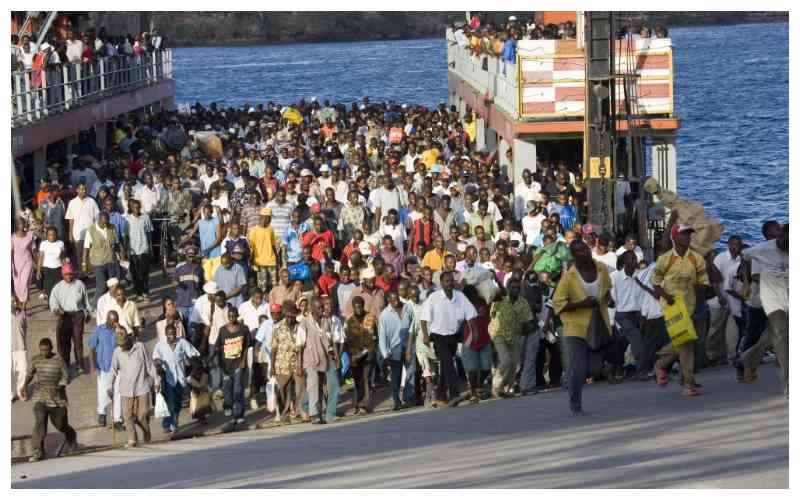
For the coastal and inland water counties, the decentralisation of ferries and harbours, as outlined in the Fourth Schedule of the 2010 Constitution, remains an unfulfilled aspiration.
Coastal counties of Mombasa, Kwale, Kilifi, Lamu, and Tana River hoped for more say in the management of major infrastructure projects, such as ferries and harbours along the Indian Ocean.
Residents of Lake Turkana counties, Turkana and Marsabit, and the lake region of Homa Bay, Siaya, and Busia also held similar hopes when the constitution was enacted and promulgated.
However, 16 years after the promulgation of the 2010 constitution, these counties are yet to start benefiting from the infrastructure resources of these water bodies as envisaged.
With the port of Mombasa generating billions of shillings annually, the county government could be among the richest in the country, which could translate into better services for residents.
However, the national government is yet to devolve the ferries and harbours under the county transport function, and this has left the Mombasa County government yearning for resources.
Ferries and harbours are a county responsibility except for the regulation of international and national shipping and related matters, which remain under the national government.
Former Mombasa governor Hassan Joho had boldly sought to have a grip on the port, demanding the county government be allowed to collect revenue there, but his efforts were frustrated as he was at loggerheads with Uhuru Kenyatta’s administration. He demanded a dollar from every container landed at the port, but he was ignored.
Joho, who is currently the mining, blue economy and maritime affairs cabinet secretary, had argued that other port cities owned ports and got revenues from the facilities in their jurisdictions and that Mombasa should not be an exception.
He had observed that Rotterdam city owns 70 per cent of Rotterdam Port; Shanghai Port is fully owned by the Shanghai municipality; Durban is owned by Durban city; Long Beach Port in California is 100 per cent owned by Long Beach city; and Antwerp is fully owned by the Antwerp city.
Mombasa Port handled 45.45 million metric tonnes of cargo last year compared to 41 million metric tonnes recorded in 2023, reflecting a 10.9 per cent growth. This could have earned Mombasa County increased revenues.
Mombasa lawyer Yusuf Aboubakar explained that the Fourth Schedule of the 2010 Constitution places ferries and harbours under the management of counties.
However, Aboubakar noted that the main problem has been a lack of legislation to clarify how revenue from the ferries and harbours should be shared between national and county governments.
“Ferries and harbours belong to counties, but there is a lack of clarity on whether the revenue should be delivered to the national treasury or how it should be shared between the national and county governments. There has to be an agreement on how the revenue from ferries and harbours should be shared,” he stated.
Aboubakar, who was a delegate at the Bomas constitutional conference, said there is a need for national and county governments, through the Council of Governors (COG), to agree on how to implement the Fourth Schedule on such matters.
Stay informed. Subscribe to our newsletter
According to the lawyer, a bill to clarify the function of ferries and harbours is not likely to be tabled in parliament soon because of a lack of interest among members of parliament in the matter.
Aboubakar said even if an MP presents a bill in the august house, chances of its passage are minimal because many legislators will feel that such a law would benefit a few counties like Mombasa, which have ferries and harbours, as it would increase their revenues.
“The Fourth Schedule on ferries and harbours requires a bill in Parliament. But such a bill is not likely to sail through Parliament because many MPs are from outside the coastal region who will not see the benefit of passing such legislation as it does not raise revenues in their regions,” he argued.
He also noted that the national government has maintained a grip on devolved functions since the 2010 Constitution was promulgated, noting that many funds for health and agriculture are still held at the ministries while county governments get peanuts.
Aboubakar argued that devolution has not yet taken root and hence the challenge of competition for resources between national and county governments that will either take time to be implemented or will not be applied at all.
Apart from Mombasa County, Kwale, Lamu, and Kisumu counties also have ferries and harbours.
He noted that the ferry and harbour functions are among the sections in the Constitution that will take time before they are conclusively addressed, or they will never be implemented.

Subscribe to our newsletter and stay updated on the latest developments and special offers!








 join
join