×

The Standard e-Paper
Informed Minds Prefer The Standard
 The Standard Group Plc is a multi-media organization with investments in media
platforms spanning newspaper print operations, television, radio broadcasting,
digital and online services. The Standard Group is recognized as a leading
multi-media house in Kenya with a key influence in matters of national and
international interest.
The Standard Group Plc is a multi-media organization with investments in media
platforms spanning newspaper print operations, television, radio broadcasting,
digital and online services. The Standard Group is recognized as a leading
multi-media house in Kenya with a key influence in matters of national and
international interest.

Audio By Vocalize
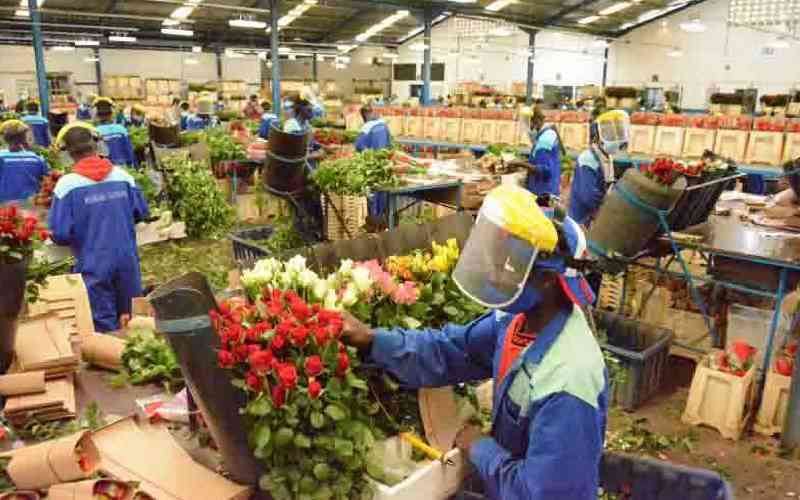
Workers at the Maridadi flower farm in Naivasha. [File, Standard]
A striking floral installation in the shape of a butterfly was one of the main attractions at the International Flower Trade Expo (IFTEX) 2026, held at Visa Oshwal, Westlands, Nairobi, earlier this week.
Held under the theme Shaping the Future of Floriculture, the continent’s largest flower industry trade show attracted over 210 exhibitors and hundreds of buyers from Europe, the Middle East, Asia, Africa, and America.
The creative butterfly design, exhibited by Sosiani Flowers, featured a variety of carefully selected alstroemeria flowers arranged to showcase the symmetry and elegance of a butterfly’s wings.
The vivid colours created an illusion of movement and lightness, despite the installation being crafted entirely from fresh flowers.
It drew large crowds of visitors who paused to take photos and admire the unique display.
Sheila Kwamboka, marketing manager at Sosiani Flowers, said they chose the butterfly design because it symbolises life and transformation.
“It represents life, growth and living in harmony with nature. That is what we stand for at Sosiani Flowers,” she said, adding the company is now shifting towards organic practices because organic farming is the future of sustainable agriculture.
Kwamboka said the design has become a popular backdrop for selfies, attracting hundreds of visitors each day.
“It has become a backdrop for selfies.” Sosiani Flowers won the best stand award and received a gold prize at IFTEX 2026. A few metres away, at the entrance of the Ole Engai Growers stall, stood a floral display of horses pulling a chariot. It brought a vivid glimpse into Chinese traditions and cultural heritage at the flower fair.
Anjali Shah, director at Ole Engai Growers, said the inspiration for this year’s design came from the Chinese zodiac and the symbolism associated with the Year of the Horse.
She explained that people born in horse years are believed to share certain personality traits associated with the horse, an animal that has long symbolised strength, speed, freedom and endurance in Chinese culture.
“The horse is the central inspiration, reflecting themes of strength, growth, abundance and progress, and naturally, the chariot complements it. Together, they symbolise movement, power and prosperity within the Indian community,” she explained.
The design drew hundreds of visitors, many of whom stopped to admire and pose for photographs.
Ole Engai Growers won the best exhibition stand award. “The award is a testament to the collective effort, creativity, and dedication of the entire team,” Shah said. However, beneath the veneer of the beautiful flower displays lie significant challenges facing the floriculture sector, chief among them rising freight costs in the past five years.
Stay informed. Subscribe to our newsletter
“Five years ago, freight costs were around $1.40 (Sh140) per kilo. Today, they are approximately $4 (Sh517.44) per kilo. That increase has had a major impact on our competitiveness,” Shah said.
Stakeholders are now calling on the government to intervene through subsidies, tax relief, or other measures that can help reduce transportation costs.
“We cannot simply increase flower prices to offset these costs because buyers are already facing higher logistics expenses. As a result, growers are forced to absorb much of the pressure,” Shah said.
Kenya’s flower industry also faces stiff competition from neighbouring countries, particularly Ethiopia, where transportation costs are significantly lower.
Stakeholders also acknowledged that unpredictable weather patterns have made planning increasingly difficult.
Despite the challenges, the country remains one of the world’s leading floriculture exporters.
Today, Kenya is Africa’s largest flower exporter, the world’s leading exporter of rose cut flowers to the European Union, and the third-largest exporter of cut flowers globally.
The sector generates approximately Sh110 billion in annual export earnings, supports more than 200,000 direct jobs and sustains millions of livelihoods, particularly among women and young people. Kenya’s flowers reach major markets across Europe, the United Kingdom, the Middle East and Asia within hours of harvesting.
The industry has also emerged as a model for sustainable production, investing heavily in renewable energy, water conservation, traceability systems and internationally recognised environmental standards.
Cabinet Secretary for Investments, Trade, and Industry Lee Kinyanjui described floriculture as one of Kenya’s most significant economic achievements.
“When many people think about flowers, they think about beauty, colour, and celebration. Yet for us as Kenyans, flowers represent something much deeper. They represent jobs and livelihoods, enterprise and innovation, foreign exchange earnings, community development, women’s empowerment, and economic opportunity,” Kinyanjui said.
The CS assured that despite rising freight costs, regulatory pressures, and global economic uncertainty, the government remains committed to improving the business environment through better logistics infrastructure, faster VAT refunds, and expanded market access opportunities.
Kenya Flower Council (KFC) CEO Clement Tulezi emphasised the broader social and economic impact of the industry, describing floriculture as one of Kenya’s most transformative sectors.
“Flowers are jobs. Flowers are school fees. Flowers are healthcare. Flowers are empowerment,” he said.

Subscribe to our newsletter and stay updated on the latest developments and special offers!










 join
join