×

The Standard e-Paper
Home To Bold Columnists
 The Standard Group Plc is a
multi-media organization with investments in media platforms spanning newspaper
print operations, television, radio broadcasting, digital and online services. The
Standard Group is recognized as a leading multi-media house in Kenya with a key
influence in matters of national and international interest.
The Standard Group Plc is a
multi-media organization with investments in media platforms spanning newspaper
print operations, television, radio broadcasting, digital and online services. The
Standard Group is recognized as a leading multi-media house in Kenya with a key
influence in matters of national and international interest.

Audio By Vocalize
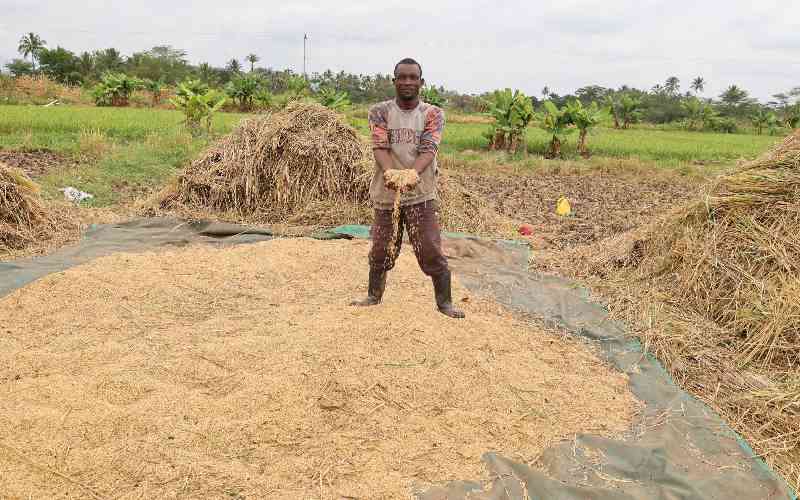
A farmer who practices climate-smart farming in Taita Taveta. [Benard Orwongo, Standard]
Humanitarian organisations have called for a shift from emergency food aid to long-term investments that help communities withstand the growing impact of climate change.
The organisations spoke during the visit by King Letsie III of Lesotho in Taita Taveta.
The King had toured climate-smart farming activities in Taita Taveta County, a visit aimed at boosting food security in the county, Kenya and Africa.
International Federation of Red Cross and Red Crescent Societies (IFRC) Secretary General Jagan Chapagain said food insecurity a big crisis, not only in Kenya but globally.
"Food insecurity is a big issue, and number of people affected is extremely high," said the official.
Chapagain said whenever there is food insecurity crisis, well-wishers respond.
However, he said the support is not long-term, more so with the change in climate that continues to affect farming practices.
He drummed support for climate-smart farming.
"Whenever there is food crisis, we usually respond. But we need durable solutions by finding out what type of soil, seedlings and farming practices can produce better with less water, and embrace value addition," he said.
He added, “This is how to respond to food insecurity"
Data shows 3.3 million Kenyans are currently faced with food insecurity.
In 2024, 307 million people in Africa were documented to experience hunger.
Solutions to food insecurity, according Chapagain, require sustainable and durable solutions, with support from governments and partners.
Stay informed. Subscribe to our newsletter
"Red Cross cannot do it alone. We believe we can source from various partners," said the humanitarian official.
He emphasised that funding is key, more so in mechanisation and modern farming technologies.
Chapagain said that farmers should be trained to adapt to changing weather patterns through climate-smart agriculture.
He called for support of farmers by governments and partners to get better markets for their produce.
On financing, Chapagain urged governments and development partners to invest more in preparedness rather than waiting for disasters to strike.
"Responding before a crisis is far cheaper than responding after it has happened. We must invest in farmers today so they do not need humanitarian assistance tomorrow," he said.
Kenya Red Cross Society Secretary General Ahmed Idris regretted the increased number of people who are food insecure.
In Kenya, he said the society is pushing to support quality and food availability, system stability in food production and promote sustainable and alternative livelihoods.
"King of Lesotho's visit as food security ambassador has been to bring attention and issues around food," said Dr Idris.
He warned that the impact of food insecurity would be more with anticipated Elnino.
El Nino is expected in November and December.
Currently, farmers are already counting losses following drain spell that hit the country, more so maize farmers.
"El Nino is a wet season, which means flooding. As a country, we need to mobilise the right partnerships and the government to put in place measures early enough so that no Kenyan is affected," added the Kenya Red Cross Society boss.
Among measures to be put in place include food support for vulnerable families, and protecting communities from the effects of excess water, and investing in drainage systems.
Some communities, he said, should be moved to higher grounds.
"We encourage partners on interventions to reduce the impact of potential floods and food shortage in the country. Measures taken in advance make it cheaper to respond to emergencies," said Idris.
After the King's visit, he said the society will engage governments and partners to advocate interventions to improve food insecurity in the country.
The national and county governments, he said, are expected to promote climate-smart agriculture systems that utilise less water.
Additionally, the Kenya Red Cross Society will align with government policy and support small-scale farmers to access capital, and mobilise partnerships.
"Kenya is a country of paradox in that when it rains there's lots of water and when it doesn't there's lack of water for farming," said Idris.
Subscribe to our newsletter and stay updated on the latest developments and special offers!

 Prefer the Standard on Google