×

The Standard e-Paper
Home To Bold Columnists
 The Standard Group Plc is a
multi-media organization with investments in media platforms spanning newspaper
print operations, television, radio broadcasting, digital and online services. The
Standard Group is recognized as a leading multi-media house in Kenya with a key
influence in matters of national and international interest.
The Standard Group Plc is a
multi-media organization with investments in media platforms spanning newspaper
print operations, television, radio broadcasting, digital and online services. The
Standard Group is recognized as a leading multi-media house in Kenya with a key
influence in matters of national and international interest.

Audio By Vocalize
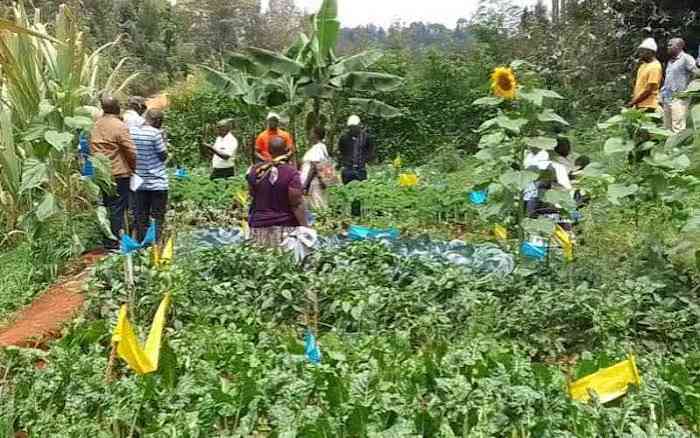
Stakeholders at a recent national agroecology symposium urged the government to support their participation in boardroom decision-making to end years of top‑down policy formulation.
During the two-day forum, farmers, fishers, and pastoralists pleaded to be heard, as most had reverted to traditional methods of farming and livestock rearing due to the effects of climate change, among other challenges.
The forum, held in Nairobi and facilitated by the Ministry of Agriculture and Pelum Kenya, brought together hundreds of farmers and pastoralists who said they had responded to the effects of climate change in new ways and reduced their risk of lifestyle diseases.
Agriculture Secretary Peter Owoko delivered a statement on behalf of Agriculture and Livestock Cabinet Secretary Mutahi Kagwe, during which stakeholders were informed that Kenya would require Sh46.6 billion to facilitate an effective transition to agroecology from the previous system. Pelum Kenya Country Coordinator Rosinah Mbenya said agroecology has played a significant role in enriching the soils years after exhausting the use of synthetic fertilisers and chemicals.
Mbenya said through agroecology farmers from various parts of the world have been meeting with respective networks for the interconnections and searching for solutions to their challenges faced by their crops and livestock.
The forum facilitated knowledge exchange on practical agroecological innovations and experiences and strengthened policy dialogue to accelerate implementation of the National Agroecology Strategy for Food System Transformation.
“It showcased the agroecological technologies and models to promote adoption and market linkages and promotes inclusive participation, particularly of women, youth, and pastoralism,” Mbenya pointed out.
She lauded Murang’a for being the first county to pass the agroecology policy before the national one, followed by Vihiga, Makueni, Kiambu, and Nakuru, with those waiting being Laikipia, Kirinyaga, Turkana, among others.
Rockefeller Foundation Director Betty Kibaara outlined that jointly with Pelum Kenya, they are establishing a school feeding programme targeting 30 selected schools in Murang’a that will be connected with the organic foods producers.
The schools, she said, have been identified in Kiharu, Kangema, and Mathioya sub-counties in addition to others in Kajiado County.
“This is one of the programmes that connects the farmers with a ready market, and in Murang’a we are laying the groundwork to roll it out,” said Kibaara, adding that Murang’a requires Sh3.4 billion for the transition to full-scale organic farming.
Dr David Ikirore challenged the government to spearhead the domestication of agroecology policies, as the majority of the people had returned to the ancient ways of farming.
“The policymakers should get accurate information from the farmers pertaining to issues on effects of climate change and best ways to promote agroecology,” he said.
Stay informed. Subscribe to our newsletter
Subscribe to our newsletter and stay updated on the latest developments and special offers!


 Prefer the Standard on Google









 join
join