×

The Standard e-Paper
Join Thousands Daily
 The Standard Group Plc is a
multi-media organization with investments in media platforms spanning newspaper
print operations, television, radio broadcasting, digital and online services. The
Standard Group is recognized as a leading multi-media house in Kenya with a key
influence in matters of national and international interest.

Audio By Vocalize
The government is seeking to transform road maintenance through technology that can identify structural weaknesses before roads deteriorate, in a move aimed at improving infrastructure spending and reducing costly emergency repairs.
Roads and Transport Cabinet Secretary Davis Chirchir said the Kenya Roads Board was moving to acquire a Traffic Speed Deflectometer that will allow engineers to assess pavement strength continuously while travelling at normal traffic speeds.
The technology is expected to improve how the government determines road conditions, estimates the remaining lifespan of pavements and prioritises maintenance interventions.
Chirchir said Kenya's classified road network covers 239,122 kilometres, with the Government spending more than Sh54 billion annually on maintenance.
However, he noted that maintenance programmes still rely largely on visual condition surveys covering only a sample of the network, limiting the ability to establish the actual structural condition of roads.
He said conventional testing methods assess pavement conditions at isolated points and require lane closures, while the new equipment would provide continuous measurements across paved roads.
With improved data, engineers will be able to identify roads requiring structural strengthening instead of spending money on routine maintenance that may not address underlying problems.
The investment forms part of a broader Government strategy to introduce intelligent systems into infrastructure planning, delivery and management.
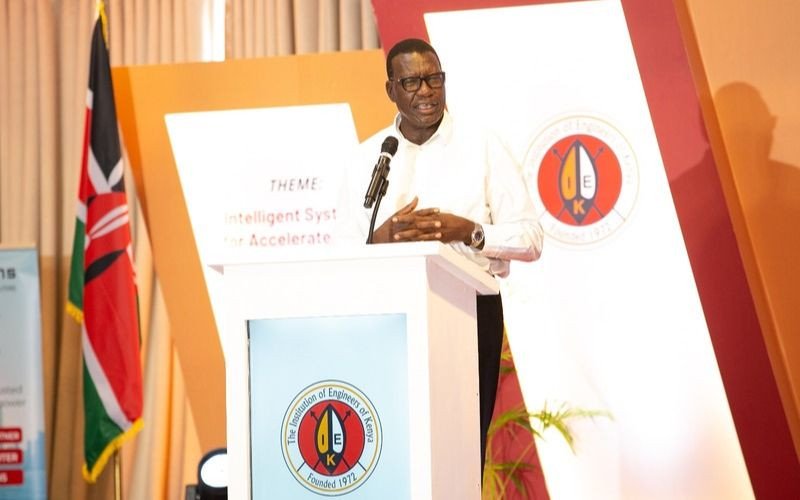
Speaking during the 33rd Institution of Engineers of Kenya (IEK) International Convention in Mombasa, Chirchir said infrastructure investment must increasingly be guided by evidence, predictive analysis and long-term asset performance.
The Government is also implementing a Sh44.8 billion Intelligent Transport Systems programme in Nairobi through the Kenya Urban Roads Authority.
The first phase, valued at Sh7.8 billion, involves establishing a modern Traffic Management Centre and installing intelligent transport infrastructure at at least 25 major junctions.
The second phase will cover 80 additional junctions at Sh13 billion, while the third phase will extend the technology to another 125 junctions at a cost of Sh24 billion.
The first two phases are financed by South Korea, while the third is financed through China Exim Bank.
The investments are intended to improve traffic management through real-time monitoring, advanced analytics and better coordination of urban transport networks.
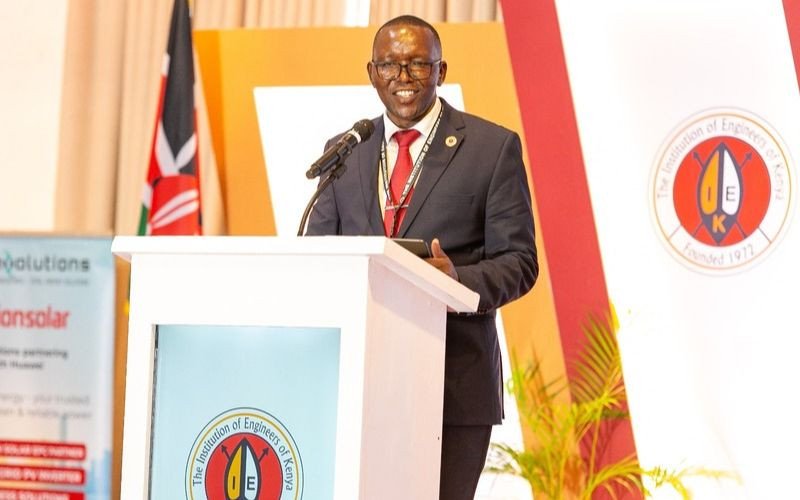
Principal Secretary for Roads Joseph Mbugua said intelligent systems should be judged by their contribution to better engineering decisions throughout the lifecycle of infrastructure assets.
Stay informed. Subscribe to our newsletter
He said the focus should be on improving planning, project delivery and management rather than merely acquiring technological equipment.
IEK President Eng. Harrison Keter said the growing investment in infrastructure presented an opportunity for engineers to contribute directly to national development through employment, professional advisory services and project implementation.
He cited information shared by Kenya Power's Human Resources General Manager during the convention indicating that the utility had recently employed 426 engineers.
Keter said the profession welcomed infrastructure investment but must also ensure that projects meet the highest standards of safety and professionalism.
He warned that technology-driven infrastructure development would only succeed if engineers remained accountable for design, construction supervision and quality assurance.
Subscribe to our newsletter and stay updated on the latest developments and special offers!


 Prefer the Standard on Google