×

The Standard e-Paper
Smart Minds Choose Us
 The Standard Group Plc is a
multi-media organization with investments in media platforms spanning newspaper
print operations, television, radio broadcasting, digital and online services. The
Standard Group is recognized as a leading multi-media house in Kenya with a key
influence in matters of national and international interest.

Audio By Vocalize
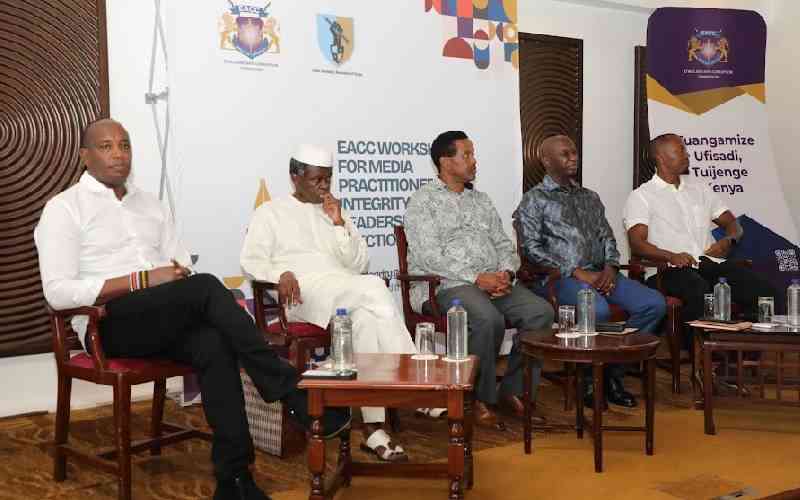
Realisation of the Integrity threshold for election to public office in Kenya remains constrained by gaps in the current integrity framework, thus hindering effective enforcement.
The Ethics and Anti-Corruption Commission says under the current framework, political candidates with active corruption cases in court and under investigation are cleared to contest elections.
The commission further blamed the uncertainty arising from the interpretation of Articles 99(3) and 193(3) of the Constitution, and the exhaustion of appeal and review processes as another hurdle hindering enforcement.
The Commission’s Regional Manager, Western Kenya, Eric Ngumbi said, for instance, EACC flagged 87 names with outstanding integrity issues in the 2017 General Election, and 241 individuals in 2022 out of whom only five were blocked by IEBC.
“Failure by political parties to consider candidates integrity and suitability during party primaries and nomination processes, prioritising candidates political influence and popularity over constitutional integrity standards, has also contributed to this uncertainty,” Ngumbi said.
While citing citizen apathy and tolerance of unethical conduct, Ngumbi said some public officers do not resign six months before elections as required under the Elections Act, with some resuming duty after unsuccessful party nominations.
Mr Ngumbi said there is an urgent need, therefore for all stakeholders to review legislation on integrity enforcement to address existing gaps and ambiguities.
This, he said, includes application of Articles 99(3) and 193(3) on disqualification from elections- standard of proof in ethics matters and making EACC’s recommendations on integrity suitability for persons seeking public appointment binding.
“We must wholesomely push for timely determination of integrity related cases in Court and establish clear legal procedures and timelines for integrity verification of candidates seeking elective office,” he said, adding that there should be deliberate efforts from enforcement and oversight agencies to enhance vigilance and oversight to safeguard public resources during the election period.
“We must have conclusive jurisprudence on the integrity threshold for public office-Judicial interpretation of unresolved constitutional questions on integrity enforcement and compel political parties to integrate integrity standards into nomination procedures, and to conduct integrity due diligence on prospective candidates,” said Ngumbi.
According to him, collaboration among accountability institutions and non-state actors must be strengthened and a culture and attitude change among Kenyans advocated for.
Ngumbi said ahead of the 2027 General Election, media must sustain accountability scrutiny and public education.
He said the commission foresees a challenge in integrity verification and vetting for aspirants.
He said the commission will roll out of a national integrity awareness campaign on electoral integrity and compliance, with a special focus on young people from December 2026.
Stay informed. Subscribe to our newsletter
“For receiving and taking action on integrity related complaints before, during and after elections, EACC will set up desks during campaigns, engage political parties, aspirants, public institutions and other stakeholders on integrity compliance,” he said.
He affirmed the commission will participate in relevant litigation and issue advisories on emerging integrity risks.
According to him, voter bribery or other inducements in exchange for votes, use of public resources in campaigns like government vehicles and other facilities, deployment of public officers to political activities, and theft of public funds remain a big challenge.
He said the challenges extend to non-compliance with the requirement to resign 6 months before elections and continued holding of office while campaigning for nomination.
Other challenges include submission of forged or fake academic qualifications to satisfy electoral eligibility requirements, branding of public projects in personal names to gain political mileage, misinformation and narrative manipulation and non-compliance with wealth declaration requirements.
Subscribe to our newsletter and stay updated on the latest developments and special offers!


 Prefer the Standard on Google