×

The Standard e-Paper
Kenya’s Boldest Voice
 The Standard Group Plc is a
multi-media organization with investments in media platforms spanning newspaper
print operations, television, radio broadcasting, digital and online services. The
Standard Group is recognized as a leading multi-media house in Kenya with a key
influence in matters of national and international interest.

Audio By Vocalize
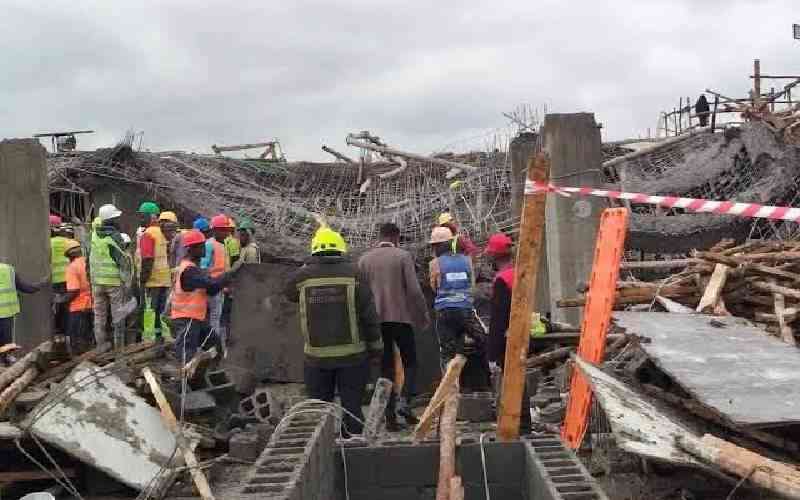
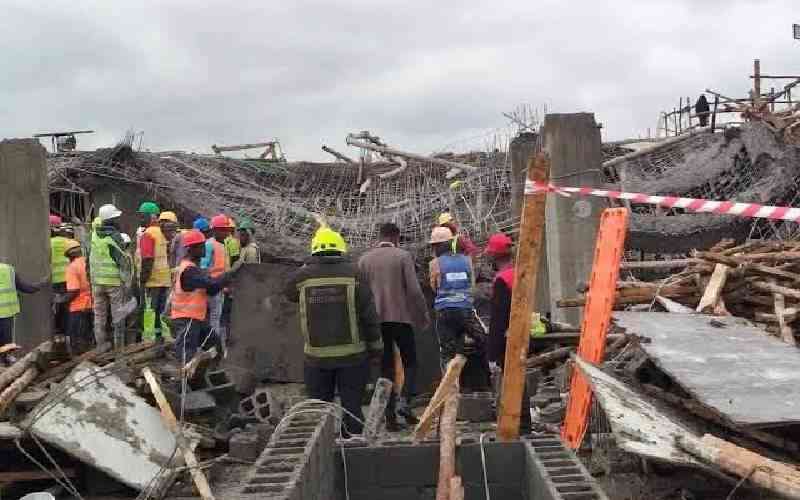
Six people died after an eight-storey building under construction collapsed on Mombasa Road near the SGR Terminus. [Courtesy]
“And fear a trial which will not strike those who have wronged among you exclusively.” (Quran 8:25)
It is a profound reminder that the consequences of wrongdoing are rarely confined to those who commit it. Sometimes, the innocent suffer the greatest consequences of the misconduct of others. A society that tolerates dishonesty, compromises its institutions and celebrates shortcuts eventually creates problems that no individual can escape.
Consider what has been happening in Kenya's construction industry. Within barely three weeks, Nairobi has witnessed three major construction-related disasters. The collapse of buildings in Eastleigh and Syokimau, and most recently a retaining wall along Riverside Drive, have collectively claimed at least 18 lives. Families have lost loved ones, workers have died at places where they went to earn a living, and others have been injured. These are not merely construction accidents to be forgotten after rescue operations end. They raise serious questions about the integrity of the construction industry and the institutions mandated to regulate it.
Buildings do not collapse because of poor workmanship alone. The causes may include compromised structural designs, substandard materials, unqualified contractors, inadequate supervision or deliberate disregard of approved plans. We have laws, professional bodies, county planning departments and regulatory authorities whose responsibility is to prevent such failures. If these safeguards exist, why do Kenyans continue to die under buildings that should never have been allowed to reach that stage?
A government report recently revealed that 57 per cent of the 21,282 buildings inspected countrywide were not structurally compliant. This suggests that the problem extends far beyond the buildings that have already collapsed. How many families are living in houses whose safety has not been properly established? How many workers report to construction sites where basic safety standards are ignored? And how many officials have looked the other way when their intervention could have prevented a tragedy?
The same principle applies to our education system. We have developed an unhealthy obsession with examination results, sometimes at the expense of the education those results are supposed to measure. Examination cheating, leakage, collusion and the involvement of people entrusted with administering national examinations are not harmless shortcuts. They undermine the credibility of qualifications and subsequently in the fields they join and disadvantage candidates who have worked honestly.
When an examination is compromised, the damage extends beyond cancelled results and disciplinary action. Universities, employers and professional institutions rely on those qualifications. We risk producing graduates whose certificates suggest competence that their actual knowledge and skills may not support. An employer recruiting such a graduate may have no way of knowing that the qualification was obtained through malpractice. In some professions, the consequences could ultimately affect the lives of members of the public.
We should also pay attention to the food we consume. Kenyans buy food from markets, shops and supermarkets expecting that regulatory institutions have done their work. A consumer purchasing vegetables cannot reasonably be expected to conduct laboratory tests to establish whether the produce contains dangerous levels of pesticide residues. That responsibility belongs to the relevant regulatory authorities.
Yet a performance audit published by the Auditor-General in 2026 identified serious gaps in pesticide residue monitoring, including limited testing and inadequate coverage of agricultural products and counties. This should concern every household. Food safety cannot depend entirely on the honesty of individual farmers and traders. It requires an effective regulatory system that tests, monitors and enforces standards.
The same applies to medicines, building materials, consumer products and the water we drink. We cannot have institutions that exist largely on paper, issue statements when problems arise and become visible only after citizens have suffered. Regulation is about preventing harm before it happens.
This is why the independence and effectiveness of regulatory institutions matter.
We must also reconsider our attitude towards those who cut corners. In some sections of society, wealth is celebrated without much interest in how it was acquired. People who accumulate property and money through questionable means sometimes receive greater recognition than those who build their lives through honest work.
When dishonesty is rewarded and integrity is treated as naivety, more people are encouraged to take shortcuts. Eventually, the consequences reach everyone. The family living in a building constructed through compromised standards did not participate in the corruption. Yet all may suffer because someone else failed to do what was right.
Corruption is a public safety issue. It concerns the quality of our institutions, the safety of our homes, the credibility of our education system and the health of our families.
Stay informed. Subscribe to our newsletter
A nation does not become unsafe in a single day. It becomes unsafe through small compromises that are repeatedly ignored until their consequences become impossible to contain.
-The writer is a public Policy and governance commentator
Subscribe to our newsletter and stay updated on the latest developments and special offers!


 Prefer the Standard on Google