×

The Standard e-Paper
Smart Minds Choose Us
 The Standard Group Plc is a
multi-media organization with investments in media platforms spanning newspaper
print operations, television, radio broadcasting, digital and online services. The
Standard Group is recognized as a leading multi-media house in Kenya with a key
influence in matters of national and international interest.
The Standard Group Plc is a
multi-media organization with investments in media platforms spanning newspaper
print operations, television, radio broadcasting, digital and online services. The
Standard Group is recognized as a leading multi-media house in Kenya with a key
influence in matters of national and international interest.

Audio By Vocalize
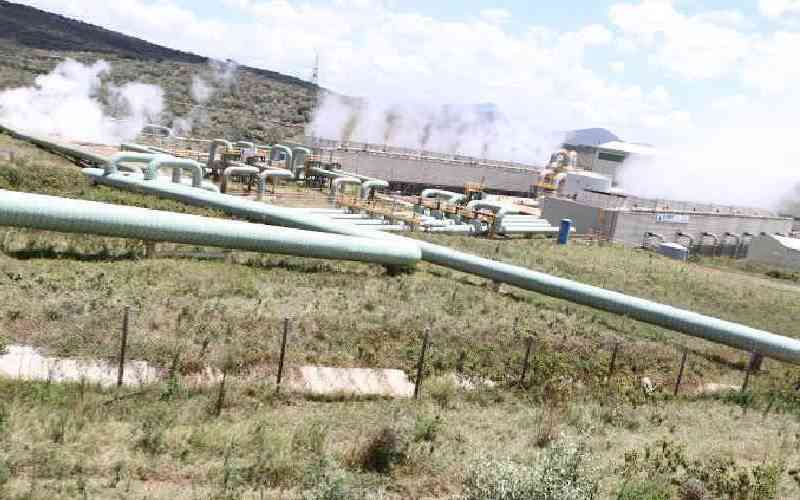
Olkaria Geothermal Power Plant in Naivasha. [File, Standard]
Renewables are on course to overtake coal as the world’s largest source of electricity in 2026, creating an opportunity Kenya should seize.
The International Energy Agency (IEA) says renewable generation reached near parity with coal in 2025 and is forecast to grow by more than eight percent this year. Its share of global electricity generation is projected to rise from 33 percent in 2025 to 37 percent by 2027.
Electricity demand is also increasing. The IEA expects it to grow by 3.6 per cent in 2026, driven by industry, electric vehicles and expanding data centres.
For Kenya, the question is whether it can turn its renewable-energy advantage into industrial capacity, exports and jobs. To achieve that, Kenyan businesses need expert partners with cutting edge technological skills and reliable access to capital. Dubai is proving to be a useful ally in this mission.
A strong renewable foundation
More than 90 per cent of Kenya’s electricity has been generated from renewable sources, with geothermal, hydro, wind and solar forming the backbone of the national power system.
Olkaria’s geothermal fields, Lake Turkana Wind Power and expanding solar installations have helped establish Kenya as one of Africa’s clean-energy leaders. The country aims for a fully renewable electricity system by 2030.
But producing clean electricity is only part of the opportunity. The bigger prize lies in using that power to manufacture goods, process agricultural commodities and attract industries seeking reliable, low-carbon electricity.
That is why developments such as the Sleeping Warrior Special Economic Zone at Elementaita matter. Designed around renewable power, the park is attracting activities ranging from agro-processing to clean manufacturing.
Capital is the missing link
Kenya’s Green Investment Fund is designed to channel long-term capital into climate-resilient businesses. Through the Kenya Development Corporation, $40m has been committed as seed capital, with the government seeking another $160m from institutional investors and development-finance partners.
While this is a strong commitment, green industrialisation is expensive. Geothermal fields, transmission networks, electric mobility, green hydrogen and industrial parks require capital on a scale governments cannot provide alone.
This is where strategic partnerships become critical, and Dubai is emerging as one such important partner.
At COP28 in 2023, Kenya announced an $800m partnership with Dubai-based AMEA Power for a proposed 200MW development at Paka. During the same summit, the UAE unveiled a $4.5 billion package of private, public, and development capital for green energy projects across Africa, demonstrating the country’s role as the leading renewables partner on the continent. At a time when traditional financing partners in the west and China are reducing their exposure, such commitments are a vital lifeline for Kenya’s burgeoning renewables economy.
Stay informed. Subscribe to our newsletter
Technology and logistics matter too
Capital alone will not deliver Kenya’s green revolution. Technology, manufacturing capacity and logistics are equally important to position the country as a leader in green energy and tech.
In 2025, Dubai-based Aquilastor Corporate Investment Company announced a $150m investment for an electric and hybrid vehicle assembly plant at the Olkaria Green Energy Park in Naivasha. The facility is targeting 50,000 vehicles annually and more than 3,000 direct jobs, powered by Olkaria’s geothermal resources.
DP World has also agreed with GulfCap Africa to develop the Mombasa Industrial Park, a 222-hectare special economic zone near the Port of Mombasa, combining manufacturing, warehousing, distribution and logistics.
For green industries, producing competitively is not enough if companies cannot move components and finished goods efficiently to regional and international markets. Kenya can provide the gateway. Dubai can bring capital, logistics expertise and access to global commercial networks.
A Dubai-Kenya bridge
Beyond straightforward investment, the links between Kenya and Dubai businesses have evolved into a multifaceted relationship. In 2025, a further 146 Kenyan companies joined the Dubai Chamber of Commerce (DCC), bringing the total number of companies active in the Emirate up to 587.
Despite the regional insecurity of the past year, Kenyan companies set up shop in Dubai to connect with international capital as well as potential customers, suppliers and advisers from across the Middle East, Asia, and Europe. In July, as non-oil trade between Kenya and Dubai peaked at Sh 48 billion, the DCC established the Kenyan Business Council to further strengthen economic cooperation and promote long-standing, secure partnerships between the two business communities.
If structured properly, these links can help Kenyan firms secure investment, enter new supply chains and scale beyond East Africa without surrendering ownership of the value they create.
Partnerships must create Kenyan value
Kenya will not achieve its green revolution through speeches or targets alone. The real test is whether renewable electricity can produce factories, export industries, skilled employment and competitive Kenyan businesses.
Partnerships, including those with Dubai, should therefore be judged not simply by announced deal values, but by what they deliver on the ground.
Kenya should insist on local value addition, skills transfer, technology development, stronger domestic supply chains and commercially sustainable projects.
As the world moves towards cleaner energy, Kenya cannot afford to remain an exporter of raw potential while others capture the investment, technology and industrial value generated from it. Dubai offers Kenya an opportunity to accelerate that transition.
The author is a Global Communications Strategist and former Business and Technology Editor
Subscribe to our newsletter and stay updated on the latest developments and special offers!

 Prefer the Standard on Google






 join
join