×

The Standard e-Paper
Home To Bold Columnists
 The Standard Group Plc is a
multi-media organization with investments in media platforms spanning newspaper
print operations, television, radio broadcasting, digital and online services. The
Standard Group is recognized as a leading multi-media house in Kenya with a key
influence in matters of national and international interest.
The Standard Group Plc is a
multi-media organization with investments in media platforms spanning newspaper
print operations, television, radio broadcasting, digital and online services. The
Standard Group is recognized as a leading multi-media house in Kenya with a key
influence in matters of national and international interest.

Audio By Vocalize
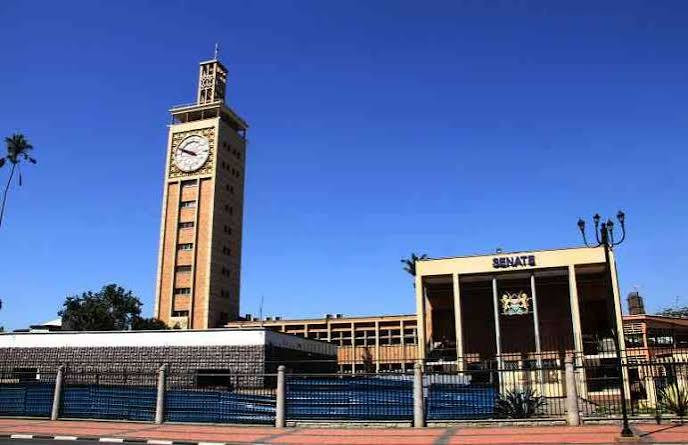
When you take a walk on Nairobi’s Parliament Road and look beneath the Senate building’s signage, emblazoned proudly for all to see, sits the motto: “For the Welfare of Society and the Just Government of the People.”
One imagines honourable members pausing each morning, reading it with solemn reverence, perhaps even shedding a patriotic tear before heading out to do battle for mwananchi. Or perhaps it is simply elegant text; nice to look at, easy to ignore, like campaign promises after elections.
The gap between that lofty inscription and the daily reality of public service is not a gap. It is a deep chasm, complete with echoing voices of frustrated citizens and the occasional bark of a uniformed officer treating a Huduma Centre like a parade ground.
It might seem like a minor detail, but the presence of police in combat fatigue in service halls and buildings paints a picture of a disciplined force in constant combat with its citizens.
While Parliamentarians pat themselves on the back for passing yet another Bill, young Kenyans queuing for national IDs are being shouted at, herded, and occasionally sent home with the immortal words: kuja kesho.
Welfare? Justice? The motto might as well be written in invisible ink. Satire dies when reality outruns it. Public servants, especially in registration offices, county halls, and immigration desks, have perfected the art of treating citizens like bothersome subordinates who should be grateful for the privilege of being served.
Files gather dust with swiveling laziness. Systems go offline at suspiciously convenient moments. Queues stretch like punishment. And when a citizen dares ask a question, the response is often delivered in the tone of a disappointed headmaster addressing a particularly dim pupil. Dominance theatre camouflaged as service. The uniform, the desk, the stamp; these have become instruments of petty power rather than tools of public duty.
Parliament, of course, bears the heaviest responsibility.
They appropriate billions for service delivery, craft oversight committees with impressive-sounding names, and occasionally summon officials for theatrical hearings that change precisely nothing.
Yet the culture of intimidation, delay, and subtle extortion persists. One wonders whether the mantra is recited at all, or if it functions merely as a decorative alibi. We have the motto, they seem to say. What more do you want?
What the people want is for Parliament to translate those words into accountability: performance audits with teeth, citizen-centric training that actually sticks, and consequences for officials who treat taxpayers like serfs.
The kuja kesho syndrome may appear to be inefficiency but it is a strategy to create artificial scarcity and desperation so that bribery becomes the only lubricant that moves the machine.
Social media overflows with evidence: videos of shouting officers, stories of passports facilitated for a fee, complaints about e-Citizen portals that work better for those who know someone. I volunteer to send mystery shoppers to record what happens in public service spaces if a media house is willing to air the footage as a campaign for better governance.
The Ethics and Anti-Corruption Commission reports confirm what citizens already live: bribery remains king in police, registration, and county offices. Parliament’s oversight, meanwhile, produces more sound than fury.
Stay informed. Subscribe to our newsletter
Enough. Citizens must stop internalising this subjugation. A public office is not a throne. The person behind the counter is not your superior; they are your employee, paid by your taxes to deliver a constitutional right. Rude, condescending, militaristic language is not a tenet of public service; it is its corruption.
When an official barks at you for requesting your ID, remember: you are not asking for a favour. You are demanding what you own. Rise above the learned helplessness. Document the nonsense; politely but firmly. Record interactions where possible. File complaints.
Support one another in queues and online. Demand digital systems that actually work instead of endless physical pilgrimages designed to exhaust you.
Most importantly, reject the idea that intimidation equals authority. True authority in a democracy flows from the people, not from a stamped form or a raised voice.
Parliamentarians love quoting the Constitution when it suits them. Perhaps they should try reading the motto aloud in their chambers once in a while, not as ritual, but as an uncomfortable mirror.
If they cannot ensure that the lowest citizen is treated with basic dignity at a Huduma Centre, then their grand speeches about the people are little more than expensive theatre.
The welfare of society and the just government of the people will not be achieved by elegant words on walls.
It will be achieved when citizens refuse to bow to petty tyrants in public offices, and when Parliament stops treating oversight as a part-time hobby. Until then, the motto remains Kenya’s most expensive piece of irony.
Subscribe to our newsletter and stay updated on the latest developments and special offers!


 Prefer the Standard on Google