×

The Standard e-Paper
Join Thousands Daily
 The Standard Group Plc is a
multi-media organization with investments in media platforms spanning newspaper
print operations, television, radio broadcasting, digital and online services. The
Standard Group is recognized as a leading multi-media house in Kenya with a key
influence in matters of national and international interest.
The Standard Group Plc is a
multi-media organization with investments in media platforms spanning newspaper
print operations, television, radio broadcasting, digital and online services. The
Standard Group is recognized as a leading multi-media house in Kenya with a key
influence in matters of national and international interest.

Audio By Vocalize

A dormitory at Dr Aggrey National School in Taita Taveta County on fire. [Renson Mwanyamwezi, Standard]
Over the last couple of months, Kenya has witnessed an unusual surge in cases of student unrest in our schools, resulting in the indefinite closure or temporary suspension of learning at over 200 institutions nationwide.
Traditionally, our collective response to school unrest has followed a predictable, reactionary pattern: Identify the ringleaders, suspend them, and call on their parents to pay for the damaged infrastructure. While this approach might have temporarily quelled unrest in the past, today’s societal dynamics demand a complete shift in strategy.
To truly address the growing chaos in our schools, we must look beyond the charred remains of mattresses and examine the three interconnected environments that shape a student's life: Home, school, and society.
Although student unrest manifests on school grounds, its underlying causes frequently originate at home. Today's parents face intense pressure from demanding jobs and tight finances, leading many to reluctantly rely on mobile devices to keep their children occupied.
This unintentional gap in active parenting leaves teenagers struggling to navigate their emotions, settle disputes, and cope with life's pressures. When a child cannot talk to their parents, they will look for other, often destructive ways to express their pain.
When these students arrive at school, they enter an environment of immense academic and physical pressure, with compressed learning terms and sudden changes to exam schedules pushing them over the edge.
To make matters worse, many institutions still run on highly punitive, archaic, and hierarchical models. Suggestion boxes are routinely ignored, leaving students with no safe, open channels to voice grievances about challenges they encounter in school.
When teenagers feel completely unheard and invisible, some turn to destruction as the only tool to force adults to listen. This internal frustration is further amplified by external societal factors.
Many learners watch older, university-educated siblings struggle with unemployment, making the historical promise of education feel out of reach.
Furthermore, our youth have witnessed adult national protests turn chaotic to capture government attention. Unconsciously, students mirror these exact tactics.
Because the causes of student unrest are multi-layered, our solutions must be equally dynamic. We must move away from heavy-handed blame games and embrace structural changes.
At home, parents must shift the conversation away from an obsession with grades and toward emotional welfare, active listening and digital discipline.
In school, administrators must urgently replace punitive structures with active student councils and regular open dialogue forums. Schools should also hire independent, qualified mental health professionals rather than overburdening teachers.
At the government level, the Ministry of Education's multi-stakeholder task force must genuinely include students and parents in decision-making. The government must also work toward a rationalised academic calendar.
Stay informed. Subscribe to our newsletter
We also need a serious, long-term national debate regarding a gradual transition from boarding schools to day schools, keeping teenagers closer to their families during their most formative years.
Until we open honest lines of communication and address these systemic fractures, we will continue to watch our educational foundations—and our children’s futures—disintegrate.
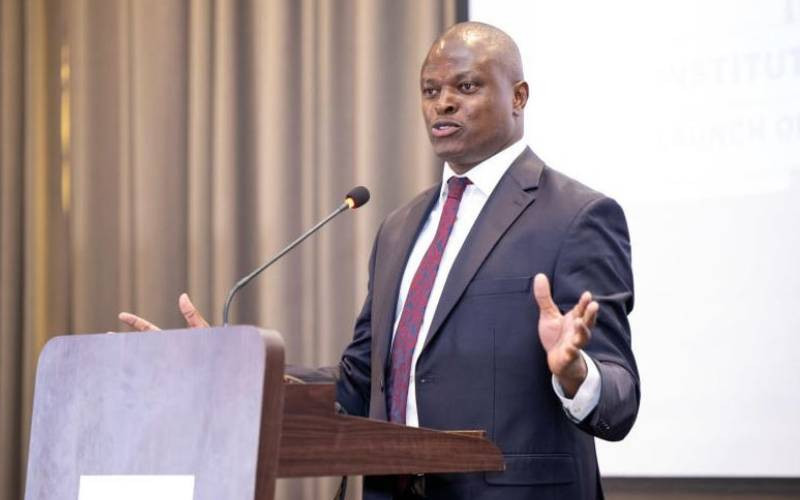
Ms Birkenstock is the Executive Principal of Crawford International School
Subscribe to our newsletter and stay updated on the latest developments and special offers!


 Prefer the Standard on Google






 join
join