×

The Standard e-Paper
Kenya’s Boldest Voice
 The Standard Group Plc is a
multi-media organization with investments in media platforms spanning newspaper
print operations, television, radio broadcasting, digital and online services. The
Standard Group is recognized as a leading multi-media house in Kenya with a key
influence in matters of national and international interest.
The Standard Group Plc is a
multi-media organization with investments in media platforms spanning newspaper
print operations, television, radio broadcasting, digital and online services. The
Standard Group is recognized as a leading multi-media house in Kenya with a key
influence in matters of national and international interest.

Audio By Vocalize
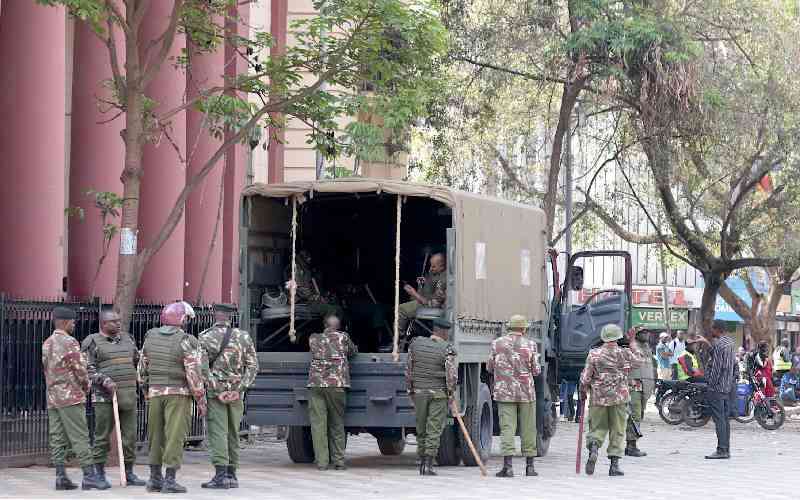
A disturbing interview aired on Citizen TV this week has reignited one of the most uncomfortable conversations in Kenya’s recent history. A man interviewed during the station’s news broadcast alleged that some police officers operate alongside criminal gangs while dressed in plain clothes. According to him, these individuals participate in robberies, attacks on civilians and other criminal activities. He further claimed that plainclothes police officers were among those involved in the attack on All Saints Cathedral and that when some of them are arrested, they are identified and released.
These are grave allegations. They cannot be ignored, dismissed, or treated as ordinary political noise. They also remain allegations that must be investigated and tested against evidence. Still, the claims have unsettled Kenyans because they echo questions citizens have asked for years.
During the protests of 2024 and 2025, Kenyans watched scenes that strained belief. Videos and reports showed individuals looting businesses, setting property ablaze, assaulting civilians, and moving through areas where police were present. Some appeared unusually confident and unafraid. Citizens asked how criminal acts could unfold so openly without immediate consequences. Why did some individuals appear to operate with impunity. Why did arrests seem selective, delayed, or absent. Those questions matter because public trust in policing rests on one principle: the belief that police stand between society and criminality.
When that confidence erodes, the consequences are profound. The social contract between citizens and the state is built on security. Citizens obey laws and accept the authority of the state because the state promises protection and justice. Security agencies are the visible face of state legitimacy.
When allegations suggest that people inside those institutions may be colluding with criminal elements, the issue moves beyond misconduct. It becomes a question of national security and democratic stability. A criminal gang can terrorise a neighbourhood. A criminal gang protected by insiders within state institutions is far more dangerous.
The reason is simple. Ordinary criminals fear arrest. They avoid exposure and operate in secrecy. If criminals believe they enjoy protection from those entrusted with enforcing the law, policing loses its deterrent force. Citizens begin to doubt whether reporting crime is worthwhile. Victims wonder whether investigations will be impartial. Witnesses fear retaliation. Businesses lose confidence in security guarantees. Public trust then collapses slowly, but dangerously.
History shows that societies are endangered when the line between law enforcers and lawbreakers becomes blurred. Countries struggling with corruption and organised crime often share one feature, criminal networks gaining access to state institutions. Once that happens, crime becomes harder to defeat because it gains information, protection, and operational cover. Kenya cannot afford that path.
The allegations require independent, and credible investigation. The National Police Service and the Independent Policing Oversight Authority must approach the matter with seriousness and transparency.
If there is even a measure of truth in the claims, decisive action must follow. Anyone found to have participated in criminal conduct must face prosecution regardless of rank, position, or connections.
This episode also reveals a deeper national challenge. Kenya is experiencing declining trust in institutions. Public scepticism toward political leadership and agencies has grown. Trust, once lost, is difficult to rebuild. Security institutions must be especially sensitive to anything that deepens suspicion. Their effectiveness depends not only on weapons, uniforms, equipment, or legal powers, but on legitimacy.
That legitimacy requires discipline within the service. It requires clear identification of officers during public order operations, strict accountability for plain clothes deployments, transparent arrest records, and firm separation between police work and political mobilisation. It also requires protection for whistleblowers, witnesses, journalists, and victims who help expose abuse.
Ultimately, this issue is bigger than one television interview. It goes to the foundation of state authority. The police service exists to defend society from lawlessness, not to be associated with it. Every allegation of criminal infiltration within security institutions must be treated with urgency, professionalism, and transparency. Kenya deserves nothing less.

Subscribe to our newsletter and stay updated on the latest developments and special offers!






 join
join