×

The Standard e-Paper
Fearless, Trusted News
 The Standard Group Plc is a
multi-media organization with investments in media platforms spanning newspaper
print operations, television, radio broadcasting, digital and online services. The
Standard Group is recognized as a leading multi-media house in Kenya with a key
influence in matters of national and international interest.
The Standard Group Plc is a
multi-media organization with investments in media platforms spanning newspaper
print operations, television, radio broadcasting, digital and online services. The
Standard Group is recognized as a leading multi-media house in Kenya with a key
influence in matters of national and international interest.

Audio By Vocalize

If I were to hand a blueprint for national success to any of our politicians and so-called leaders today, it wouldn’t be a complex economic formula or a map of hidden oil reserves somewhere in Turkana.
For me, I would hand them a copy of Lee Kuan Yew’s From Third World to First. I have written on this before, as I consider it a bible for development. The story of Singapore is not a story of luck; it is a clinical study in the transformative power of discipline.
For a country like Kenya, which shares a colonial history and a similar starting point with Singapore in the 1960s, the contrast in our current trajectories is jarring.
While Singapore emerged from a resource-poor swamp to become a global financial titan, we often find ourselves mired in a cycle of "what could have been." The missing ingredient isn't talent or resources; it is the unwavering discipline to put the collective future above individual greed.
Discipline is not just a high-level policy; it starts with the "small things." When you look at the daily commute in Kenya, you see a microcosm of our national character.
The chaos of matatus and bodabodas is more than just a traffic nuisance; it is a visual representation of a "me-first" mindset.
When a boda boda chooses the wrong side of a dual carriageway or a driver stops in the middle of a busy highway to pick up a passenger, they are making a statement: "My convenience is more important than any traffic laws. We don’t care!"
A nation cannot build a first-world economy on third-world road manners. If we cannot respect a simple red light or a lane marking, how can we expect to respect the sanctity of a public contract or a national budget?
This lack of micro-discipline creates a "hazard mindset" where every citizen feels they must break the rules just to survive. As Lee Kuan Yew understood, changing a nation starts with changing the mindset of the people, instilling the idea that order is the bedrock of progress.
At the higher levels of governance, the lack of discipline graduates from a nuisance to a tragedy. There is a pervasive, toxic myth in our corridors of power: the idea that "the government can never go broke." This fallacy has led to a reckless abandonment of fiscal responsibility.
Instead of disciplined investment in the pillars of a modern society, education, healthcare, and infrastructure, public funds are often treated as a personal war chest.
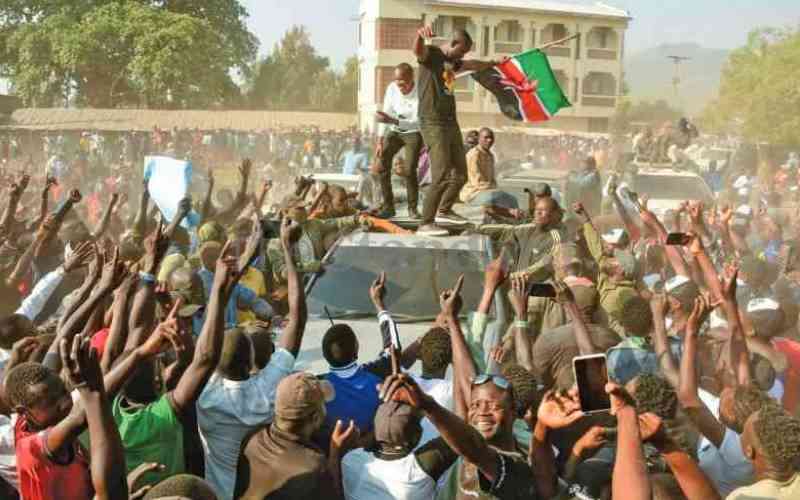
There was a clip doing the rounds where a well-known politician almost caused a stampede, dishing out 1,000 bob notes to desperate fellows so that they could attend a presidential rally the next day. If you must give people money to come and listen to you, don’t you think there’s a huge problem?
When a politician has to pay an audience to listen to them, it is a confession of failure. It proves that they have nothing of value to offer except a momentary reprieve from the poverty their own lack of discipline helped create. In a disciplined society, such "gargoyles" would be relegated to the political dustbin.
Singapore had nothing going for it. No minerals, no vast agricultural land, and no oil. They had a harbor and a leader who insisted that the country comes first.
Lee Kuan Yew’s brilliance was in recognising that human capital is only valuable when it is organised and disciplined.
Stay informed. Subscribe to our newsletter
He didn't just build skyscrapers; he built a system where corruption was social suicide and efficiency was the standard. He proved that you don't need a gold mine to be wealthy; you need a government that refuses to steal from its own future and a citizenry that understands the value of the rule of law.
Discipline is often painful. It requires saying "no" to immediate gratification for the sake of a greater tomorrow.
But as Singapore showed the world, the rewards of that sacrifice are a life of dignity, prosperity, and a nation that finally realises its true potential. It’s time we stop being a country of "what if" and start being a country of "what is."
Subscribe to our newsletter and stay updated on the latest developments and special offers!


 Prefer the Standard on Google





 join
join