×
App Icon
The Standard e-Paper
Kenya’s Boldest Voice
★★★★ - on Play Store
Download App

Legislators should 'bark' outside Parliament and while inside as well

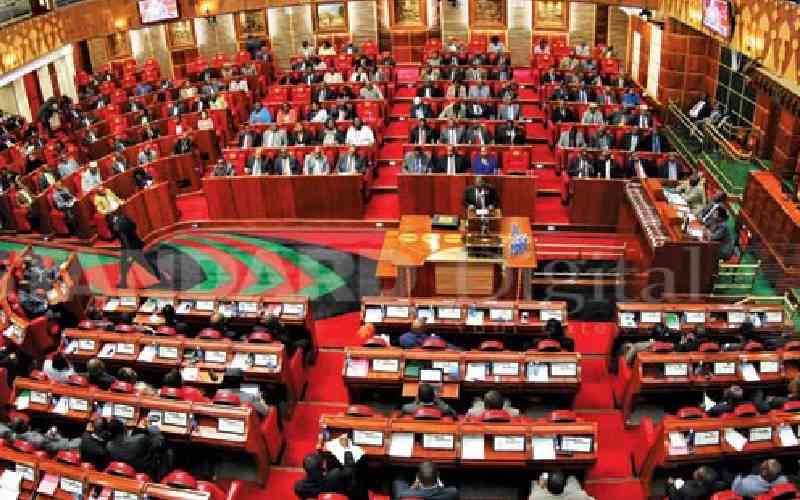
National Assembly PHOTO:COURTESY

The fifth session of the current 13th Parliament is scheduled to start this month, with the National Assembly expected to resume next week on Tuesday, February 10, 2026. Ahead of the scheduled resumption, the National Assembly spent the better part of last week in a retreat in Naivasha, trying to thrash out its agenda. Judging by what is likely to be a highly charged context, the fifth session may yield both predictable and unpredictable dynamics.

This being the penultimate session of the current Parliament, and if history is anything to go by, the upcoming 2027 elections are likely to exert disproportionate influence in various ways. Firstly, the predictable high turnover rate usually associated with the country’s parliamentary elections is likely to dictate how much time individual members dedicate to parliamentary business.

The warning was, in fact, sounded by Speaker Moses Wetangula during the Naivasha retreat. He informed the members that more than half of them will most likely not make it back. It is very likely that as the session progresses, Parliament may struggle to raise a quorum, with members dedicating more time in their respective constituencies to improve their re-election prospects.

Secondly, the ongoing political realignments will likely hold sway in the parliamentary business. For instance, the glue that arguably binds the President’s United Democratic Alliance and the Orange Democratic Movement, namely NADCO and the 10-Point Agenda, is likely to impact how Parliament configures its business. As the two formations formally enter pre-election negotiations, allied members will be keen to avoid anything that may upset the apple cart.


Back to Naivasha, the retreat afforded an early opportunity for the National Assembly to stake its claim on some of the most pressing national priorities: education and health. The mess in the junior secondary placement, which has persistently hogged the headlines for weeks, was especially at the centre of the retreat. The National Assembly unleashed its vicious fury against the leadership of the Ministry of Education. Education Cabinet Secretary Migos Ogamba got a true taste of what effective parliamentary oversight means.

But the harshest words were spared for the Principal Secretary Julius Bitok. According to the Leader of Majority, Kimani Ichung’wa, the Education ministry has ‘the most clueless PS.’ What may have perhaps spared both the CS and the PS the full consequence of the National Assembly’s wrath was the fact that the House was not in session. And that is, we assume that the MPs would have behaved differently while in the National Assembly.

The tragedy with Parliament has been its predictable unorthodox tendency of performing better in the ‘mock exam while outside session’, while intentionally failing in the ‘main exam while in session.’ The National Assembly’s palpable fury in Naivasha was likely only a performative action executed to assuage the public’s justified outrage.

It is conceivable, indeed likely, that upon returning to the National Assembly, MPs will not unleash their powers to enforce accountability in the Education ministry and indeed any other part of the Executive. It will instead be business as usual, barking outside Parliament while recoiling inside the House. Parliament should rise to the occasion and stake its constitutionally granted powers.

Mr Ogutu is a political commentator