×

The Standard e-Paper
Stay Informed, Even Offline
 The Standard Group Plc is a
multi-media organization with investments in media platforms spanning newspaper
print operations, television, radio broadcasting, digital and online services. The
Standard Group is recognized as a leading multi-media house in Kenya with a key
influence in matters of national and international interest.
The Standard Group Plc is a
multi-media organization with investments in media platforms spanning newspaper
print operations, television, radio broadcasting, digital and online services. The
Standard Group is recognized as a leading multi-media house in Kenya with a key
influence in matters of national and international interest.

Audio By Vocalize
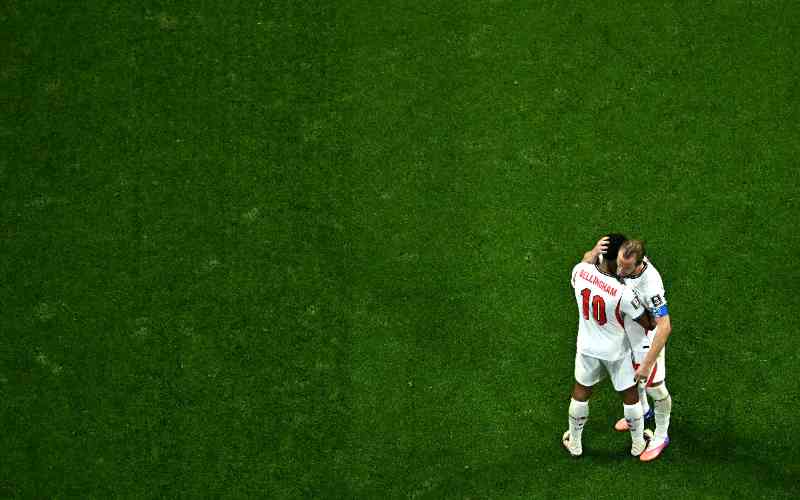
As football fans across the world turn their attention to the 2026 World Cup, we are reminded that every tournament brings champions, heartbreaks and unforgettable underdog stories. The 2026 edition has also reminded us that football can become national therapy for countries carrying wounds of war, political crisis, displacement, sanctions or post-conflict memory.
This does not mean conflict makes countries better at football. That is a myth. War destroys institutions, weakens leagues, displaces families and interrupts talent development. Most conflict-affected countries do not qualify for the World Cup. But when they do, their presence on the global stage becomes more than sport. It becomes a moment of national breathing, a rare space where citizens can gather around one flag.
The Democratic Republic of Congo is one of the strongest examples from the 2026 World Cup. After a 52-year absence from the tournament, DR Congo returned not as passengers, but as a serious and spirited team. They drew 1-1 with Portugal, scored their first World Cup goal as DR Congo, beat Uzbekistan 3-1 to reach the round of 32, and then pushed England before losing 2-1 after leading for much of the match.
That story matters because DR Congo is not simply a football nation returning after a long wait. It is still burdened by conflict in its eastern provinces, where violence involving armed groups, displacement and regional tensions has created one of the world’s most serious humanitarian crises. For such a country, a World Cup run does not end the suffering, but it gives citizens a shared emotional language beyond war.
Iran’s 2026 campaign also showed how football can become entangled with geopolitics. Iran’s participation was questioned after US and Israeli strikes on Iran, and the team faced travel restrictions and logistical complications during the tournament. Iran had qualified for a fourth straight World Cup, but its campaign was shaped by off-field controversy, including restrictions that forced the team to move between US and Mexico. Iran eventually exited unbeaten after three draws against New Zealand, Belgium and Egypt.
Haiti offers another powerful 2026 example. The country returned to the World Cup after 52 years, despite gang violence, political instability and a security crisis so severe that the team played all its qualifiers at neutral venues. Haiti has not played a senior men’s international match at home since 2021. For Haiti, qualification was not just a football achievement; it was a message to the diaspora and citizens at home that the nation still had something to celebrate.
Iraq’s return also fits this pattern. The team appeared at its first World Cup in 40 years in 2026, but its qualification path was affected by regional war and travel complications. Iraq faced major logistical problems before its intercontinental playoff because of the war involving Iran, including closed airspace and difficulty gathering a largely domestic-based squad. Even when Iraq lost heavily to Norway in its opening match, its presence itself carried symbolic weight.
Bosnia and Herzegovina’s 2026 campaign added a post-conflict dimension. Three decades after the Bosnian war, the team surprised many by qualifying, beating Wales and Italy in the playoffs, then reaching the round of 32 after a 3-1 win over Qatar. For Bosnia, as in 2014, the World Cup remains a platform where a country shaped by war, genocide memory and political division can project unity, youth and possibility.
Senegal, Algeria and Croatia also remind us that football histories are often tied to national struggle, colonial memory, separatist conflict or post-war reconstruction. Their World Cup stories cannot be reduced to trauma, but neither can they be separated from history.
The lesson of World Cup 2026 is that when a country already has talent, diaspora networks, coaching discipline and national pride, football can survive crisis and sometimes rise above it.
For Kenya and East Africa, this is a serious lesson. Passion alone is not enough. World Cup qualification requires systems: academies, competitive leagues, good stadiums, scouting, sports science, stable federations and long-term planning.
-The writer is a scholar-diplomat at Moi University, Eldoret
Subscribe to our newsletter and stay updated on the latest developments and special offers!


 Prefer the Standard on Google




 join
join