×

The Standard e-Paper
Join Thousands Daily
 The Standard Group Plc is a
multi-media organization with investments in media platforms spanning newspaper
print operations, television, radio broadcasting, digital and online services. The
Standard Group is recognized as a leading multi-media house in Kenya with a key
influence in matters of national and international interest.
The Standard Group Plc is a
multi-media organization with investments in media platforms spanning newspaper
print operations, television, radio broadcasting, digital and online services. The
Standard Group is recognized as a leading multi-media house in Kenya with a key
influence in matters of national and international interest.

Audio By Vocalize
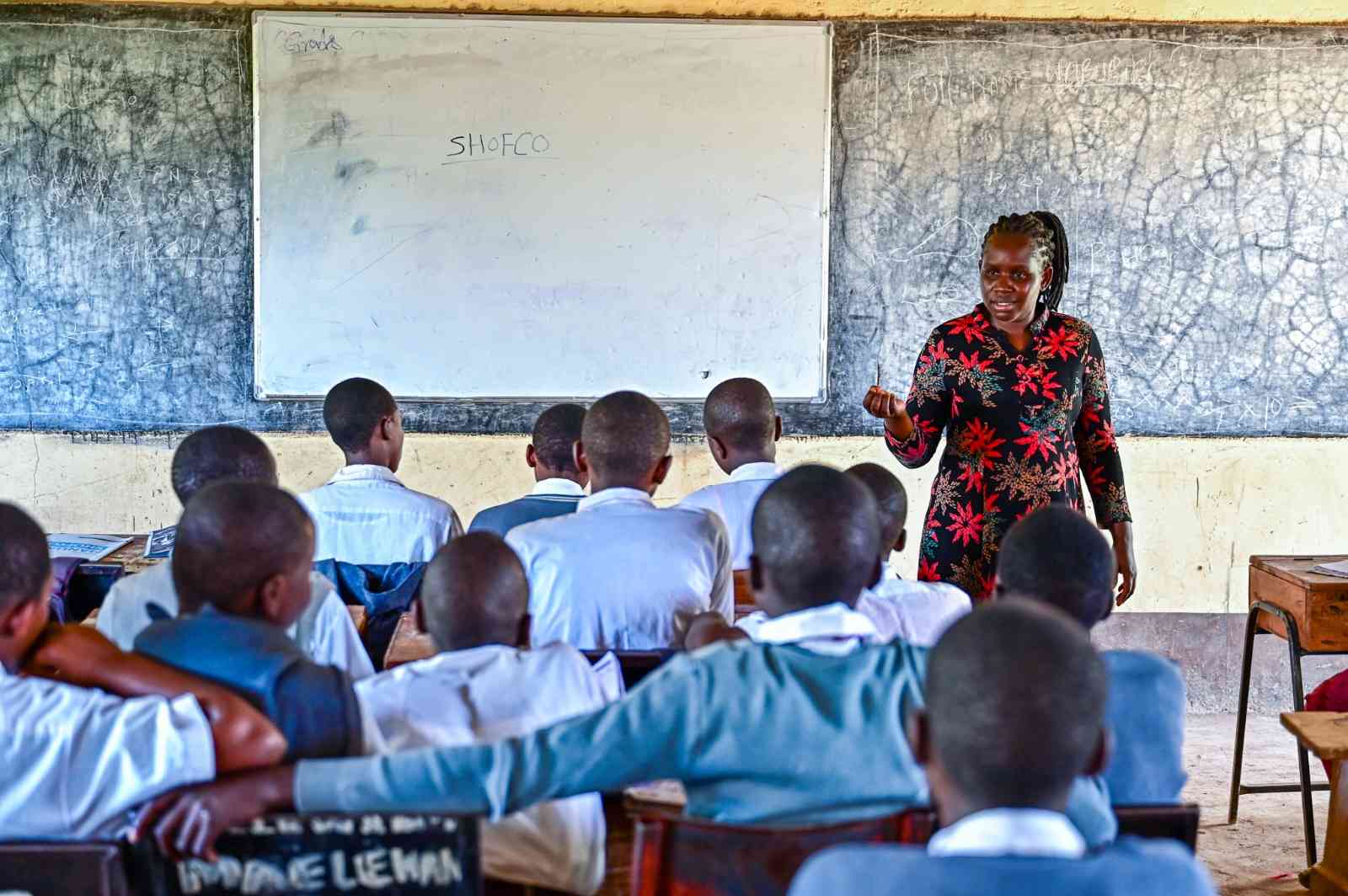
Girls in parts of Migori County face increased risks of female genital mutilation (FGM) and early marriage as cross-border movement and gold mining create new avenues for exploitation.
The risks are pronounced among the Kuria community, which lives on both sides of the Kenya-Tanzania border, making it difficult for authorities to prevent girls from being taken across the border for FGM.
Assistant Chief Shadrack Nyabanande of Masaba Sub-Location says eight girls were rescued in December after being taken across the border for the procedure and returned to school.
“The Kuria people live on both sides of the border. In December last year, we rescued eight girls who had been taken across the border to undergo FGM and returned them to school. Most of those affected are young girls, and poverty is often at the centre of these decisions,” says Nyabanande.
The 2022 Kenya Demographic and Health Survey (KDHS) estimates FGM prevalence among Kuria women aged 15–49 at about 84 per cent, compared with 14.8 per cent nationally among women aged 15–49.
At 21, Magdaline, not her real name, is a mother of three after she underwent FGM at 16 following her removal from Kenya to Tanzania.
“After the cut, I felt I was a mature person and could not go back to school. The only thing remaining was to get married and start a new life. I had dreams for my life, but everything changed,” says Magdaline.
In Nyatike, gold mining is adding another economic pressure, with officials warning that mining income can create relationships between schoolgirls and young men who have money from the trade.
Migori County Director of Gender and Children Service John Ombajo says mining has changed family dynamics in some communities.
“Gold mining has changed the economic dynamics in some communities. A young man can leave school, make quick money and suddenly have the financial ability to start a family. The danger is when that money is used to lure schoolgirls into relationships that end in pregnancy and early marriage,” explains Ombajo.
Dancun Osewe, chair of Okongo Mining Site, says children in the mining areas face risks including leaving school, entering labour and exposure to HIV.
“Gold mining should improve lives, not destroy the future of our children. We are seeing children leaving school, getting into labour and being exposed to HIV. We need urgent awareness and stronger protection so that the wealth beneath our soil does not become a burden on the next generation,” warns Osewe.
Jerine Ogot, a Shining Hope for Communities (SHOFCO) case worker in Nyatike Sub-County, says economic hardship is exposing women and girls to exploitation.
“In the gold-mining areas, we see cases where economic desperation exposes girls and women to exploitation. We also have situations where sex is exchanged for fish, while FGM continues to expose girls to early marriage and other forms of violence,” notes Ogot.
Stay informed. Subscribe to our newsletter
The Migori County Government and SHOFCO are building a safe house in Macalder, Nyatike Sub-County, to provide protection and support for survivors of sexual and gender-based violence (SGBV) as they pursue justice.
SHOFCO founder and chief executive Kennedy Odede says the facility will respond to cases involving HIV, FGM, child marriage, SGBV and teenage pregnancy affecting girls and women across South Nyanza.
“We are investing in Migori because communities here deserve the same access to protection, justice and opportunity as communities anywhere else. The safe house will be a place where a survivor can find safety and a pathway to justice,” says Odede.
Ombajo says the facility will link survivors to social services, law enforcement and the courts, especially when returning home could expose them to further violence.
He adds that SHOFCO's Rights of Children (ROC) clubs in schools have helped children report harmful practices before they happen.
“We want children to understand that they have rights, and we want adults to understand that those rights cannot be negotiated away because of poverty and culture,” adds Ombajo.
Principal Magistrate Chrispine Oruo of Rongo Law Courts says survivors can struggle to remain safe after reporting violence.
“A safe house gives survivors a place where they can be protected while the justice process takes its course. This is particularly important in incest cases, where the person accused of violence may be a member of the same family and the survivor may have nowhere else to go,” observes Oruo.
Juliet Ombogo, an Office of the Director of Public Prosecutions (ODPP) prosecutor at Rongo Law Courts, says fear, family pressure and poverty can prevent survivors from attending court.
“We have had cases where survivors fail to come to court because of fear, family pressure, poverty or because they have returned to the environment where the violence occurred. SHOFCO has helped support survivors to continue with their cases,” explains Ombogo.
She urges communities not to settle serious SGBV cases outside the justice system.
“Out-of-court settlements should not become a way of making violence disappear. Survivors should come forward and seek help. There are institutions and people who can support them through the justice process. ODPP and SHOFCO are some of them,” warns Ombogo.
Ogot says awareness campaigns are helping women and girls understand where they can seek assistance.
“We have been creating awareness so that women and girls know where to go and what support is available to them,” adds Ogot.
Magdaline says she wants her three children to have opportunities she did not have.
“I cannot change what happened to me, but I can hope that my children will have a different life. I hope other young girls will not go through what I went through,” says Magdaline.
Subscribe to our newsletter and stay updated on the latest developments and special offers!


 Prefer the Standard on Google






 join
join