×
App Icon
The Standard e-Paper
Join Thousands of Readers
★★★★ - on Play Store
Download Now

Reintegration kicks off for girls who fled FGM

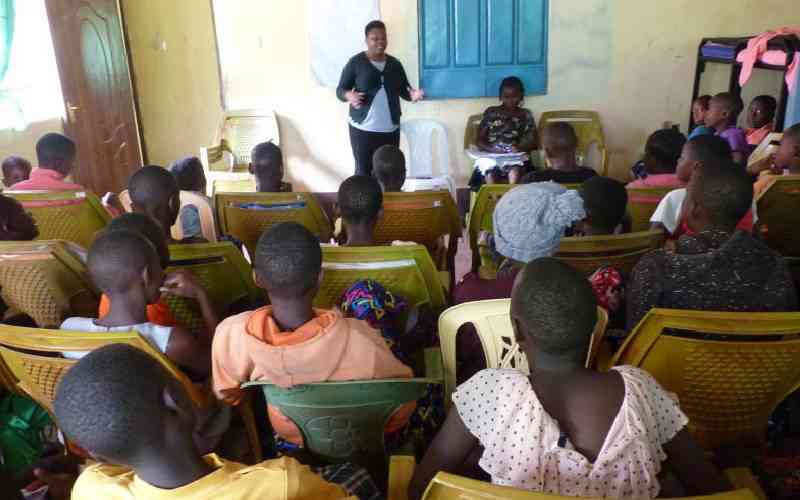
Goseso Woman Network charlady Susan Matinde addresses 69 girls who fled FGM, before their reunion with parents, on January 13, 2023. [File, Standard]

Gender activists in Migori have begun the process of reintegrating more than 120 girls who escaped female genital mutilation (FGM) ahead of the school reopening.

The Bwirege clan, one of the four Kuria communities in Migori, conducted cross-border circumcision of girls from November 2025, prompting many to flee their homes to avoid the cut.

Around 120 girls sought refuge at Komotobo Maranatha Mission in Kuria East Sub-County over the past two months after being rejected by their families. Activists said the girls would remain safe at the shelter until January 5, when schools reopen, confident that the circumcision period will have ended.


“Most of these girls have been rejected by their families. With schools set to reopen next week, we have begun counselling to ensure they return to their families and continue with their education,” said Benter Odhiambo, coordinator at Micontrap Kenya.

Speaking at the facility, she oversaw the donation of food and toiletries to the girls, followed by bonding and counselling sessions to celebrate the festive season.

Odhiambo added that activists in the region are committed to achieving full educational transition for the girls, a challenge that often arises immediately after circumcision.

“Once girls are circumcised, they are considered mature and ready for marriage or sexual activity, which often results in fewer reporting back to school,” she explained.

By the beginning of last week, counsellors had already begun engaging parents and guardians of the girls at the rescue centre to facilitate their return to school.

Denis Marwa, the centre manager, said that since 2007, the facility has provided shelter for girls fleeing FGM, as the region lacked a government-owned rescue centre. He added that some girls have come from as far as Tanzania.

“We have girls whose parents were arrested and are undergoing legal proceedings, while others have been openly rejected by their families, which could affect their education,” Mr Marwa said.

He explained that the centre trains the girls in life skills and connects them with role models — other girls who fled FGM and are now married, in professional careers, or still in school — to provide encouragement.

“We will have to release the girls back to their families eventually, as schools are reopening. We have created a team of elders, church leaders, and family members to ensure they are reintegrated safely,” he said.

Colleta Bwahi, CEO of Micontrap Kenya, said the organisation would collect data from schools and local authorities to monitor the girls’ transition back into education.

The trio called on the government to establish a dedicated rescue centre to provide a longer-term, safer environment for girls fleeing FGM.

They noted that for over two decades, activists’ calls for such a centre have gone unanswered by the government and elected leaders.