×

The Standard e-Paper
Kenya’s Boldest Voice
 The Standard Group Plc is a
multi-media organization with investments in media platforms spanning newspaper
print operations, television, radio broadcasting, digital and online services. The
Standard Group is recognized as a leading multi-media house in Kenya with a key
influence in matters of national and international interest.
The Standard Group Plc is a
multi-media organization with investments in media platforms spanning newspaper
print operations, television, radio broadcasting, digital and online services. The
Standard Group is recognized as a leading multi-media house in Kenya with a key
influence in matters of national and international interest.

Audio By Vocalize

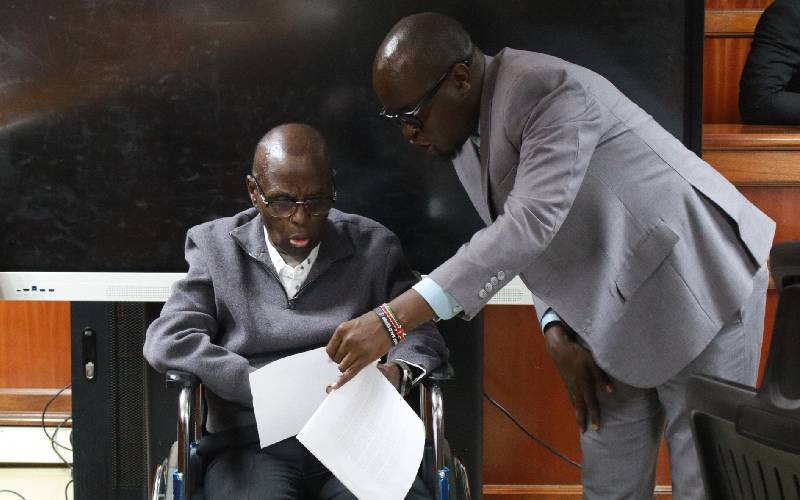
Wajir Governor Ahmed Abdulahi before the Senate committee on County Public Investments and Special Funds at KICC, Nairobi, May 17, 2023. [File, Standard]
Wajir Governor Ahmed Abdullahi has been taken to task by the Senate over some fictitious Sh1.3 billion pending bills that have already been paid for by his administration.
Abdullahi, who appeared before the Senate County Public Accounts Committee, chaired by Homa Bay Senator Moses Kajwang, was tasked to provide documents proving that the pending bills have not been cooked, as they demanded a forensic audit of the debts.
Kajwang sought to know from the Governor what assurance he could provide to the Senate that the pending bills were not manufactured since they were not disclosed in the previous financial year, then they were suddenly put there, which raised eyebrows.
“We would like Governor Abdullahi to clearly explain to this committee where the Sh1.3 billion came from. If we do not get a clear explanation, we will then consider that these pending bills were manufactured and funds meant to benefit Wajir residents paid out,” said Kajwang.
The Auditor General had raised questions about the sudden appearance of the suspicious pending bills in the county’s books for the financial year ending June 30, 2025, raising the amount to Sh3.5 billion despite only Sh2.2 billion being declared previously.
The Governor had a difficult time explaining where the pending bills came from as Senators accused the devolved unit of creating the debts, arguing that the pending bills were legitimate historical contingent liabilities accrued from projects rolled out by his predecessor and their omission was not deliberate.
Abdullahi told Senators that his administration had budgeted to settle Sh2.2 billion in the current financial year and has so far paid Sh1.1 billion from the pending liabilities, with the paid amount accruing from the financial year 2024-25.
He said that the County will work closely with the National Treasury to ensure the timely release of funds to the county government in line with the cash disbursement schedules approved by the Senate, so as to enable the county to settle its obligations on time.
“As a County Executive, we have put in place measures to enhance our own generated revenue to meet our revenue targets and address revenue shortfalls that contribute to the challenge of pending bills,” said Abdullahi.
Senator Kajwang asked the governor to explain what process the county government used to pick out the pending bills to the point of declaring them eligible since they had disowned them in the previous financial year, accusing the county of hunting for the said pending bills.
Nairobi Senator Edwin Sifuna pointed out that the Governor had said there were no records of the pending bills and it was like his administration went out looking for people to pay because there were other debts for the past three years which had not been cleared.
“We are interested to know how the Sh1.3 billion worth of pending bills suddenly dropped from the sky, and who decided the liabilities to be included in the financial year under review. Governor Abdullahi should clearly explain this to us,” said Sifuna.
In his response, the Governor said the pending bills were arrived at following a multi-departmental scrutiny of projects rolled out by the previous administration, but their claims had not been settled and submitted a document with the list of the projects.
Stay informed. Subscribe to our newsletter
However, rather than helping support his point, the document added to the suspicion surrounding the controversial debt, with the Senators realising that the pending bills had been paid for despite the governor first saying they were just payable and had not been settled.
There were Sh47 million unremitted pension deductions to the local authority provident fund, which has now accumulated interest worth Sh410 million, while there was also some Sh113.2 million in unremitted gratuity, which exposes retired county staff to delays in accessing retirement benefits.
“Governor Abdullahi, it seems that the administration is prioritising the payment of tea and mandazi debts, yet your retired staff’s gratuity has not been cleared. Why is this so, yet it is supposed to be on top of your priority list?” said Sifuna.
There was no end in sight for the governor as more audit queries emerged with his administration being on the spot for failing to settle statutory deductions amounting to Sh732 million, with some being outstanding since 2014.
Abdullahi distanced his administration from the non-remittance of the statutory deduction between 2018 and 2022, placing the blame on former Governor Mohamed Abdi Mohamud, stating that his administration inherited a legal dispute from the previous regime.
“My administration has since tried to meet its statutory deduction obligations, and we are also negotiating for an out-of-court settlement with the pension schemes to reduce the accumulated penalties and interest,” said Abdullahi.
The Governor admitted that action could have been taken earlier, pledging to conclude agreements with pension administrators and allocate more resources towards clearing the debts, saying even though they will not clear the entire amount, they will do something substantial in the budget.
Nandi Senator Samson Cherarkey said that if someone took the statutory benefits of retired employees and never remitted, then they must be investigated and prosecuted, since it was unacceptable for county employees to suffer due to the mistakes of other individuals.
“If there is someone who took money belonging to the people of Wajir, he should be investigated and prosecuted; criminal liability does not expire because someone left office; those affected want to know when they will receive their dues,” said Cherarkey.
The Auditor General's report revealed the county administration has 216 drivers for a fleet of 149 vehicles, where 90 of them are grounded and unserviceable, with drivers employed for a fleet of vehicles that, more than a year later, have yet to be purchased.
The Governor defended the employment of extra drivers, arguing that they were necessary because of the county’s terrain and referral system, which sees drivers working in shifts, stating that some of the drivers had been absorbed as enforcement officers while waiting for new vehicles.
Abdullahi told the committee that they are soon purchasing some 10 ambulances and 11 other vehicles as part of the expansion of their fleet, which will ensure that the extra drivers are fully engaged and that currently the drivers work in shifts and it was necessary to have more.
“The drivers work in shifts; it is necessary to have more than one driver for ambulances and water bowsers because during drought, we usually run a 24-hour emergency made of three shifts to deliver water to the farthest points the livestock might have moved to,” said Abdullahi.
Subscribe to our newsletter and stay updated on the latest developments and special offers!


 Prefer the Standard on Google