Audio By Vocalize
Activist moves to court seeking orders compelling Parliament to disclose MPs’ final voting records on crucial legislation, including the Finance Bill.
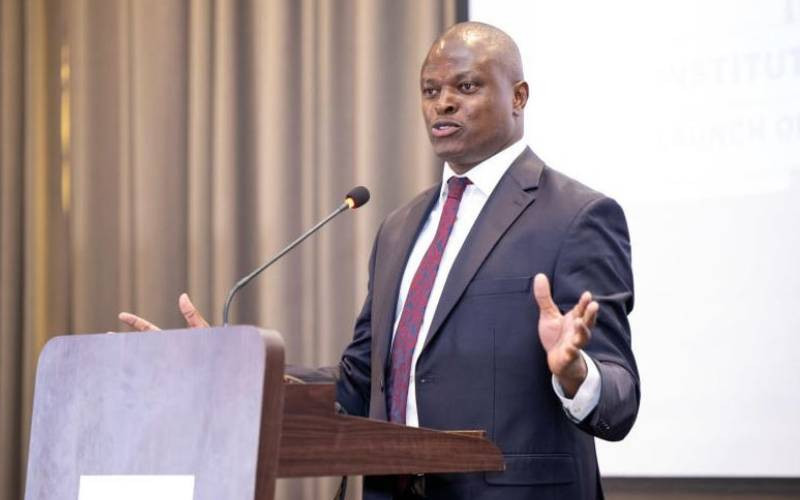
Rights activist Francis Awino has moved to the Milimani High Court seeking orders compelling Parliament to make MPs’ voting, attendance and other legislative records publicly accessible to Kenyans.
In his petition, Awino has sued the Speaker of the National Assembly, National Assembly, Clerk of the National Assembly, Speaker of the Senate, Senate, Clerk of the Senate and Attorney-General.
The activist challenges what Awino describes as inadequate transparency and accountability in Parliament, particularly during final votes on consequential legislation.
Awino wants the court to declare that final legislative voting must be conducted in a manner that is open, transparent, auditable and reasonably accessible to the people through their elected representatives.
He argues that Article 35 of the Constitution and the Access to Information Act require Parliament to provide timely public access to final-vote, attendance, division, quorum, leave and related legislative records.
According to the activist, meaningful public participation cannot end with citizens submitting memoranda or attending parliamentary hearings.
He wants the court to declare that public participation requires an open legislative process whose final representative decision is capable of public scrutiny and verification.
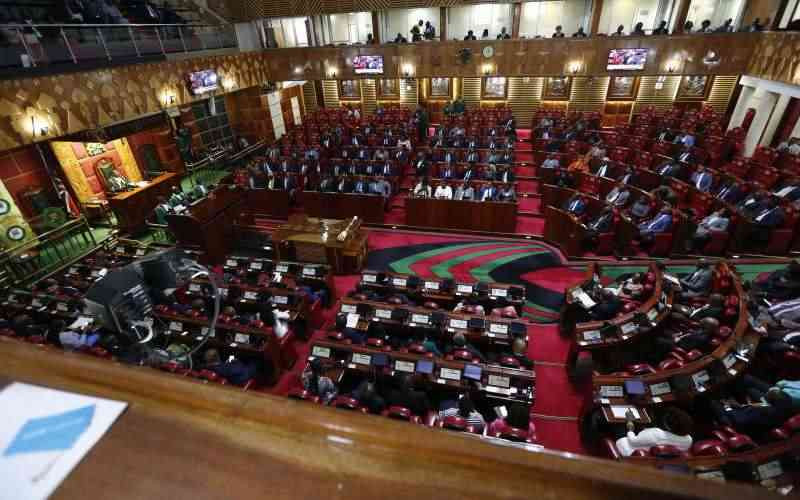
A key issue raised in the petition is the final vote on the Finance Bill, 2026, following media reports that a large number of MPs did not participate in the vote.
Awino cites reports published by across various local media stations indicating that 186 or 187 MPs did not participate in the vote.
According to the reports cited in the petition, 122 Members voted in favour of the Bill while 40 voted against it, with the remaining Members reported as having not participated.
However, Awino cautions that the media reports should not be treated as conclusive evidence of the conduct or status of individual MPs.
“The Petitioner relies on the reports not as conclusive proof of the exact number, the status of individual Members, the authenticity of attributed explanations, or individual wrongdoing,” the petition states.
He argues that official parliamentary records are necessary to establish whether each Member was present, absent, on approved leave, excused, participating remotely, abstaining, suspended or otherwise recorded.
Awino says the reported scale of non-participation raises constitutional questions because the Finance Bill has direct implications for taxation, public revenue, the cost of living and public services.
Stay informed. Subscribe to our newsletter
He is asking the court to compel Parliament to provide certified records relating to final legislative votes on the Social Health Insurance Bill, 2023, Finance Bill, 2025, Finance Bill, 2026 and legislation concerning university funding.
Among the records sought are Hansard reports, Votes and Proceedings, Order Papers, attendance registers, member-specific voting records, division lists, electronic voting reports, audit logs, quorum records, Speaker’s rulings and records of leave or excused absence.
Awino also wants Parliament to establish a publicly accessible final-vote register identifying the Bill, date, stage, voting method, quorum determination, announced result and the status of every Member.
He wants Parliament to publish attendance and division records within 48 hours of final votes and preserve the underlying electronic voting and audit records.
The activist is further seeking orders requiring Parliament to develop a framework allowing secure, authenticated and auditable remote participation in narrowly defined exceptional circumstances.
He argues that such a framework should cater for genuine incapacity, disability, maternity or paternity, emergencies and unavoidable official duty while protecting the personal nature of each legislator’s vote.
The petition therefore seeks to place Parliament under a more transparent system in which Kenyans can establish how their elected representatives voted on legislation affecting the public.
However, judge Patricia Nyaundi declined to certify Awino’s case as urgent and instead directed that the main petition be expedited.
The court ordered Awino to serve the petition on the respondents within seven days and by September 7, 2026.
The respondents are required to file their responses within 14 days of service and by September 22, 2026.
Awino will then file any further affidavit together with submissions within seven days and by September 29, 2026.
The respondents will file their submissions by October 8, 2026, while Awino has leave to file supplementary submissions by October 12, 2026.
The court directed that highlighting of submissions will take place on October 15, 2026.