×

The Standard e-Paper
Fearless, Trusted News
 The Standard Group Plc is a
multi-media organization with investments in media platforms spanning newspaper
print operations, television, radio broadcasting, digital and online services. The
Standard Group is recognized as a leading multi-media house in Kenya with a key
influence in matters of national and international interest.
The Standard Group Plc is a
multi-media organization with investments in media platforms spanning newspaper
print operations, television, radio broadcasting, digital and online services. The
Standard Group is recognized as a leading multi-media house in Kenya with a key
influence in matters of national and international interest.

Audio By Vocalize
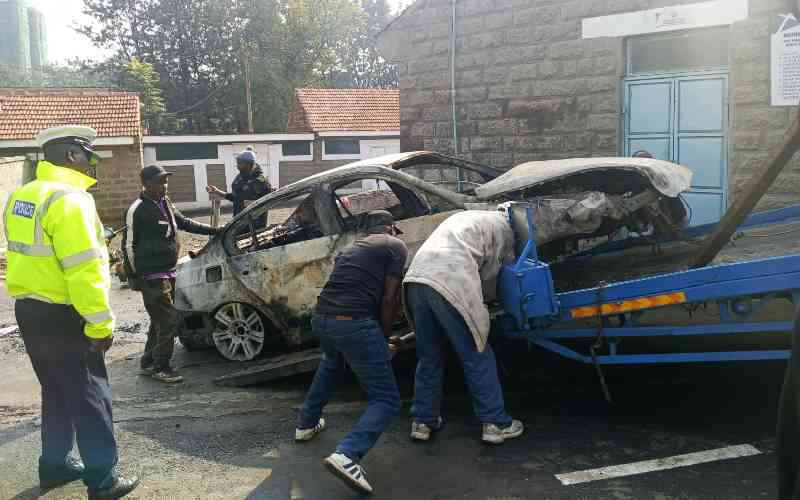
Rescue workers load the wreckage of the car that was involved in an accident along Raila Odinga Road in Nairobi, killing three occupants. [Benard Orwongo Standard]
Road crashes have claimed at least 2,150 lives in Kenya in the first six months of 2026, translating to an average of about 12 deaths every day, according to the Kenya Red Cross Society.
The humanitarian organisation has warned that if the current trend persists, the country could record at least 4,400 road deaths by the end of the year, raising fresh concerns over road safety and the effectiveness of measures being implemented to curb fatalities.
Speaking during a roundtable meeting with journalists, Natasha Lulia, road safety focal person at the Kenya Red Cross Society, said the figures were alarming and required a shift from responding to crashes after they occur to preventing them.
"It is imperative for us to look at road safety as a whole. We can take a more proactive approach to this, and be less reactive," she said.
The Red Cross said counties along the Northern Corridor are among the most affected, citing Nairobi, Kiambu, Mombasa, Nakuru and Kisumu as areas that have recorded high numbers of fatalities, crashes and serious injuries.
The organisation is now pushing for amendments to Section 42 of the Traffic Act, particularly provisions governing speed limits in urban and other high-risk areas.
Under the current provisions, the speed limit in priority areas such as schools, hospitals and public playgrounds is capped at 50 kilometres per hour.
The Red Cross now wants the limit reduced to 30 kilometres per hour, arguing that lower speeds would help protect vulnerable road users.
"We'd like, based on global evidence and best practice, to lower the speed to 30 kilometres per hour to ensure that we continue protecting vulnerable road users, such as pillion passengers, boda-boda riders, cyclists, and most importantly, pedestrians, to lower the number of crashes we keep seeing on our roads every day," said Lulia.
This comes barely two months after the National Transport and Safety Authority (NTSA) rolled out a minor traffic offences framework that introduced new penalties for over speeding motorists.
However, the organisation said reducing the speed limit alone would not be sufficient without proper enforcement and supporting infrastructure.
It wants authorities to install adequate and clearly understandable road signs showing applicable speed limits and introduce traffic-calming measures such as speed bumps and rumble strips in areas where lower speeds are required.
The Red Cross also called for improved infrastructure for non-motorised road users, including dedicated walkways and cycling paths, saying these would reduce conflicts between pedestrians, cyclists and motorised traffic.
Stay informed. Subscribe to our newsletter
They said counties also have an important role to play in implementing road safety measures, particularly in urban areas where vulnerable road users interact closely with motorists.
"Road safety is everyone's business, not only the authorities. The economic implications of these road crashes require concerted effort to arrest the situation," said Policy and Advocacy lead at Red Cross, Kaunda Jilly.
Subscribe to our newsletter and stay updated on the latest developments and special offers!


 Prefer the Standard on Google









 join
join