×

The Standard e-Paper
Join Thousands Daily
 The Standard Group Plc is a
multi-media organization with investments in media platforms spanning newspaper
print operations, television, radio broadcasting, digital and online services. The
Standard Group is recognized as a leading multi-media house in Kenya with a key
influence in matters of national and international interest.
The Standard Group Plc is a
multi-media organization with investments in media platforms spanning newspaper
print operations, television, radio broadcasting, digital and online services. The
Standard Group is recognized as a leading multi-media house in Kenya with a key
influence in matters of national and international interest.

Audio By Vocalize
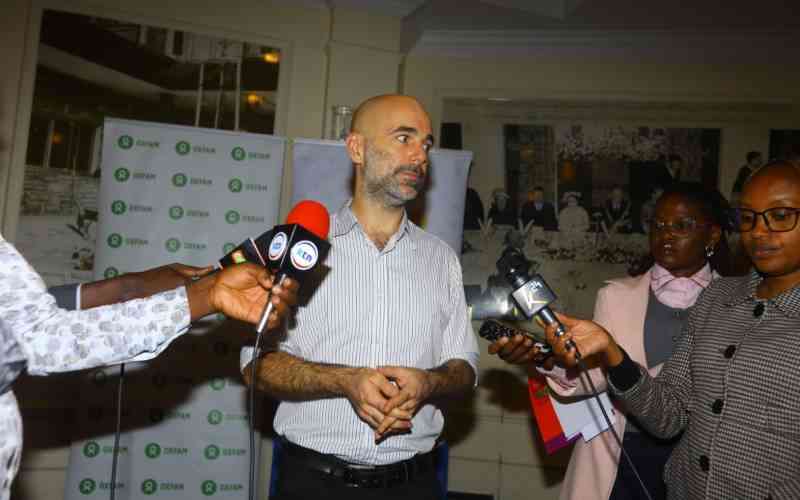
Lead researcher for ODI, Dustin Barter at the Kenya humanitarian crisis report launch. [Juliet Omelo, Standard]
A new report has warned that Kenya is trapped in a cycle of perpetual humanitarian crisis, driven not only by punishing droughts and floods but by deep-rooted political and economic inequalities that the aid system often reinforces rather than resolves.
Released by the Overseas Development Institute (ODI), the study, ‘Governing Inequality: Kenya’s State, Aid Politics and Perpetual Humanitarian Crisis’, argues that despite advances in disaster-risk management and devolution, the country’s most vulnerable communities remain locked in chronic emergency conditions as state institutions struggle with underinvestment, uneven capacity and decades of marginalisation.
Speaking during the report launch, Dustin Barter, a senior researcher at ODI, cautioned that Kenya’s crisis landscape cannot be understood through climatic shocks alone.
“Humanitarian actors cannot keep filling gaps created by structural inequality. For too long, the aid system has allowed the state to step back from responsibilities that should be central to governance,” he said.
The report links Kenya’s entrenched humanitarian need to long-standing disparities across regions, particularly in the Arid and Semi-Arid Lands (Asals), where communities face chronic food insecurity and limited public investment.
“These counties continue to lag in infrastructure, basic services and economic opportunity, leaving residents disproportionately exposed to climate shocks,” read the report.
Even after ten years of devolution, the counties facing the greatest humanitarian burden often have the least capacity to respond.
The report noted that while these counties have strengthened early-warning systems, coordination and localised planning, inadequate resources and inconsistent national support undermine meaningful progress.
“ODI delivers one of its strongest criticisms to the architecture of Kenya’s aid system, which remains dominated by international organisations working through short-term projects that often bypass county and national institutions entirely,” Barter noted.
He added that these parallel structures weaken accountability, dilute state leadership and limit the country’s ability to build long-lasting resilience.
Barter warned that this approach risks entrenching dependency rather than alleviating it.
“When parallel systems replace government responsibility, resilience becomes impossible. Humanitarian aid cannot substitute for the political decisions needed to tackle inequality,” he said.
The report notes that Kenyan civil society organisations continue to play crucial roles in frontline response and community advocacy.
Yet they operate within a constrained funding environment where donor priorities frequently favour larger international actors, limiting the influence and sustainability of local initiatives.
Stay informed. Subscribe to our newsletter
“ Despite their proximity to affected communities, they often struggle to secure the resources needed to drive systemic change,” said the report.
The report further suggests that Kenya’s crisis-response model requires a shift from short-term interventions to long-term structural reform centred on state leadership.
It calls for predictable financing for counties, expanded public investment in historically neglected regions and governance reforms that strengthen accountability and resource mobilisation.
“International partners must support state systems rather than build alternatives to them,” it noted.
As climate shocks intensify and inequality deepens, the report frames a critical turning point for Kenya.
“Without a redesign of how humanitarian crises are governed, the country risks normalising emergencies as a permanent feature of national life. We need to confront the political economy of inequality. Otherwise, Kenya’s humanitarian crises will continue to repeat themselves and worsen,” Barter noted.
Subscribe to our newsletter and stay updated on the latest developments and special offers!


 Prefer the Standard on Google








 join
join