×

The Standard e-Paper
Stay Informed, Even Offline
 The Standard Group Plc is a
multi-media organization with investments in media platforms spanning newspaper
print operations, television, radio broadcasting, digital and online services. The
Standard Group is recognized as a leading multi-media house in Kenya with a key
influence in matters of national and international interest.
The Standard Group Plc is a
multi-media organization with investments in media platforms spanning newspaper
print operations, television, radio broadcasting, digital and online services. The
Standard Group is recognized as a leading multi-media house in Kenya with a key
influence in matters of national and international interest.
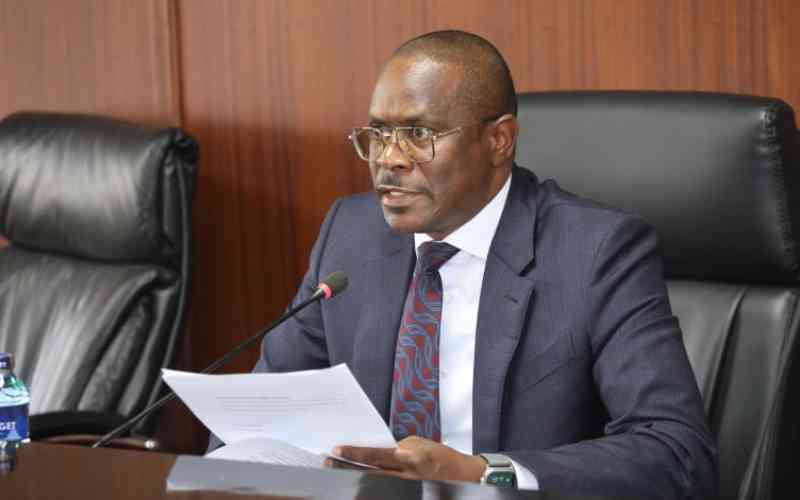
Kenya is investing heavily in infrastructure. From your vantage point as chair of the Transport and Infrastructure Committee, how critical is infrastructure to national development?
There is no country anywhere in the world that has developed without a deliberate, well-planned and well-executed infrastructure framework. Infrastructure is not cosmetic. It is not about ribbon-cutting ceremonies. It is the backbone of economic activity.
When we talk about roads, railways, air transport, ports and logistics, we are really talking about how people move, how goods move, how industries function and how markets connect. Without infrastructure, industrialisation remains a slogan. You cannot manufacture competitively if your goods cannot move efficiently. You cannot grow agriculture if farmers cannot access markets. You cannot talk about regional trade if your ports and rail systems are inefficient. So infrastructure is not optional. It is foundational.
Yet even as Kenya builds, concerns around public debt keep surfacing. How do you balance infrastructure development with fiscal sustainability?
That is the central tension of our time. Kenya’s biggest challenge today is not lack of ambition or lack of ideas. It is debt.
Borrowing in itself is not a problem. Every developing country borrows. The problem arises when borrowing is not strategic, when it does not unlock productivity, or when it mortgages future generations without creating the capacity to repay.
Infrastructure must be productive. A road, a railway, a port must generate economic activity, expand trade, reduce costs, and create value. If you borrow to build infrastructure that does not pay for itself directly or indirectly, then you are simply pushing today’s problems into the future. we must build, but we must not borrow blindly.
Some critics argue that Kenya has slowed down in infrastructure expansion compared to previous years. Do you believe the country should move faster?
I do not believe in paralysis by caution. At the same time, I do not believe in reckless speed. Kenya cannot grow at an incremental pace if we want to compete regionally and globally. The demands of our population, our economy, and our strategic position in East Africa require bold interventions. That is why discussions around instruments like an infrastructure fund are important.
However, speed must be guided by planning. It must be guided by cost-benefit analysis. It must be guided by national priorities, not political impulses. Moving fast without direction is not progress. It is confusion.
You have described road accidents as a national crisis. How serious is the situation?
It is extremely serious, far more serious than we are willing to admit. Kenya loses more than 5,000 lives every year through road accidents. That number is unacceptable. It is a national tragedy that we have normalised. At some point, we shut down the country because of Covid-19. Yet if you look at the numbers, we are losing more people on our roads every year than Covid-19 killed in this country. But because these deaths happen in ones and twos, scattered across highways and towns, we do not treat them with the urgency they deserve. This is a silent crisis.
In your view, what is driving this high rate of road fatalities?
The biggest gap in our transport system is enforcement. We have laws. We have regulations. We have speed limits. The problem is that enforcement is inconsistent, compromised, or absent. Unroadworthy vehicles are allowed to operate. Drunk drivers are released. Speeding is tolerated. Corruption undermines enforcement at every level. If traffic rules were enforced strictly and consistently, we would significantly reduce accidents within a very short time.
You’ve been particularly vocal about the role of law enforcement. What do you expect from the police?
Stay informed. Subscribe to our newsletter
The law must apply equally to everyone. There should be no sacred cows on the road. Whether you are a matatu driver, a boda boda rider, a truck operator, or a private motorist; if you break traffic laws, you must face the consequences. Drunk driving should lead to immediate arrest. Speeding should be punished without negotiation. Unroadworthy vehicles should be removed from the road. I expect the Inspector General of Police to take traffic enforcement seriously. Road safety cannot be optional. Lives depend on it.
You have also spoken about digitising traffic enforcement. How would that help?
Digitisation removes discretion, and discretion is where corruption thrives. Automated systems: speed cameras, digital fines, electronic monitoring, ensure that the law applies uniformly. A system does not negotiate. A system does not take bribes. A system records, flags and enforces. If we are serious about reducing road deaths, we must reduce human interference and strengthen systems. That is the only sustainable solution.
Beyond enforcement, do you see challenges around driver competence?
Absolutely. Many drivers on our roads have never gone to a proper driving school. You see trucks occupying fast lanes. You see public service vehicles stopping anywhere. You see drivers who do not understand lane discipline, right of way, or basic road courtesy. Infrastructure alone cannot guarantee safety. Users must understand how to operate within it. Driver training and licensing standards must be tightened if we want our roads to function properly. Like any other Kenyan, I am a fan of what NTSA has been doing in conjunction with road users, where once a vehicle is captured on video misbehaving or breaking any rule, the driver is taken for an examination. Some netizens call it Jesma, others Chemistry Paper Two. It’s hilarious but it’s working.
Pedestrians remain among the most affected in road accidents. How do you address their vulnerability?
Pedestrians are the most vulnerable road users, and sadly, they form a large proportion of road fatalities. In many cases, people are forced to cross highways without footbridges or safe crossings. That is a design failure. Roads are being built for speed, not for human safety. While personal responsibility matters, the State also has a duty to design infrastructure that protects lives. Footbridges, pedestrian crossings, service lanes: these are not luxuries. They are necessities.
What is the broader philosophy that guides your work in Transport and Infrastructure?
Kenya’s future will not be determined by how much we build, but by how wisely we build and how well we govern what we build. Discipline is not anti-development. Enforcement is not oppression. Planning is not delay. These are the foundations of a safe, prosperous and sustainable nation. If we protect lives, respect institutions, and invest responsibly, Kenya will get where it wants to go.
Development must be governed. We cannot build ourselves into debt. We cannot build roads that become corridors of death. We cannot pass laws that are not enforced. Infrastructure should enable growth, but it must also protect life. Borrowing should expand capacity, not deepen crisis. Institutions should function, not perform.
Subscribe to our newsletter and stay updated on the latest developments and special offers!








 join
join