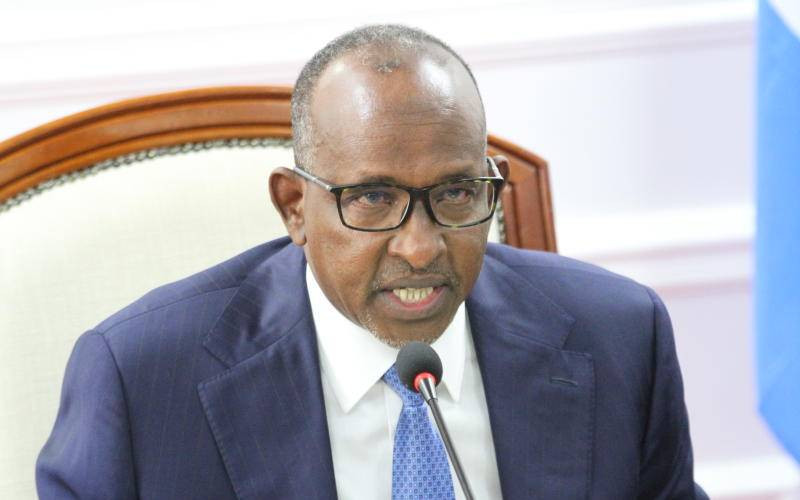
Health Cabinet Secretary Aden Duale has cautioned against unverified claims of miraculous healing, saying matters of health and life must remain grounded in science, ethics, and evidence-based medicine.
His remarks follow a warning by the Kenya Medical Practitioners and Dentists Council (KMPDC) that misleading narratives about healing could endanger public health.
The controversial claims surfaced during a three-day religious crusade in Nakuru led by a well-known preacher and drew widespread attention on both mainstream and social media. The unverified claims emerged that serious illnesses were miraculously healed through faith during the crusade.
Duale has since directed KMPDC to immediately investigate medical professionals who publicly testified to such claims.
“Any claims of miraculous healing, especially by licensed medical practitioners, must be supported by verifiable, scientifically proven medical evidence. Unsubstantiated claims constitute medical misinformation and pose a direct threat to human life and public safety,” he wrote in a post on X.
Duale said that while the Ministry of Health respects the role of faith and spiritual nourishment in people’s lives, medical practice cannot be based on belief alone.
He added that the ministry would not tolerate the misuse of medical authority to mislead the public, endanger patients or undermine trust in the healthcare system.
In a separate statement issued on Saturday, KMPDC Chief Executive David Kariuki said the council had noted the widespread reports linking some medical practitioners to healing claims attributed to a high-profile religious event.
The medics reportedly suggested that conditions such as HIV/AIDS, cancer, blindness, deafness, muteness, and other chronic disabilities were healed during the crusade, claims medical authorities say lack scientific backing.
“As the statutory body responsible for regulating medical and dental practice in Kenya, KMPDC unequivocally condemns such statements by medical practitioners based on unverified claims,” said Kariuki.
The council reiterated that evidence-based medicine remains non-negotiable in healthcare delivery and that all treatments must be supported by scientific evidence, rigorous testing, and proper regulatory approval.
KMPDC warned that unsubstantiated claims, especially when promoted by licensed professionals, could mislead vulnerable individuals and discourage them from seeking proven, life-saving treatment. “Relying on unverified healing methods for critical conditions can pose grave risks,” the council said.
The Council confirmed it has launched investigations and warned that disciplinary and legal action will be taken against any practitioner found to have violated professional standards or endangered patient safety.
“Appropriate action will be taken to safeguard public health, uphold medical ethics, and protect the public from misinformation.”
Stay informed. Subscribe to our newsletter