Audio By Vocalize
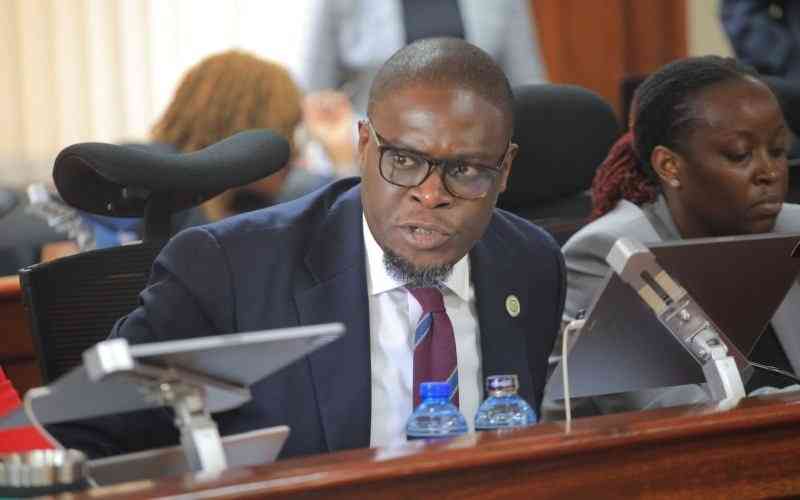
Nairobi Governor Johnson Sakaja told senators on Thursday that a Sh80 billion cooperation agreement with the national government is not a revival of the defunct Nairobi Metropolitan Services (NMS).
Sakaja appeared before the Senate Devolution and Intergovernmental Relations Committee to answer questions about the pact, signed on 17 February 2026 by Prime Cabinet Secretary Musalia Mudavadi and himself at State House, in the presence of President William Ruto.
"This is not a new governance structure; it is a joint committee, it is not a new entity, it is not NMS, no staff from Nairobi County is moving to the national government, and no staff is coming from the national government to the county. There is no provision on HR. The county will continue to do its functions," said Sakaja.
The governor, who as senator was among the fiercest critics of the NMS, the entity that stripped then-Governor Mike Sonko of key county functions in 2020, now finds himself defending a structurally similar arrangement, a fact that has not been lost on opponents.
The framework commits the national government to assume financial and operational responsibility across several functions constitutionally vested in the county, including solid waste management, road construction and rehabilitation, water and sewerage infrastructure, public lighting, drainage, affordable housing and the regeneration of Nairobi's rivers.
Specific allocations under the pact include Sh9 billion for trunk sewer networks, Sh15 billion for long-term sewer expansion, Sh8.7 billion on roads, bridges and drainage, Sh6 billion for a new sewer plant, Sh3.7 billion on street lighting, Sh3.3 billion for upgrading informal settlements, Sh3 billion each for the Gigiri-Shauri Moyo corridor and last-mile connectivity, Sh2.1 billion at the Ng'ethu Treatment Plant and Sh1.5 billion in transformers and prepaid bulk connections.
On questions of public participation, a constitutional requirement senators pressed on, Sakaja conceded the document remains open to revision but maintained the process was lawful.
"Chair, I feel like we follow the constitution 100 per cent. I'm convinced the extent to which maybe you'll say participation is not 100 per cent or whatnot is debatable," noted Sakaja.
"Already I have heard things that need to be amended; both levels of government will have to review," he added.
The governor said the pact gives him a direct channel to follow up on national government projects and regulations, noting that letters to the national government had previously gone unanswered.
Ruto, who witnessed the signing, framed the deal as long overdue.
"Capital city must work, it must meet the highest standards of order, infrastructure, efficiency and service delivery not only for its five million residents, but also for the millions who depend on it every day," said Ruto, adding, "Nairobi carries national, regional and global obligations, but is funded largely through the same formula as other counties."
The pact has, however, set off a constitutional storm. A High Court petition challenging its legality has been certified as urgent and is scheduled for hearing on 16 March 2026.
The Katiba Institute has also written to the Nairobi City County Secretary demanding full disclosure of its legal basis, scope, and financing.
At the same time, Nairobi Members of the County Assembly, who say they were bypassed, have launched public hearings with a mandate to scrutinise the agreement within 11 days.
Stay informed. Subscribe to our newsletter
More than 55 MCAs had, as of Tuesday, signed a motion to impeach Sakaja, arguing the deal is an admission of his failure to govern.
Nairobi Senator Edwin Sifuna questioned the 14-day public participation window, calling it a "disrespect to Nairobians," and noted that of the 12 members of the oversight steering committee, two-thirds are national government appointees, a structure he says renders Sakaja, in effect, a deputy governor to the Prime Cabinet Secretary.