×

The Standard e-Paper
Smart Minds Choose Us
 The Standard Group Plc is a
multi-media organization with investments in media platforms spanning newspaper
print operations, television, radio broadcasting, digital and online services. The
Standard Group is recognized as a leading multi-media house in Kenya with a key
influence in matters of national and international interest.
The Standard Group Plc is a
multi-media organization with investments in media platforms spanning newspaper
print operations, television, radio broadcasting, digital and online services. The
Standard Group is recognized as a leading multi-media house in Kenya with a key
influence in matters of national and international interest.

Audio By Vocalize
From its beginnings in 1945, the founders of the United Nations created two organs: the General Assembly comprising all peace-loving countries, and the Security Council, made up of 15 members.
Within the Security Council are the five Permanent Members, the then bog powers of the US, Russia, China, Britain and France, who felt that they needed protection from ‘democracy’ in the General Assembly.
To ensure that all the big ones would be members, unlike what had happened in the League of Nations, Franklin Delano Roosevelt proposed that they each have ‘veto’ power at the Security Council to negate decisions deemed detrimental to the interests of any big power.
The additional 10 members, known as E10, are elected from the General Assembly for two year rotational terms. These 15 members are the ones who recommend candidates for the General Assembly to vote for a secretary-general. The E10, outgoing UN secretary-general Antonio Guterres quipped, comprises ‘the sixth veto’ at the Security Council when it comes to choosing a secretary-general.
The new UN Secretary-General is expected to “advance the UN80 reform initiative, undertake efforts to develop metrics that complement and go beyond Gross Domestic Product (GDP) and launch negotiations on a post-2030 sustainable development agenda.”
Although the UN does not have an official term limit, most secretaries-general serve a traditional five year, two term tenure, provided the P5 does not object. The attempted breach of the two-term tradition came in 1981 when Austrian Kurt Waldheim sought a third term only to create an electoral stalemate as the US and China issued vetoes against Waldheim and his Tanzanian challenger, Salim Ahmed Salim.
Egypt’s Boutro Boutros-Ghali, whom the Americans jettisoned after one term, was the exception to the two term tradition. Dag Hammarskjold of Sweden died in a plane crash in Congo in September 1961, during his second term, while trying to handle a crisis that had arisen following the ouster and killing of Patrice Lumumba.
To be elected by the entire General Assembly, a candidate requires the support of at least nine members of the UN Security Council, with none of the P5 exercising the veto power. Successful candidates, therefore, cannot be obnoxious to any P5 member. The ideology and related geopolitical interests of the P5 affect the likely outcome of the election for UN secretary-general.
After the United States ejected Boutros-Ghali in 1996, for instance, France initially ‘discouraged’ Ghana’s Kofi Annan and ‘encouraged’ Amara Essy of Côte d’Ivoire, while the US and Britain repeatedly discouraged Essy. Since the E10 vote favoured Annan, France “eventually abstained, reportedly after reaching an understanding on a senior UN appointment”; Annan then got the job.
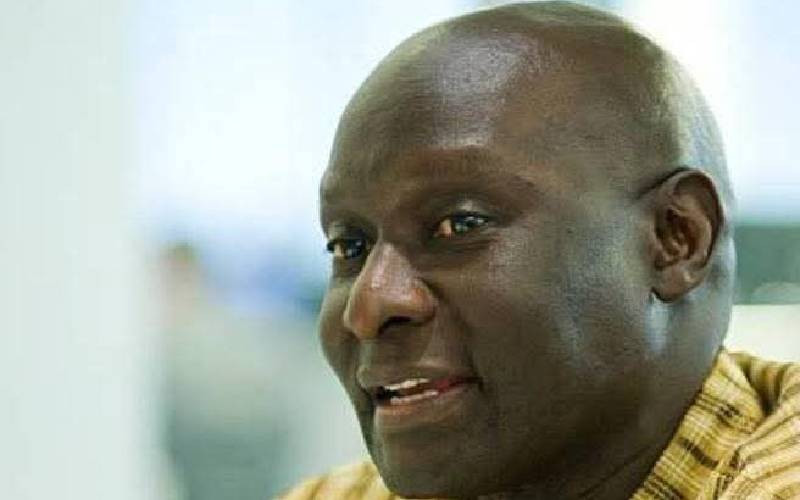
Two Africans, Macky Sall of Senegal, a former French colony in West Africa, and Olara Otunnu of Uganda, a former British colony in East Africa, are among the seven people who want to succeed Antonio Guterres in January 2027.
Will there be a repeat of the 1996 big-power geopolitical game and compromise, featuring perceived French interests in collision with Anglo-American interests, in the persons of Macky and Olara? The two Africans are among seven candidates from seven countries in two UN regional groups, Latin America and Africa; the other five candidates are all from Latin America. There are four women from Latin America and three men, two of them Africans.
While Macky had been president of Senegal, Olara had distinguished himself as an astute diplomat from the time the second Milton Obote regime appointed him Uganda’s permanent representative to the United Nations in 1980.
It was while serving as president of the UNSC in 1981 that he introduced the straw-polling system for candidates aspiring to become secretary-general, known as the Otunnu Formula, which he used while presiding over the election of Javier Pérez de Cuéllar of Peru.
This was after defusing the Waldheim-Salim UN electoral crisis. He served as Uganda’s Minister for Foreign Affairs for one year, from 1985 to 1986, before Yoweri Kaguta Museveni’s ‘movement’ took over the country. Appointed president of the International Peace Institute in 1990, Kofi Annan appointed him UN Under-Secretary-General in August 1997.
He ventured into Uganda’s electoral politics against Museveni in 2011, using Obote’s old party, UPC, and performed poorly; he reportedly failed to vote for himself.
Stay informed. Subscribe to our newsletter
In 2026, he received Museveni’s endorsement to run for the UN secretary-general position.
Olara knows the UN system, having invented the straw-polling system and worked as Annan’s UN Under-Secretary-General. He entered the race late, on July 24, 2026, as the seventh candidate and, at 75, the oldest.
He faces stiff competition, not so much from Senegal’s Macky as from two formidable Latin American women candidates: Guyana’s Carolyn Rodrigues-Birkett, 52, the youngest, and Rebecca Grynspan, 70, of Costa Rica.
In the second straw poll, Rodrigues-Birkett had eight ‘encourage’, three ‘discourage’ and four ‘no opinion’ votes. Grynspan had seven ‘encourage’, four ‘discourage’ and four ‘no opinion’ votes. Olara, the inventor of the system, was fifth with five ‘encourage’, five ‘discourage’ and five ‘no opinion’ votes. This was an improvement from the first straw poll, in which he received only two ‘encourage’ votes.
Geopolitical attitude
Olara’s ultimate chances are likely to be affected by three factors. First is the ideological and geopolitical attitude of the big powers towards the various candidates.
This factor could knock out two of the five Latin American candidates, Chile’s Michelle Bachelet Jeria and Argentina’s Rafael Grossi. Bachelet, a former two-term liberal president of Chile, had started with high hopes, backed by Guterres, of becoming the first woman UN Secretary-General.
Those hopes floundered when Chile’s new right-wing, Trump-like president, José Antonio Kast, withdrew his support. The Trump administration has also reportedly expressed serious reservations about her candidacy.
Grossi’s problem is likely to be with Russia over the stationing of an IAEA team at the Zaporizhzhia nuclear plant in Ukraine. The US is also reportedly not thrilled by his calls for diplomacy over Iran’s nuclear programme.
Second is the attitude of other UNSC voters towards Uganda’s international standing. They may compare Olara’s personal qualities with Uganda’s troubled image on the three UN “pillars”—peace and security, development, and human rights. They will also assess whether he has the “leadership abilities, experience and skills for a strong and fit-for-the-future organisation.”
Third is gender. The feeling that it is time for a woman secretary-general is more pronounced than ever, with four women candidates, all from Latin America, in the race. Two of them, from Guyana and Costa Rica, lead Olara in the straw poll, making his prospects appear difficult.
Olara would not be the first East African to seek the UN’s top job. Tanzania’s Salim Ahmed Salim challenged Austria’s Kurt Waldheim in 1981, but China vetoed Waldheim while the US vetoed Salim. Olara persuaded both to withdraw.
Salim had been fronted as the OAU and Third World candidate, but Ronald Reagan’s administration opposed him over his positions on South Africa and China. The Soviets also opposed him because of his pro-China leanings.
Olara’s “age of hope and faith”, promising “a new world economy” and stronger UN moral authority, sounds feasible.
His proposed reforms, including a UN body to oversee AI, are ambitious. But the decision is not his. It rests on big-power interests, Uganda’s global image and the growing demand for a woman UN chief.
Subscribe to our newsletter and stay updated on the latest developments and special offers!

 Prefer the Standard on Google




 join
join