×
App Icon
The Standard e-Paper
Home To Bold Columnists
★★★★ - on Play Store
Download App

Lessons for Sifuna and others from firebrands who became statesmen

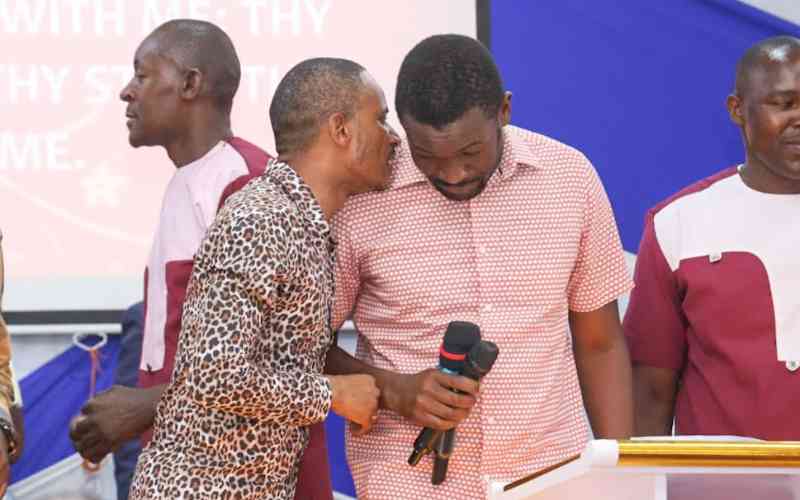
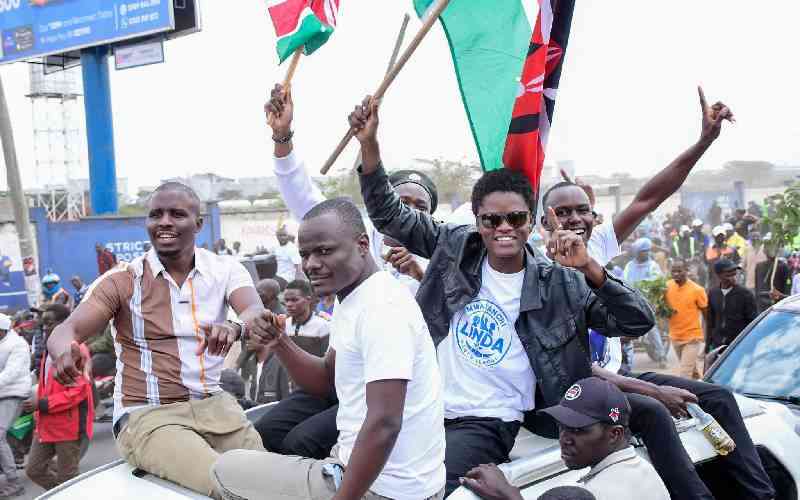
ODM Secretary General Edwin Sifuna and Embakasi East MP Babu Owino during a church Service at  Coast PAG church, Kawangware, Nairobi, on January 25,2026. [Benard Orwongo, Standard]

Che Guevara and Fidel Castro first crossed paths in Mexico City in 1955, an encounter that would catalyse one of 20th century’s most consequential revolutions. Their alliance culminated in the overthrow of Fulgencio Baptista’s regime in 1959, ushering in a new political order in Cuba. Castro emerged as prime minister and later president, a position he would hold until his death in 2008.

Guevara, meanwhile, assumed a range of senior positions, including Minister of Industry and head of the central bank, before abandoning the comforts of office to export revolution abroad. His campaigns in Congo and later Bolivia ended in failure. Captured by Bolivian forces, he was executed in 1967.

In his early years, Nelson Mandela was widely regarded as a radical, a reputation earned through his prominent role in the struggle against apartheid and his demand for political equality for South Africa’s black majority. He initially championed non-violent protest and civil disobedience, but as repression intensified, he helped found Umkhonto we Sizwe, the armed wing of the African National Congress (ANC). The decision led to his arrest, conviction at the Rivonia Trial and incarceration for 27 years.


Mandela’s release in 1990 marked the beginning of a political transformation few had anticipated. Elected president in 1994, following South Africa’s first multiracial democratic election, he defied expectations of retribution. Instead, he pursued reconciliation, urging peaceful coexistence between black and white citizens in what came to be called the “Rainbow Nation”. His willingness to forgive his former jailers, rather than seek vengeance for decades of injustice, became a defining feature of his statesmanship.

Julius Malema entered politics early, joining the African National Congress’s youth movement, Masupatsela, at the age of nine. He later rose to become president of the ANC Youth League, a position that made him one of the party’s most prominent young figures. In 2012, he was expelled from the ANC for conduct deemed to have brought the organisation into disrepute. Undeterred, he went on to found the Economic Freedom Fighters (EFF) and secured a seat in South Africa’s National Assembly.

Malema presents himself as a radical counterpoint to the legacy of Nelson Mandela. He has championed the expropriation of white-owned farmland without compensation and the nationalisation of key industries. His rhetoric has repeatedly tested the limits of South Africa’s constitutional order and he has been convicted of hate speech for remarks interpreted as inciting violence against white South Africans.

Such is his polarising effect that when the ANC, having lost its parliamentary majority, sought partners to form a government, it chose to align instead with the Democratic Alliance, a party with a predominantly white base, and the Inkatha Freedom Party, preferring these unlikely bedfellows to any accommodation with Malema’s EFF.

There is a clear lesson in the trajectories of these leaders. Firebrand politics can mobilise, but its utility is finite and should be abandoned once its purpose is met. Castro and Mandela evolved into statesmen and secured enduring legacies. Che Guevara did not and died in the jungle. Julius Malema, similarly, risks permanent exile from national leadership. This is a cautionary tale Edwin Sifuna, Winnie Odinga and other young Turks would be wise to heed as ambition matures into responsibility and durable governance.

Mr Khafafa is a public policy analyst