×

The Standard e-Paper
Fearless, Trusted News
 The Standard Group Plc is a
multi-media organization with investments in media platforms spanning newspaper
print operations, television, radio broadcasting, digital and online services. The
Standard Group is recognized as a leading multi-media house in Kenya with a key
influence in matters of national and international interest.

Audio By Vocalize
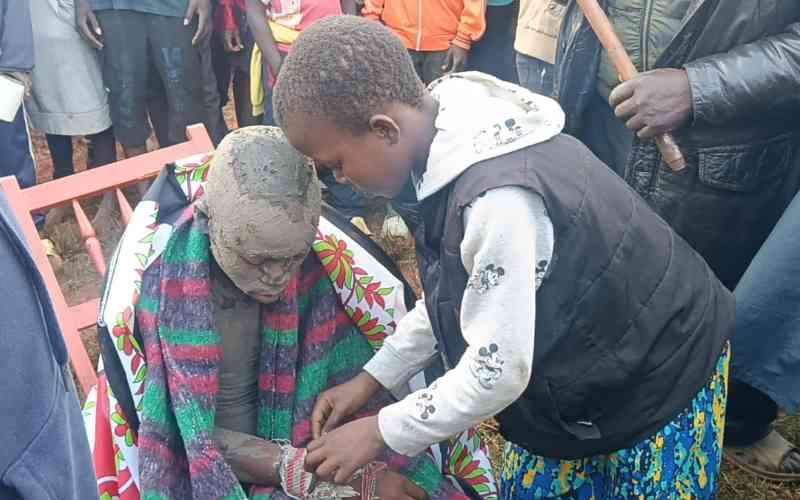
It is that time of year again. The school gates have closed and the December holidays have begun. In villages from Meru to Bungoma, Kisii to Nandi, a familiar excitement is building. Mothers are hunting for new shoes and smart shirts. Grandfathers are clearing their throats for the speeches of their lives.
Somewhere, a nervous 14-year-old is lying awake, counting days until he "goes to the river" and returns a man.
An uncle is on the phone asking how many crates the party will need. Let's call that boy Brian. Brian is brave. He has heard the stories, practised his poker face and promised his father he will not flinch. What nobody has prepared him for is that the most dangerous moment of his initiation may not be the cut. It may be the bottle that follows.
Initiation is one of the most beautiful institutions our communities have. Done right, it is a classroom where boys learn endurance, respect, responsibility and what it means to belong to something bigger than themselves. Our forefathers built these rites to make protectors, providers and leaders. They did not build them to make drunkards.
Somewhere along the way, though, an uninvited guest walked into the seclusion hut. Nobody stopped him.
Picture the scene. A dozen boys are kept away from their parents for days or weeks. They are healing, aching and bored stiff. Their "guardians" are sometimes just a few years older and carry more swagger than wisdom. A cigarette goes round: "It will take away the pain." A cup of busaa or chang'aa follows: "Kunywa, wewe ni mwanaume sasa." (Drink up, you're a man now.) Then someone pulls out a rolled stick of bhang and grins.
Then comes the homecoming. The music is loud, the meat is sizzling, and in front of beaming relatives, an adult hands a young boy his first "official" beer. Everyone cheers. In that single moment, we teach a child that manhood comes with a bottle.
Is this an exaggeration? The numbers suggest otherwise. NACADA's 2022 National Survey on the Status of Drugs and Substance Use found that one in every six Kenyans aged 15 to 65, about 4.7 million people, is currently using at least one drug or substance.
The figure that should keep every parent awake is the gender gap. One in three Kenyan men uses drugs or substances, roughly 3.8 million, compared with one in 16 women.
Alcohol leads with about 3.2 million users, and about 1.36 million of them are addicted. Tobacco has 2.3 million users. More than half a million Kenyans use cannabis, and about 1.77 million mix substances.
Ask yourself where those 3.8 million men started. Very few of them woke up at 35 and took their first sip. Addiction is usually planted in adolescence, and the younger the start, the deeper the roots. For far too many Kenyan men, the first drink was poured by a trusted elder in the name of tradition.
Here is the irony. Real tradition is on our side. Bukusu circumcisers, the custodians of one of Kenya's most celebrated rites, follow a strict code that bans alcohol, drugs and sex during the cutting season. They understand that a rite soaked in liquor loses its sacredness.
In Nandi, authorities have brought busaa under a permit system, and NACADA has taken awareness campaigns straight to the community at the peak of the initiation season. The law is clear too. Under the Alcoholic Drinks Control Act, supplying alcohol to anyone under 18 is an offence. "It's our culture" is not a defence.
So how do we take the rite back? Parents, vet your son's mentors with the same care you would give choosing his secondary school. Ask who will be in that hut, and what they will be teaching. Elders, churches and community leaders, build on the alternative rites of passage programmes that are already working. This December, let us send our sons to the river and welcome back men who are whole.
Stay informed. Subscribe to our newsletter
- Writer is Deputy Director, Corporate Communications at NACADA
Subscribe to our newsletter and stay updated on the latest developments and special offers!


 Prefer the Standard on Google