×

The Standard e-Paper
Smart Minds Choose Us
 The Standard Group Plc is a
multi-media organization with investments in media platforms spanning newspaper
print operations, television, radio broadcasting, digital and online services. The
Standard Group is recognized as a leading multi-media house in Kenya with a key
influence in matters of national and international interest.

Audio By Vocalize
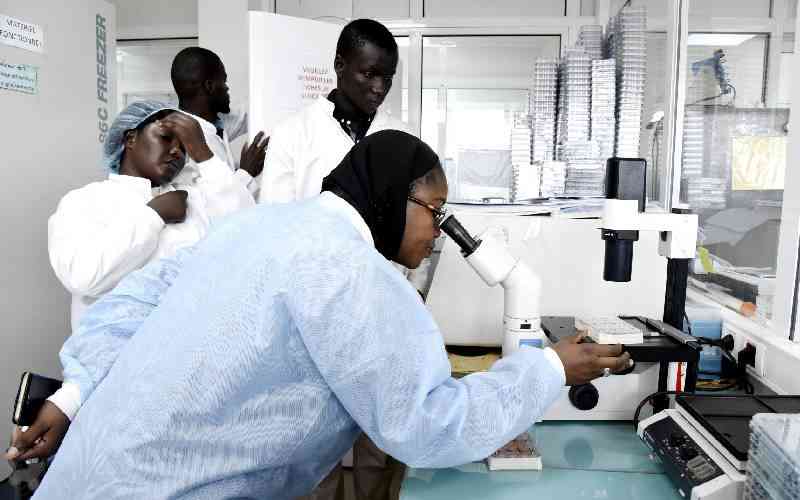
A great deal of knowledge is generated in Kenya's universities and research institutions, but is enough of that knowledge reaching the people who need it most?
Education is rightly regarded as a foundation of development but it does not end with teaching and learning in classrooms. It also produces research that can help society understand its problems, question existing assumptions and find better ways of doing things.
Research touches almost every part of our lives. From agriculture and healthcare to economics, technology, governance and the environment, decisions that affect society are increasingly expected to be supported by evidence.
Ironically, some of the most useful research remains largely within academic circles. Studies are published in journals, presented at conferences and used to build academic careers, but their findings may never reach policymakers, the media or the wider public in a form that they can easily understand.
Academic publication is important and should remain so. Universities need scholarly journals to test ideas, build knowledge and maintain academic standards, but research should not end with publication for purposes of academic progression.
Researchers and universities therefore have a responsibility to think beyond the academic audience. If a study addresses a problem affecting farmers, businesses, parents, young people, policymakers or communities, its findings should find a way to reach those audiences.
This is where the media can become an important partner. Newspapers, radio, television and digital platforms have the reach that most academic publications do not. The media can help translate research findings into information that ordinary people can understand and use.
The relationship should, however, be symbiotic. Universities and researchers should make relevant studies accessible to journalists and help them understand the significance of the findings, while the media should identify and communicate research that has genuine public value.
There are encouraging signs that universities themselves are beginning to appreciate this responsibility. Research institutions are increasingly talking about research impact rather than measuring success only through the number of papers published, and some are investing in helping researchers communicate their findings beyond academic circles.
Strathmore University, for instance, has established a programme to build researchers' capacity to translate their studies into information that can be consumed by the wider public and have an impact on society. Such initiatives create an opportunity for the media to tap into a much wider pool of knowledge that might otherwise remain largely invisible outside the university.
My own experience as an editor working in research environments in both public and private universities has given me an opportunity to see this challenge up close range. There is no shortage of research, but there is still considerable room for improving the journey from the researcher's desk to the public, especially policymakers.
Likewise, my experience as a former senior newspaper editor and writer is a confession that research stories were not part of what was considered prime news worthy of prominent placement or coverage. Education desks have been losing prominence with time.
The media needs to develop the capacity to handle research reports under a dedicated education desk. Reporting research is not simply about reproducing a university press release or announcing that a new study has been published.
Stay informed. Subscribe to our newsletter
Research can be technical and difficult to explain. A journalist covering it must understand what was studied, how it was studied, what the findings actually show and what they do not show before reducing the technical language into a story that makes sense to the ordinary reader.
This is one reason newsrooms should consider giving education and research a more defined place in their editorial structures. A dedicated desk, or at least journalists specifically trained to cover research, would make it easier to develop sustained relationships with universities and research institutions.
The media should also make greater use of researchers as public experts. Political analysts, both real and pseudo, have become familiar voices on radio and television. They help audiences interpret almost every political development, yet researchers studying the deeper issues affecting society are not given anything close to the same regular platform.
There is no shortage of subjects for such experts to discuss. A researcher studying food security can help explain why food prices behave the way they do. An education researcher can illuminate challenges facing schools.
Likewise, an environmental scientist can explain changing weather patterns while an economist can help citizens understand developments that may otherwise be reduced to political arguments. The public needs accessible explanations of what research means for everyday life, devoid of academic jargon.
For this to happen, universities must become more deliberate in making their research available to the media. Researchers should learn to identify the public-interest dimension of their work, prepare accessible summaries and be willing to engage journalists who want to understand their findings.
The media, in turn, should regard universities not merely as places to obtain occasional expert comments but as important sources of knowledge. A stronger relationship between the two would allow journalists to find credible evidence while giving researchers a route through which their work can reach society.
Research ultimately derives its greatest value from the difference it makes. A study that informs policy, changes practice, improves public understanding or helps solve a problem has moved beyond the pages of a journal and begun to serve the society that needs it.
The challenge, therefore, is for both academia and media to move beyond their traditional boundaries. Universities must produce research that matters and make its findings accessible, while the media must give that knowledge the editorial space it deserves.
If education is the foundation of development, research is one of the ways that foundation produces results. The media has an important role in making sure that the knowledge generated in our institutions does not remain hidden from the society it is meant to serve.
Subscribe to our newsletter and stay updated on the latest developments and special offers!


 Prefer the Standard on Google






 join