×

The Standard e-Paper
Kenya’s Boldest Voice
 The Standard Group Plc is a
multi-media organization with investments in media platforms spanning newspaper
print operations, television, radio broadcasting, digital and online services. The
Standard Group is recognized as a leading multi-media house in Kenya with a key
influence in matters of national and international interest.
The Standard Group Plc is a
multi-media organization with investments in media platforms spanning newspaper
print operations, television, radio broadcasting, digital and online services. The
Standard Group is recognized as a leading multi-media house in Kenya with a key
influence in matters of national and international interest.

Audio By Vocalize
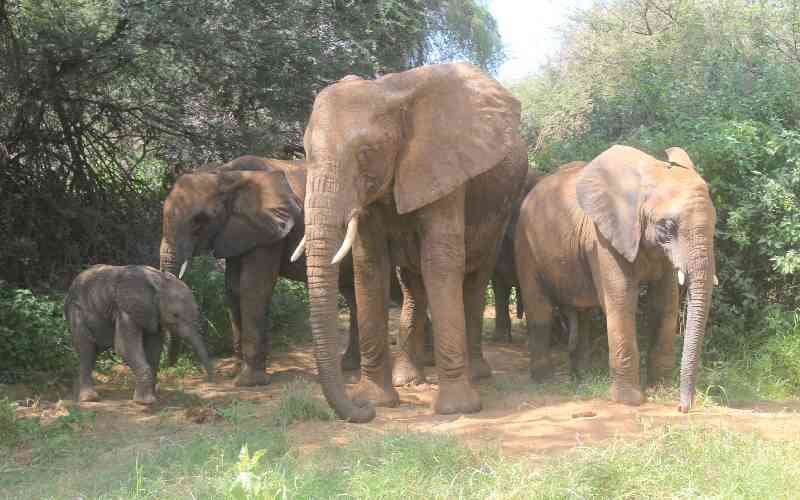
Elephants in Samburu National Reserve. [Benard Orwongo, Standard]
Fifteen elephants reported dead in the past month within Amboseli National Park succumbed to cyanide poisoning sprayed on nearby tomato farms, the samples collected by the Kenya Wildlife Service (KWS) have revealed.
KWS Director General Prof.Erastus Kanga said the laboratory analysis of the samples collected from the carcasses and taken to the government laboratory detected traces of cyanide.
The findings shift focus to the agricultural chemicals that had been sprayed on the nearby tomato farms as the likely cause of the elephants deaths.
‘’Earlier indications show that the samples that we delivered there are remnants of what we call cyanide, and cyanide is a highly toxic chemical, particularly for elephants, if elephants consume cyanide, they cannot survive a day or two,” Kanga said.
He warned herders who graze livestock in the fields to exercise caution to avoid getting in contact with the cyanide.
‘’Other than the elephants and the wildlife that might be feeding in those fields, we have the local livestock, we have the goats, cattle and if eventually if this cyanide is the one in the system. we are going to see negative impacts,’’ he said.
Dr Isaac Lekoolol, KWS Head Veterinary and Capture Service, said they noticed that some of the elephants were getting recumbent and going down, while others showed signs of paralysis on their front limbs before death.
‘’Just before their deaths, we were noticing that some of them were becoming recumbent and they were going down. We also noticed some signs of paralysis on the front limbs,” Lekoolol said.
He observed that the animals experienced deliberate breathing problems that showed that the respiratory system had already been compromised.
The postmortem results of the fifteen elephants indicated that the lungs and heart were affected.
Among the hardest-hit areas was the Kimana Wildlife Sanctuary, where one herd lost six elephants within a short period, including adult females and calves.
KWS is now determined to partner with stakeholders to prevent similar incidents and protect wildlife that frequently moves between farms and protected areas in search of food and water.
The wildlife agency, however, maintained that there is currently no evidence to suggest the contamination poses a risk to human health.
Stay informed. Subscribe to our newsletter
Rangers and researchers have intensified surveillance across the Amboseli ecosystem and are closely monitoring elephant herds as investigations into the poisoning continue.
Subscribe to our newsletter and stay updated on the latest developments and special offers!

 Prefer the Standard on Google









 join
join