
 The Standard Group Plc is a multi-media organization with investments in media
platforms spanning newspaper print
operations, television, radio broadcasting, digital and online services. The
Standard Group is recognized as a
leading multi-media house in Kenya with a key influence in matters of national
and international interest.
The Standard Group Plc is a multi-media organization with investments in media
platforms spanning newspaper print
operations, television, radio broadcasting, digital and online services. The
Standard Group is recognized as a
leading multi-media house in Kenya with a key influence in matters of national
and international interest.

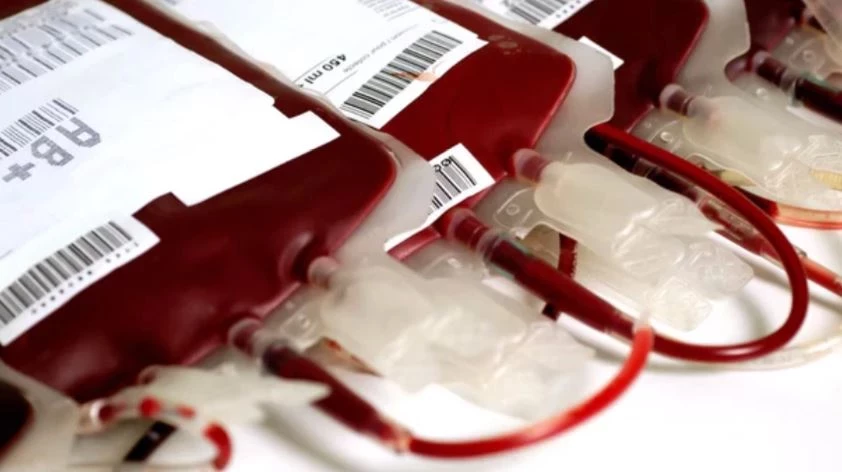
Somewhere in Africa tonight, a young mother is haemorrhaging after childbirth. The blood she needs may not be available.
Every day, the same story repeats itself in different forms: children weakened by severe malaria-related anaemia, road accident victims in emergency rooms, cancer patients undergoing treatment, and people living with sickle cell disease managing a chronic, life-threatening condition. For all of them, access to safe, compatible blood is not a clinical detail; it is the difference between life and death.
The World Health Organisation recommends that countries collect blood donations equivalent to at least one per cent of their population annually to meet basic needs. Most African countries remain well below this threshold. According to the WHO, sub-Saharan Africa collects roughly five donations per 1,000 people, compared with over 30 per 1,000 in high-income countries, a gap that translates daily into preventable deaths.
Where blood is available, questions of quality and safety persist. Cold-chain failures, inadequate screening and fragmented logistics mean that even when blood exists, it does not always reach patients safely or on time. In many settings, families are still required to find replacement donors themselves, an informal, unreliable system that places the burden of structural failure on grieving and frightened relatives.
The shortage is not, at its core, a matter of unwillingness. Many Africans would donate blood if approached in the right way, in the right setting, and with the right information. The barrier is often misinformation. Deeply rooted beliefs persist that donating blood causes permanent weakness, that donated blood is sold for profit, or that the process is unsafe. These are not fringe fears; they are widely held convictions that require sustained, trusted engagement to address.
Even where donor recruitment succeeds, the infrastructure required to turn a donation into a safe, usable product is often lacking. Blood must be screened for transfusion-transmissible infections, including HIV, hepatitis B and C, and syphilis. It must be stored at precise temperatures, typed, cross-matched and administered correctly. Each step requires investment, training and reliable systems that are frequently underfunded or inconsistent.
The challenge is significant, but not insurmountable. Several African countries, such as Rwanda and South Africa, demonstrate what is possible when blood systems are prioritised.
These are not outliers driven by exceptional wealth; they are proof of concept. The knowledge and models exist. What is often missing is sustained political will and coordinated investment to replicate them. Three priorities stand out. Investment: National blood programmes must be treated as core health infrastructure, with predictable government funding and long-term planning.
- Closing the gap: Bungoma Assembly leads drive to boost blood supplies
- Kenya's prolific blood donor hits 111 donations
- Study reveals Kenya's blood shortage crisis goes beyond a lack of donors
Keep Reading
Policy: Every country should have a clear national blood policy with measurable targets and accountability.
Community trust: Building trust requires continuous, community-based engagement through health workers, educators and local champions.
Africa’s patients cannot wait for a more convenient moment. Blood supply must be treated as the emergency it already is, before another preventable death becomes another silent statistic.









 join
join